

There are common misconceptions about the legal requirements and how many extinguishers businesses must have – and the reality is that it depends on several variables. So how many fire extinguishers do you need? The rule of thumb is that you’ll need at least one serviced extinguisher for every 200 square metres of floor space: one per 2,150 square feet. This is also per floor.
However, that could change based on the size and layout of the premises, the types of fire risks you’re dealing with, the nature of your business, and multiple other parameters.
In this article, our fire experts will discuss the considerations to ensure your business is fully compliant with the Regulatory Reform (Fire Safety) Order 2005 and that you know exactly how many extinguishers of each type you need.
Key Summary
- How many fire extinguishers should a business have legally? The standard recommendation is to have one serviced fire extinguisher for every 200 square metres of floor space. However, this requirement may vary based on factors like the size and layout of the premises, types of fire risks, and the nature of the business.
- What are the Types of Fire Extinguishers?: Different classes of extinguishers are needed based on fire types:
- Class A for paper, fabric, and wood (water, dry powder, foam, wet chemicals).
- Class B for flammable liquids (CO2, dry powder, foam).
- Class C for flammable gases (dry powder).
- Class F for fats and cooking oils (wet chemicals).
- Electrical Risk extinguishers for electrical equipment (CO2, dry powder).
- Why do you need a Fire Risk Assessment?: Conducting a thorough fire risk assessment is crucial. This should evaluate ignition points, fuel sources, fire escapes, and evacuation protocols to determine the exact number of fire extinguishers needed for your business, ensuring they are accessible and adequately cover all potential fire risks.
Calculating the Minimum Number of Fire Extinguishers in a Business Premise
As we’ve covered, the basic standard is to have one extinguisher per 200 square metres or two extinguishers on each floor. Therefore, if you have a smaller building split into multiple storeys, you’ll potentially require more extinguishers than a similarly sized commercial premise across one level.
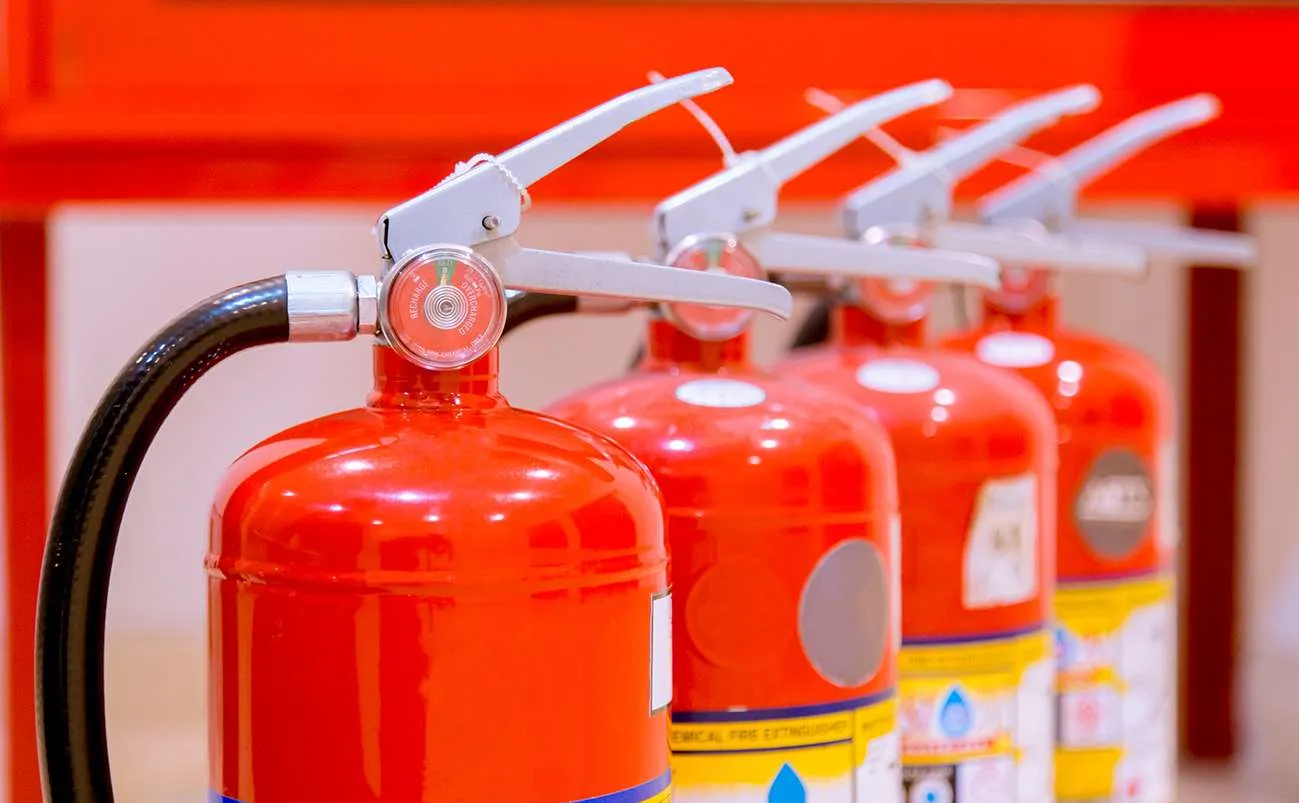
The complexity is that there are also varied types of extinguishers, which come in different sizes, from three to nine-litre extinguishers in most cases. These products are split into classes depending on the types of fire they can extinguish:
- Class A extinguishers use water, dry powder, foam or wet chemicals and can extinguish fires involving paper, fabric and wood.
- Class B extinguishers are used for flammable liquids and can be CO2, dry powder or foam.
- Class C extinguishers are used in premises with flammable gases and are filled with dry powder.
- Class F extinguishers can put out fires involving fats and cooking oils and use wet chemicals.
- Electrical Risk extinguishers control fires involving electrical equipment and are fitted with CO2 or dry powder.
If you have multiple potential fire hazards, you may need more than one type of extinguisher on every floor – or possibly several extinguishers throughout the building, depending on the risks present.
Evaluating Your Business Fire Risks
The first step in identifying the exact number of extinguishers you need is to complete a full and thorough fire risk assessment. This evaluation should consider all relevant points, such as:
- Ignition points
- Fuel sources
- Fire escapes
- Evacuation protocols
From there, you’ll be able to see which class of extinguisher you need to control any possible type of fire. Then, you can look at the size of the property, the locations, and the severity of the potential risks.
If multiple ignition sources are spread throughout the building, you may require several extinguishers in each category, with one within easy reach of all ignition and fuel sources.
It’s also important to think about the capacity of your extinguishers since small extinguishers used in a staff kitchen with one microwave will be insufficient for a larger commercial kitchen with multiple pieces of high-heat equipment.
Deciding Where to Fit Your Business Fire Extinguishers
Installing your extinguishers is key because they’ll need to be accessible and clear of emergency exits or evacuation routes but within a position where the extinguishers aren’t likely to be tampered with. Extinguishers should be serviced regularly and inspected since damaged or used extinguishers require replacement.
Most businesses coordinate their extinguishers with other assets within their fire prevention and protection systems, which might mean:
- Placing extinguishers close to exits
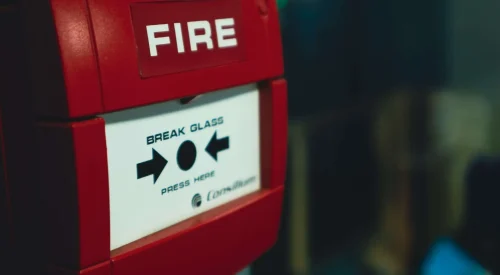
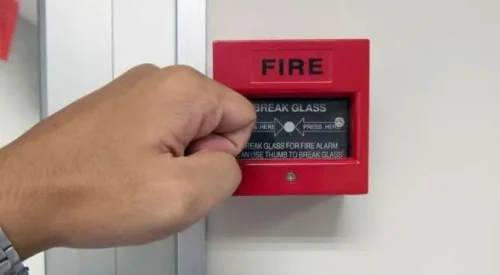
- Installing extinguishers below all fire alarm call points
- Adding extinguishers within 30 metres of any ignition point
The guidelines state that anybody inside the building should be within 30 metres of an extinguisher at all times, meaning anybody would be able to find and get to an extinguisher in the event of an emergency.
If you require specialist extinguishers, such as a foam extinguisher that can put out chemical fires, they should adhere to the above guidance and be close to any piece of equipment or facility that could be involved in this type of fire.
Extinguishers should be easy to see and visible. They are often placed within stands or brackets to avoid an extinguisher falling. Still, they should have a quick-release catch or handle that won’t prevent a user from activating the extinguisher.
Adding Signage to Your Fire Extinguisher Points
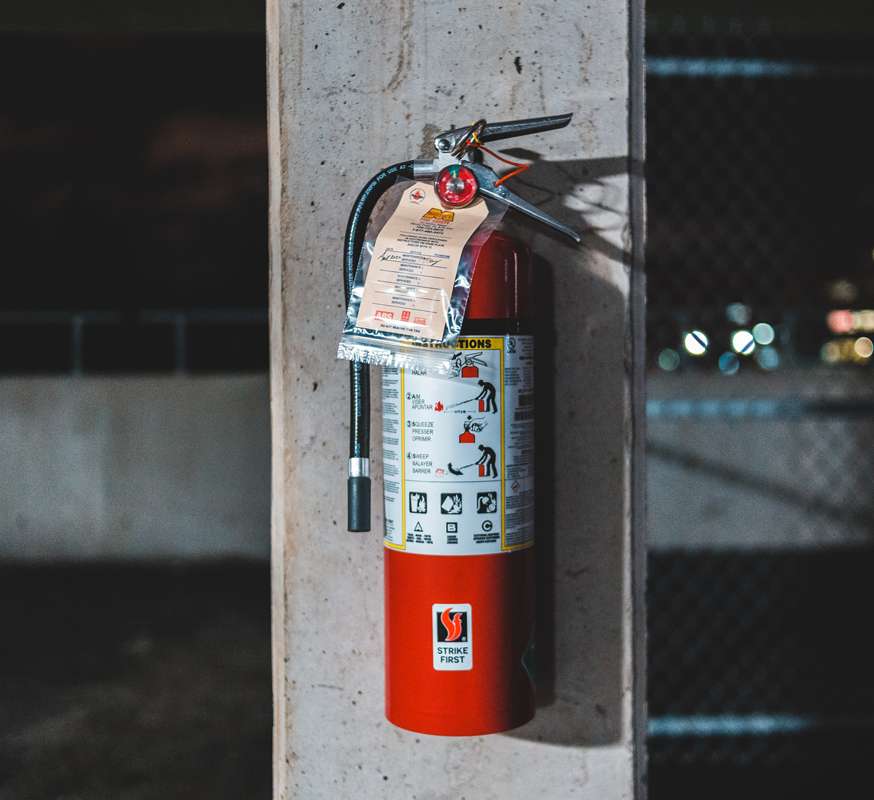
Regardless of how many extinguishers you have, of what size, and the kinds of fires they are intended for, you must ensure every extinguisher is clearly labelled, making it apparent what it contains and what fires it can be used against.
Using the wrong extinguishers can cause a minor fire to grow out of control. The most common scenario is when an untrained person grabs a water extinguisher and tries to extinguish a cooking fire. Because water and oils or fats do not combine, spraying water onto a cooking fire can mean the burning materials explode violently.
Likewise, using a water-filled extinguisher on an electrical fire will cause the electricity to spread within the water and create a serious electrocution risk.
If the labelling or usage instructions on extinguishers become worn or damaged, they should be replaced immediately. Although fire wardens and other personnel may have attended fire safety courses and know how to handle any extinguisher, those instructions could be vital in a crisis or where the panic and stress of an emergency mean a staff member forgets what to do.
Businesses should also provide fire safety training, ensuring they have sufficient fire wardens on site at all times and that all staff understand how to raise the alarm, evacuate the building, and where their nearest call point, extinguisher and exit is.
Maintaining your fire extinguishers
Maintaining fire extinguishers is crucial to ensure they function correctly in an emergency. Regular maintenance involves checking each extinguisher’s pressure, condition, and accessibility to guarantee that it is ready for use. Without proper maintenance, extinguishers can become unreliable, leading to potential failure when needed most.
Key aspects of fire extinguisher maintenance include:
- Regular Inspections: Conduct monthly visual inspections to ensure extinguishers are accessible, the seals are intact, and there are no visible signs of damage.
- Annual Servicing: Have a professional service your extinguishers annually to check internal components, refill or replace extinguishing agents, and ensure overall functionality.
- Hydrostatic Testing: Perform hydrostatic testing periodically (typically every 5-12 years, depending on the type of extinguisher) to check the integrity of the cylinder and ensure it can withstand internal pressure.
Neglecting maintenance can lead to corrosion, leakage, or pressure loss, rendering the extinguisher ineffective. In a fire emergency, this failure could result in significant property damage, financial loss, or even endanger lives. Proper maintenance ensures that fire extinguishers remain in optimal condition, providing peace of mind that they will perform effectively when needed.
Have you considered P50 fire extinguishers?
When it comes to maintenance, companies are staring to adopt P50 fire extinguishers mainly du to the self maintained element. However, the P50 fire extinguisher offers numerous advantages. Designed with advanced technology and a focus on reliability, the P50 extinguisher addresses common issues associated with traditional extinguishers.
Why P50 fire extinguishers:
- Self-Maintained Design: Unlike traditional extinguishers requiring external servicing, the P50 can be self-maintained with an annual maintenance inspection to check magnetic gauges. This feature simplifies maintenance processes and reduces costs.
- Multi-Purpose Use: The P50 extinguisher is versatile and suitable for various fire types, including carbonaceous materials, flammable liquids, cooking oil, and electrical fires. This versatility eliminates the risk of using the wrong type of extinguisher for a given fire, enhancing safety.
- Long Life Cycle: With a 20-year life cycle, the P50 offers a cost-effective solution, reducing the frequency of replacements and the associated costs.
- Corrosion and Manufacturing Guarantees: The P50 comes with a 10-year operational corrosion guarantee and a 10-year manufacturing faults and workmanship guarantee, ensuring long-term reliability and performance.
- The P50 fire extinguisher’s patented design and multi-purpose functionality mean businesses can reduce the number of extinguishers on-site without compromising safety. By integrating the P50 into their fire safety protocols, businesses can ensure comprehensive protection, streamlined maintenance, and long-term cost savings.
Professional Fire Safety Risk Assessments and Guidance
You are welcome to contact the Clearway team at any time for more information about the number, size, type, and placement of extinguishers you need within your business premises.
We appreciate that many variables and considerations will influence your fire safety approach and that companies often avoid taking action for fear of making the wrong decision or purchasing extinguishers they will never need.
Please get in touch at your convenience, and we’ll be delighted to explain more about fire safety and prevention, as well as other assets you can include without your fire detection solutions.

Daniel Meeajane 
Business Development Director, Clearway Fire and Security
Daniel Meeajane is a Business Development Director for Clearway Fire and Security.
Having been involved in some major projects and achieving successful results Daniel uses his knowledge and experience to leverage awareness in Fire Protection. To do this a deep understanding of the BS 5839 PT1 is required along with keeping updated on the latest technology.
Related content
Sun Jun 2 2024
Fire Alarm Monitoring Services
Mon Jan 8 2024
Fire Alarm Maintenance Services
Fri May 9 2025