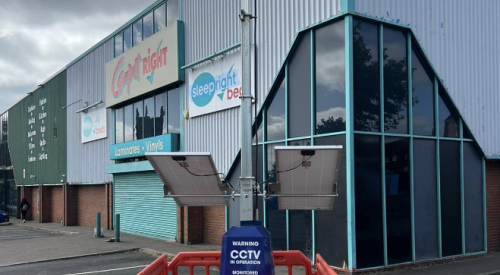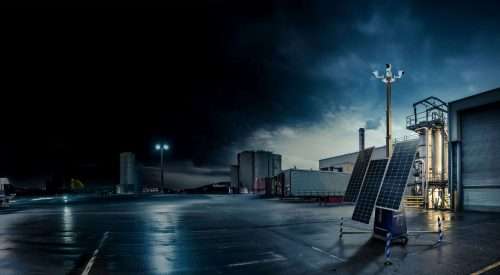


CCTV towers come in a range of models and functionalities designed for different functionalities, from inView devices to traffic management towers.
CCTV towers are in strong demand from construction sites, events, high-risk compounds, transport providers and energy plants, where conventional mains-powered and wall-mounted cameras would be unviable, and managers need to cover wider areas simultaneously.
This guide summarises the features and functionality of varied CCTV surveillance towers to illustrate the contrasts.
Different Types of CCTV Towers: Key Takeaways
- CCTV towers range from mains-powered devices to autonomous, solar-powered models that operate independently of the grid and provide an ideal solution for remote, isolated, or large-scale sites.
- Some types of CCTV Towers cameras are specifically designed for niche environments, such as traffic management systems that monitor vehicle volumes and speeds to improve road safety.
- Picking the right CCTV tower will depend on the nature and layout of the site, access to a power supply, the duration of the risks you need to control, and your security concerns.
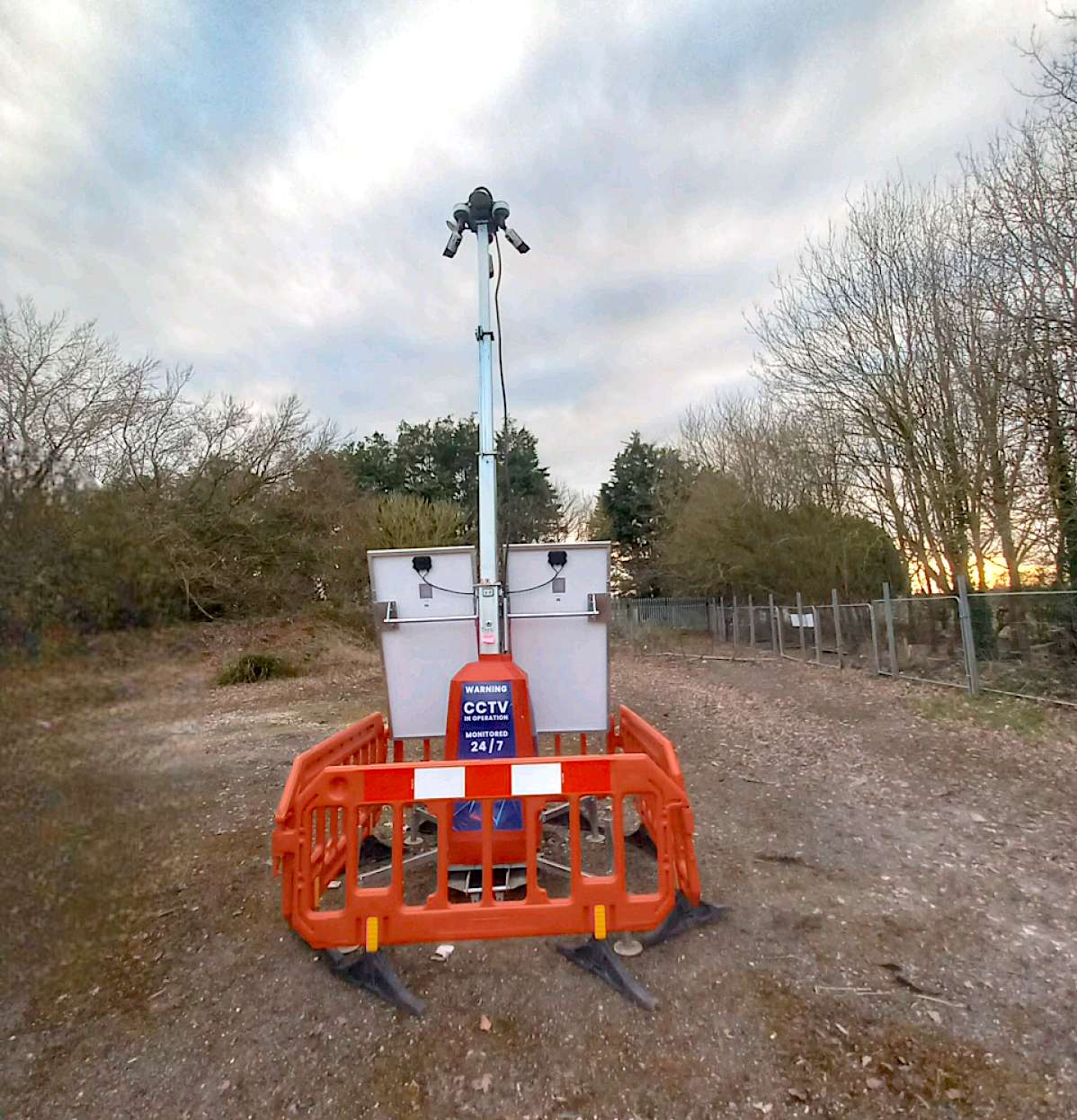
What are the different types of CCTV Towers?
There are several types of CCTV towers, each designed for different environments, risk levels and deployment needs. The right option depends on whether you need rapid deployment, long-term coverage, power independence or advanced analytics.
Type 1: Static CCTV Towers
These are fixed-position towers installed for medium to long-term monitoring. They are typically connected to mains power and broadband or fibre, making them ideal for sites with existing infrastructure such as industrial estates, car parks and logistics hubs.
Type 2: Mobile CCTV Towers
Mobile towers are designed to be moved easily between locations. They are commonly used on construction sites, temporary compounds and vacant land where security needs change over time. Most are trailer-mounted or skid-based for fast relocation.
Type 3: ANPR CCTV Towers
These towers are equipped with specialist cameras designed to capture and read vehicle number plates, day and night. They are commonly used at site entrances, access roads and car parks for vehicle monitoring and access control.
Type 4: AI-Enabled CCTV Towers
AI-enabled towers use intelligent analytics to detect people, vehicles, intrusion events and unusual behaviour. This reduces false alarms and enables proactive responses rather than relying on manual monitoring alone.
In reality, most modern CCTV towers are not limited to just one type. The features described above are often integrated into a single, multi-purpose tower, giving sites flexibility without needing different systems for different risks.
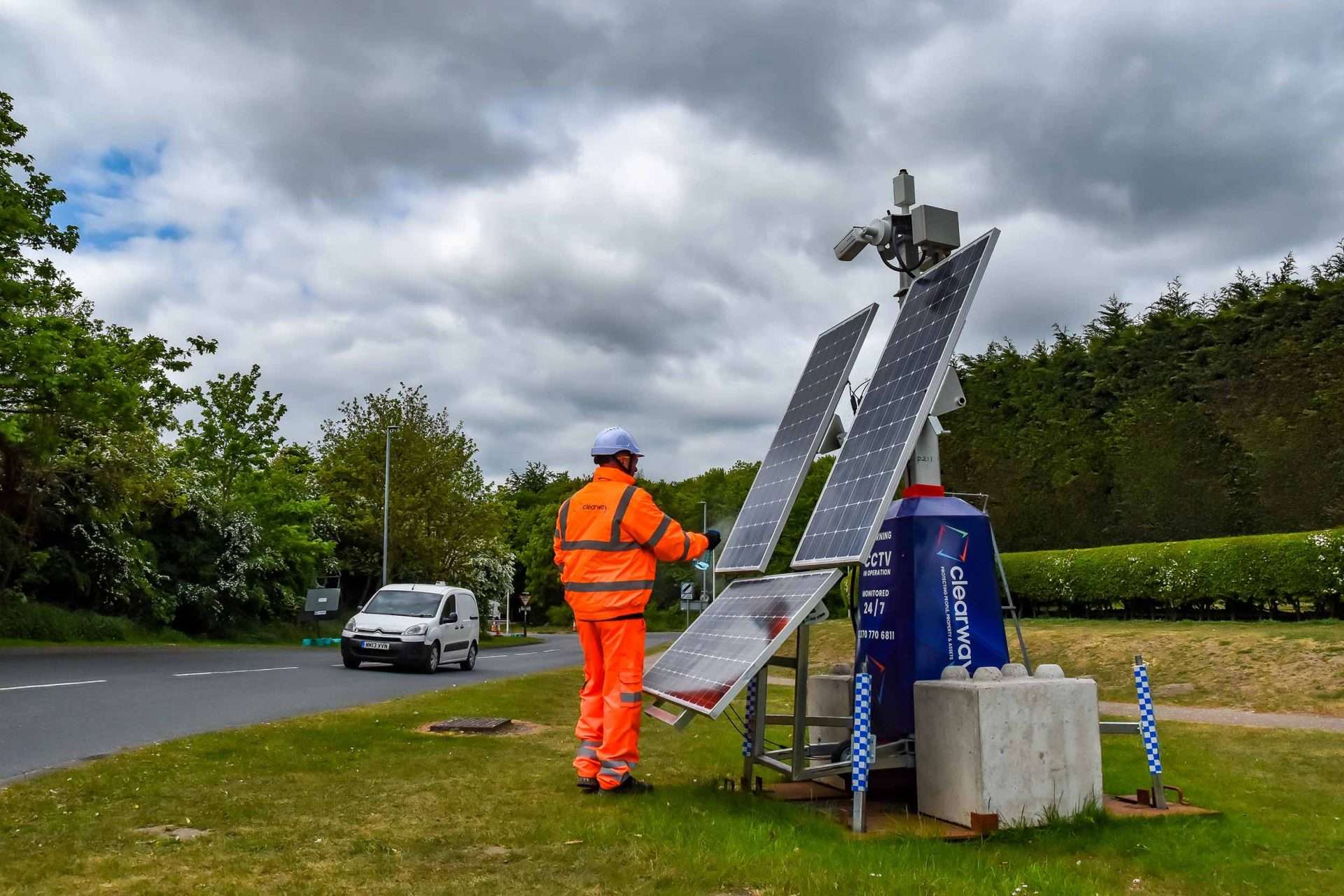
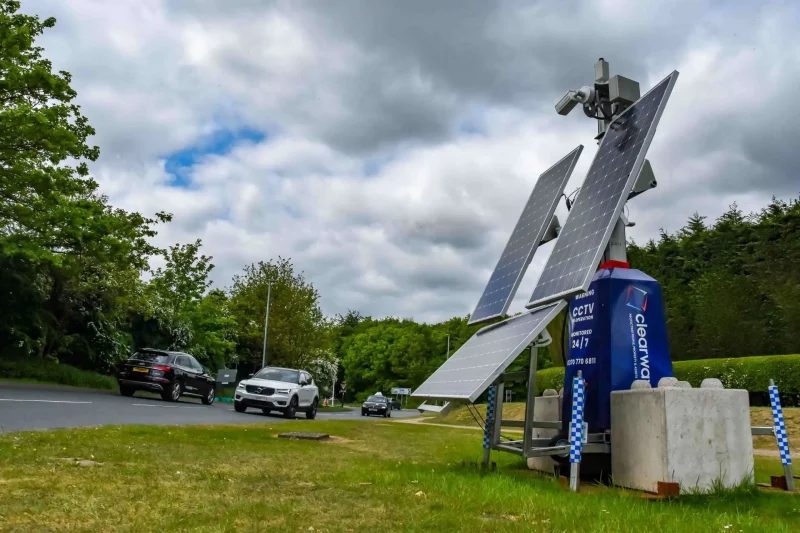
A good example of this is the Clearway InView CCTV Tower.
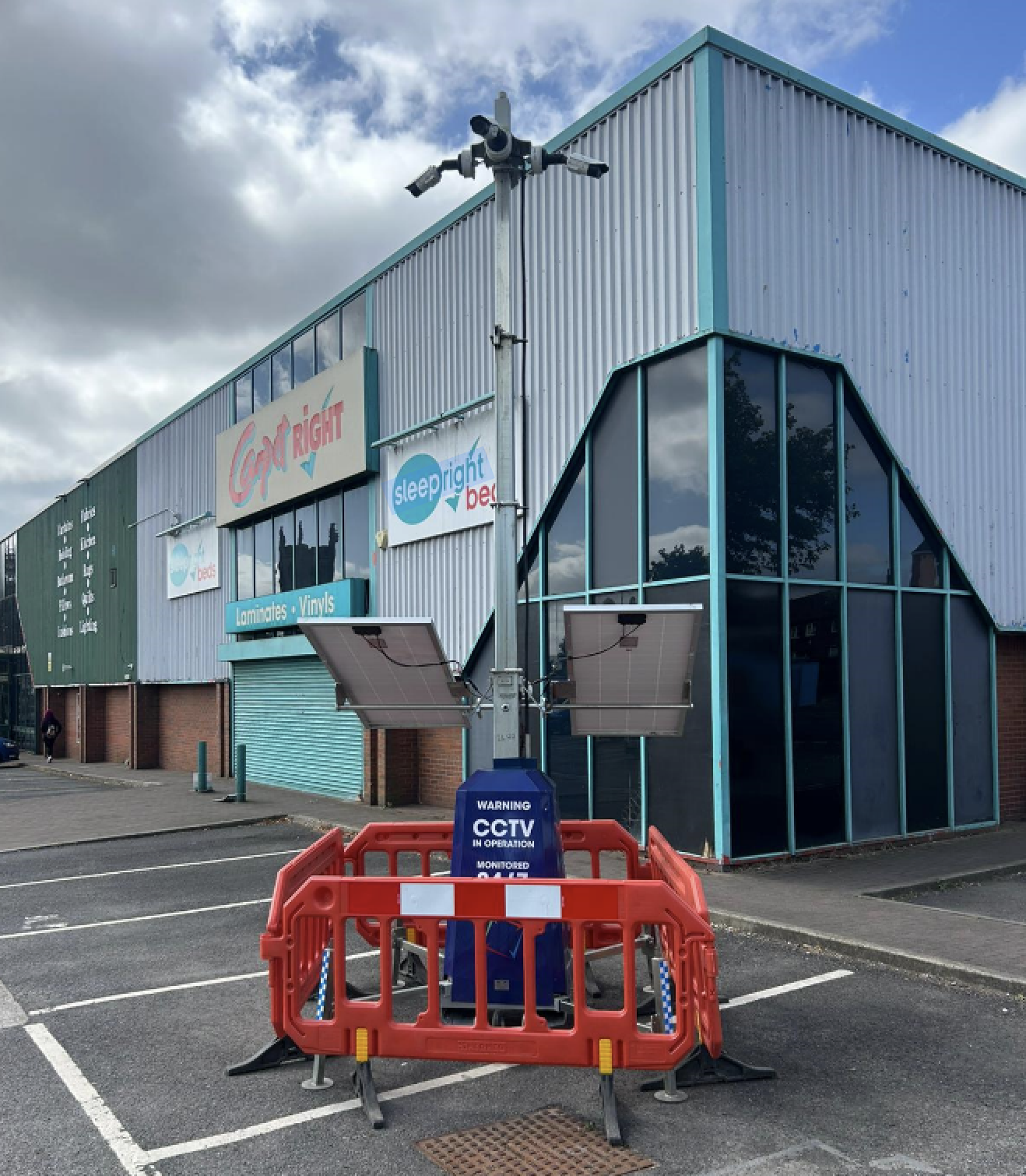
Rather than choosing between mobile, solar, AI or ANPR towers, many solutions combine these capabilities into one platform:
Mobile and rapid deployment – The tower can be delivered, installed and operational quickly, making it suitable for construction sites, vacant land and temporary projects.
Solar-powered with battery backup – Integrated solar panels and batteries allow the tower to operate off-grid, removing the need for mains power and enabling deployment in remote locations.
AI-enabled analytics – Intelligent detection distinguishes between people, vehicles and irrelevant movement, reducing false alarms and enabling faster, more accurate responses.
ANPR capability – Specialist cameras can be added to capture and read number plates at entrances and access routes, day and night, supporting access control and vehicle monitoring.
Remote monitoring and live response – All data is transmitted securely for live monitoring, audio challenge and escalation when genuine threats are detected.
How Do the Clearway CCTV Towers Compare?
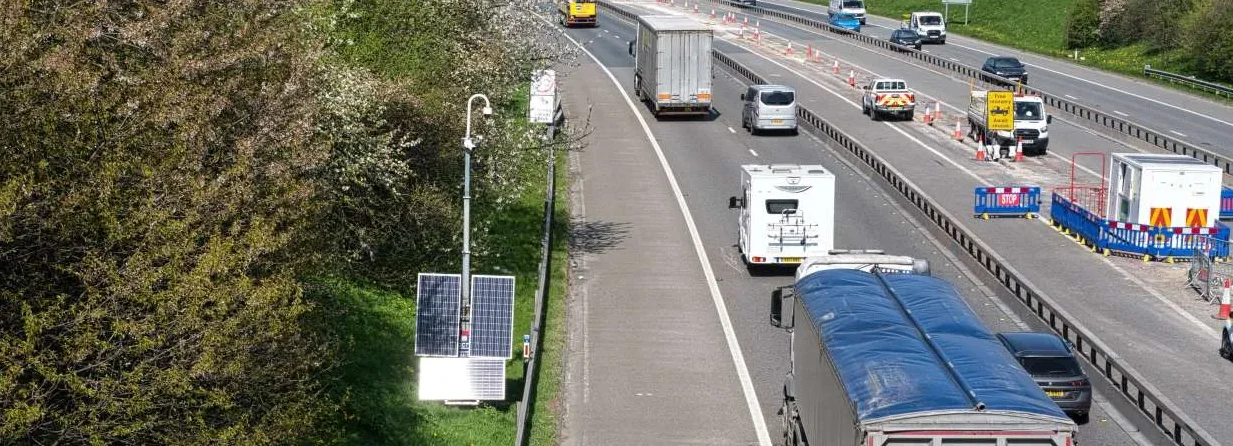
We’ve compared our inView CCTV tower, designed to secure high-risk environments, with the InView Highway Technology Tower, created for road safety applications, to illustrate some of the primary differences.
| InView CCTV Tower | InView Highway Technology Tower | |
| Primary use case | Protecting compounds, construction sites, events and other high-risk spaces | Highways and road safety management |
| Power source | Off-grid power supply with dual solar and battery systems | Solar energy and long-life batteries |
| Detection capabilities | PTZ, wide-angle and AI analytics | PTZ and AI objection detection |
| Camera systems | Triple NDAA 4MP bullet cameras | Usually two high-resolution cameras per tower |
| Flexibility | Adjustable height up to 6 metres and rapid deployment even on uneven ground | Rapidly deployable and scalable coverage |
InView cameras are often considered a gold standard, with fully weatherproof casings, mobile network connectivity, monitoring through Clearway’s in-house NSI Gold Cat II-accredited Alarm Receiving Centre (ARC), and integral smart infrared LEDs for overnight captures.
Why Does My Choice of CCTV Tower Matter?
Each site or premise will have a distinct set of challenges or problems, and needs to adapt its security approach accordingly, since a set of alarms or CCTV cameras that works well for one compound might leave glaring security gaps at another.
It’s also important to think through the practicalities and your requirements, which should help narrow down the options.
‘Surveillance coverage is often vital in remote and high-risk areas, and it is equally important to make informed decisions about the best CCTV towers that will provide effective, reliable protection.
Starting with a risk assessment to identify core threats, vulnerabilities and priorities is advisable, as this ensures you can select the optimal CCTV solutions to bring those risks under control.’
What Factors Will Affect the Right CCTV Tower for My Site?
The following should all be considerations when comparing solar-powered CCTV towers or deciding which units to install, including your power source and site layout:
- Access to power: CCTV towers can operate with mains electricity, solar cells, batteries, generators or a combination – so you must know what power options are available and how reliable they are.
- Duration of security risks: In some situations, security risks are temporary, such as during construction. In others, threats are subject to change, which can influence the time period you’d need to hire a CCTV tower for.
- Layout and site perimeters: Larger compounds and construction sites may require multiple towers or might need integrations with access controls and alarms.
- Surveillance performance: Risks that arise primarily overnight require night vision or thermal imaging, and many sites require CCTV towers with remote viewing access.
- Environmental aspects: Specific sectors have their own considerations regarding health and safety, regulatory compliance, and how CCTV towers need to operate – including public sector spaces, vacant properties, construction sites, railway depots, and traffic control teams.
If in doubt, it is worth scheduling an independent risk assessment with a consultant to help narrow down the options.
Where Are CCTV Towers Most Often Used?
CCTV tower installations can be used on any site where conventional or static CCTV isn’t possible or wouldn’t be effective, including construction sites with elevated theft risks and site boundaries that are difficult to control.
Research has shown that vandalism is just as costly to smaller construction sites as theft, which is why robust preventive measures are often considered mandatory in the sector. [1]
Other uses include demolition sites, vacant properties, agricultural and remote businesses or sites, compounds and corporate complexes that need 24/7 protection and solar and wind farms in isolated areas.
While these are the most prevalent applications, CCTV towers can also be used for event management and to enhance security coverage during periods of temporarily higher risk.
Frequently Asked Questions
How Effective Are CCTV Towers?
CCTV Towers are a proven deterrent and can provide extensive coverage of sites of all sizes, with a tower height of up to six metres that is impossible to overlook.
CCTV towers can be deployed quickly and installed anywhere, ensuring that any intrusion attempts, trespass or thefts will be immediately detected, the alarm sounded, and security personnel or the police notified.
Are CCTV Towers More Cost-Effective Than Traditional CCTV?
In many cases, yes, because towers can be hired for any period of time, and don’t require cabling, wiring, or trenches, since they operate on solar and battery power rather than the mains grid.
The extended coverage, reduced reliance on manual guarding, rapid notifications when suspicious activity is identified, and proactive responses to de-escalate emerging incidents can all deliver considerable cost savings.
References:
- ResearchGate: Theft and Vandalism on Construction Sites
- ResearchGate: Unlocking Solar Power for Surveillance