



Finding that travellers have set up an encampment on your land, hardstanding, or business premise can be stressful. If you’ve encountered this issue before, you’ll know that it’s not something the police can necessarily help with.
UK laws exist that protect the rights of private landowners, but the correct procedures and the right to use force differ considerably from scenarios where travellers have set up on land owned by the highway authorities or local council.
The primary contrast you need to know is that because travellers are using private land, this is deemed a civil matter rather than a criminal offence. However, if there are indications of criminality, the police may be able to intervene, and they will often need to be informed before an eviction to supervise and ensure any aggression is dealt with swiftly.
Clearway’s eviction specialists have compiled this checklist to highlight the laws, rights, and procedures for safely and lawfully evicting travellers from your private land.
Traveller Eviction Facts:
- Private landowners can evict travellers from their land or premises but rely on Common Law eviction procedures. The police and local authority will often not get involved if there is no evidence of unlawful behaviour since traveller encampments on private land are treated as a civil matter rather than criminal activity.
- Evictions must follow a set process to be upheld and legal, and the eviction itself should only be carried out by a qualified, experienced agent, usually a Certified Enforcement Officer with the requisite knowledge and training.
- If travellers refuse to vacate private land and other attempts to order them to leave have been unsuccessful, the landowner can pursue a court-enforced order called a Writ of Possession. This step is usually the final course of action and must be backed by a legitimate court order to be actionable.
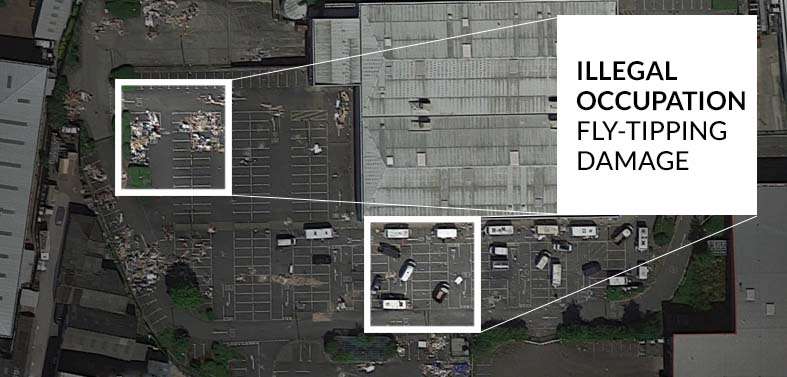
Traveller Eviction Checklist for Private Landowners
In every instance, whether travellers are located on a field, agricultural land, business premises, hardstanding or car parking area, or within the boundary of your land, the key is to act swiftly and decisively without making any threats or attempts to physically remove them.
This response is often a result of frustration or anger, but could put you, as the private landowner, at risk of legal action.
Therefore, it is paramount that you consult an experienced team to represent you and ensure travellers are evicted and prevented from returning with minimal disruption and damage to your land or property.
Step 1: Giving Notice to Leave
The Criminal Justice Act, Section 61 gives landowners the right to remove travellers, working with Certified Enforcement Officers who will understand and follow a defined procedure to ensure an eviction is peaceful and lawful.
An Enforcement Officer will start the process by notifying the travellers that they are being asked to vacate the land, usually giving a 24-hour compliance period.
Only once notice has been given, and the travellers have been given the opportunity to leave of their own accord, can the eviction agents take further steps to remove them. Your representative will often take photos as evidence, which may also be useful in identifying how travellers have gained entry and documenting any damage caused.

Step 2: Evicting Travellers from Your Land
After the travellers have been given notice and this has been documented, the Certified Enforcement Officers can proceed with the eviction using limited force, which is referred to in Common Law as ‘reasonable’.
We recommend contacting the local police, who will often attend to prevent any escalations and keep the peace during the eviction. Trained agents will not damage vehicles or caravans, remove clamps placed on wheels, or respond in kind to threatening or aggressive behaviour.
Instead, they use conflict management techniques to ensure the travellers are made to vacate the land, often negotiating to provide a number of hours for travellers to pack belongings and move along under the supervision of the agents and any police in attendance.

Step 3: Responding to Refusal to Vacate
Most evictions are resolved peacefully, but there are scenarios in which travellers refuse to leave, knowing that an agent cannot, for example, physically remove people from inside a stationary caravan.
If there are signs of criminal activity, the enforcement team may request the police remain on standby or intervene. This action may be possible if two or more travellers:
- Have caused demonstrable damage to the private land or property.
- Have used aggressive or abusive language or behaviour to the landowner or agents.
- Have parked more than six caravans or vehicles on the land and are refusing to move them.
If the travellers refuse to leave but have not committed a crime or caused an incident promoting police intervention, and the agents cannot legally remove them, the next step is to apply for a Writ of Possession.
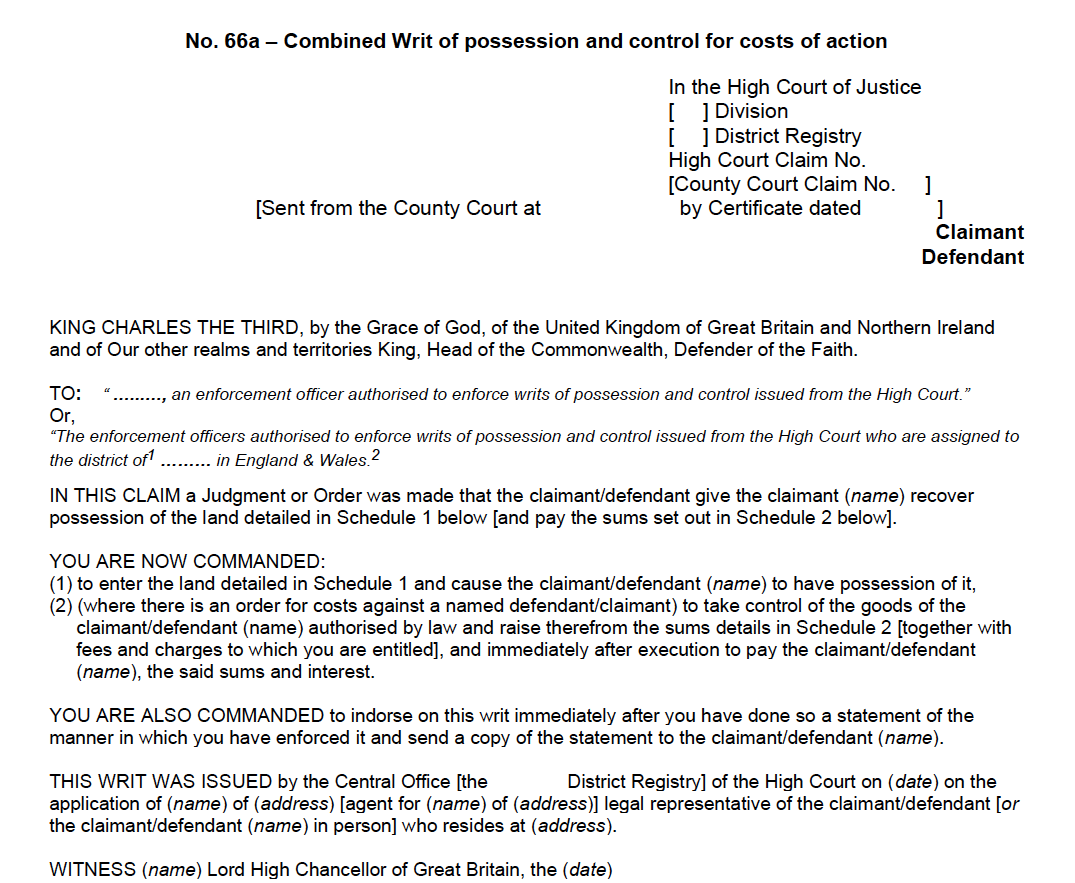
Step 4: Seeking a Court Enforced Traveller Eviction
A Writ of Possession is granted by the courts and enforced by a High Court Enforcement Officer. The court will normally ask for evidence that the travellers have already been asked to leave and details of the negotiations or attempts made thus far.
This process is covered by the Civil Procedure Rules and requires a hearing. If the court supports the request and issues an eviction order, the Enforcement Officer will serve it to the travellers or post it prominently outside or at the entrance to the land.
The court can set a date by which the travellers must leave and a subsequent hearing date if they remain in situ. At that point, the landowner will be granted an eviction order, which enables the Enforcement Officer to regain possession.
Although this process can take longer, it is a secondary option if other efforts to evict travellers have not been successful. Refusing to leave once a Writ of Possession has been granted is a criminal offence, which enables the police to intervene and potentially prosecute trespassers who do not comply.
Step 5: Preventing Travellers From Re-entering Private Land
The final phase is to ensure your land or property is suitably protected and to proactively stop travellers from returning to your site or from other groups trying to access your privately owned land.
Options may include security fencing, PID systems, access controls for business premises, concrete barrier blocks around larger boundaries, regular site inspections, and security patrols.

If you need more advice about preventing unauthorised access to your land, evicting travellers, or reviewing your current security measures to prevent travellers from attempting to set up an encampment, you are welcome to contact the eviction team at Clearway for more customised advice.
Related content
Traveller Eviction Services: 24/7 Rapid Removal
Sat May 24 2025
Thu Mar 16 2023
Common Law Eviction Enforcement Services
Fri Mar 17 2023