

Virtual fencing is an excellent way to boost the security approach for commercial premises and protect perimeters without the cost of erecting physical boundaries, which may be prohibitively high around large sites.
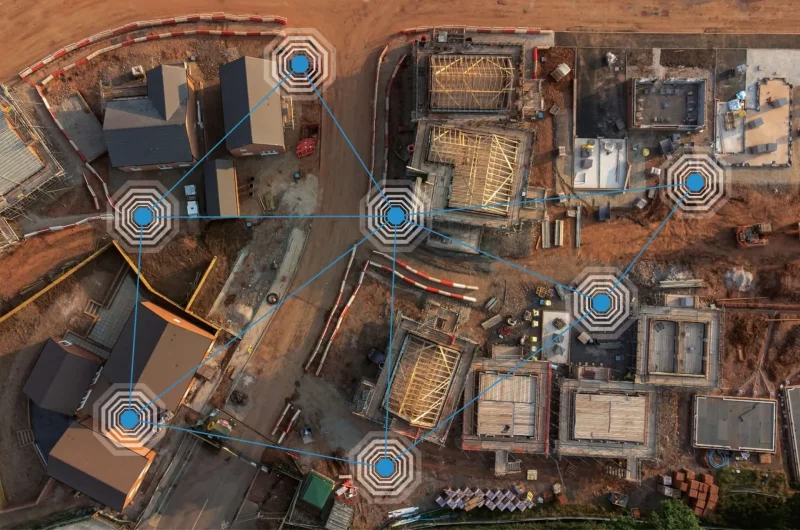
These technological barriers are invisible but work proactively to secure all access points. Virtual fencing’s convenience, coverage, and cost-effectiveness mean it is increasingly being used for facilities such as wind and solar farms, agricultural land, construction sites, and large-footprint premises.
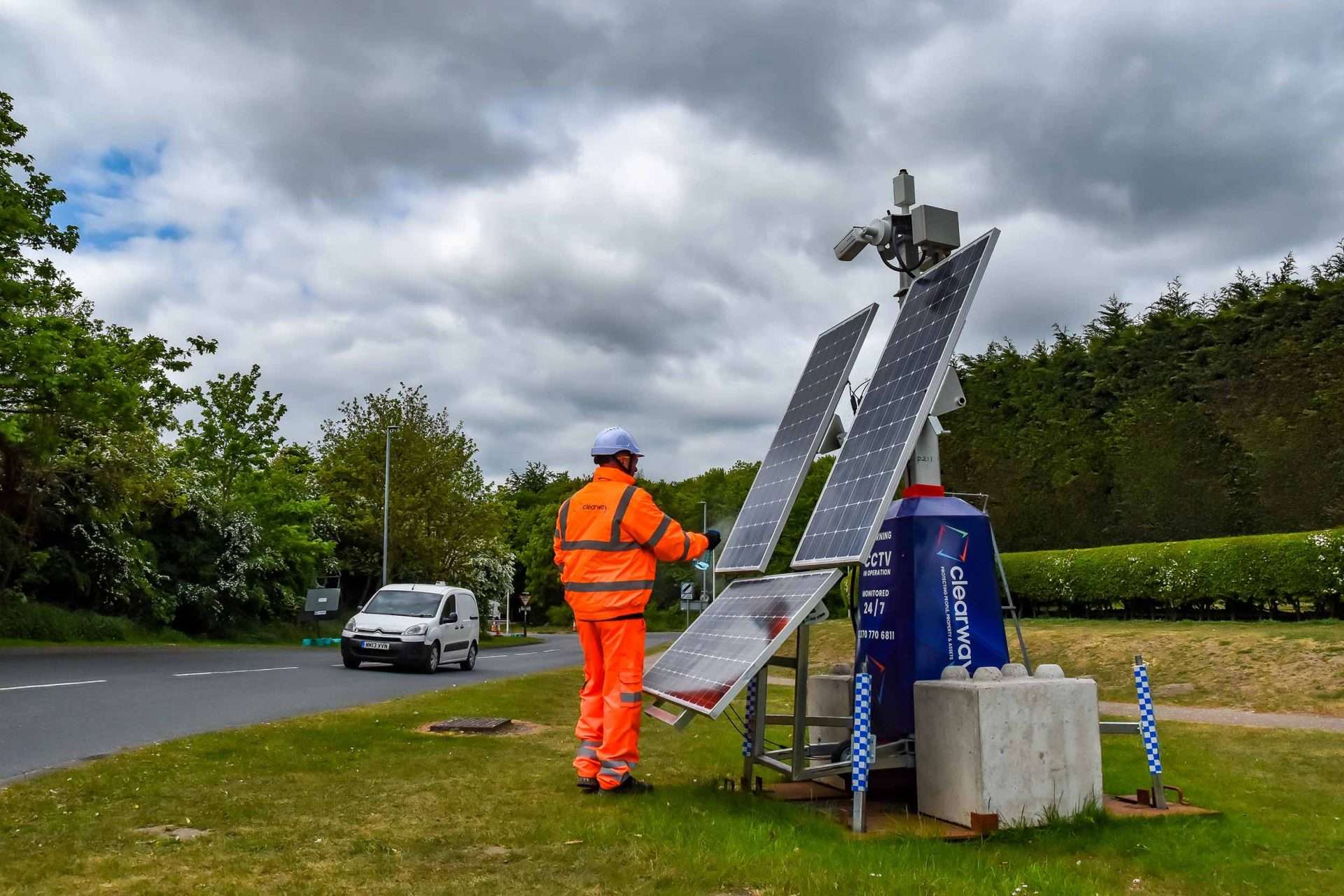
Equipped with a network of sensors, smart perimeter intrusion detection devices, and surveillance CCTV, a virtual fence can detect and analyse a vast array of movements, sounds, and vibrations. This augments security response times and verifies whether an alert is a genuine threat, reducing false responses.
Virtual Fencing: A Snapshot
- Virtual fences leverage a range of surveillance and security devices, including cameras and sensors, to provide an invisible and often large perimeter around outdoor spaces and complex facilities.
- As an invisible boundary, the virtual fence can detect and identify the cause of almost any movement, from an approaching vehicle to an intruder attempting to enter a protected facility.
- Companies and organisations use virtual fencing to improve security responsiveness, mitigate false alarms, and protect perimeters of all sizes from potential threats.
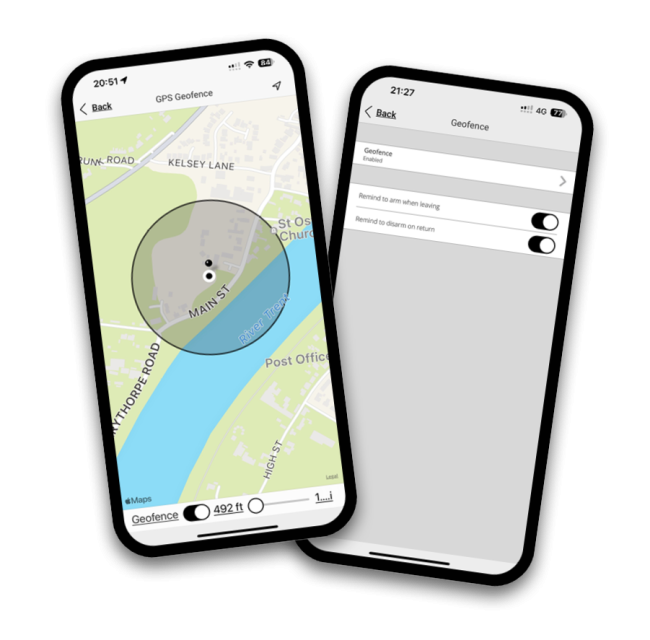
Incorporating Virtual Fencing Into Your Perimeter Security
Conventionally, the only way to protect a boundary and safeguard infrastructure, assets and controlled-entry facilities was to erect a physical fence, wall or boundary line.
A common issue for larger and multi-building compounds and outdoor spaces like development sites and agricultural businesses is that this could be extremely costly and time-consuming.
Although a wall or fence can be effective, there is also the potential for these physical barriers to become compromised. Without a method of detecting movement, such as vibrations caused by a person climbing a fence, there remains the possibility of an undetected security breach.
Virtual fencing is significantly more budget-friendly and can be adapted to detect real-time threats and intrusion attempts. It surpasses the effectiveness of a physical boundary and ensures that any attempts at trespass are immediately identified and investigated.
Depending on the nature of your site or premise and the types of risks and threats you need to protect against, virtual fencing can integrate with:
- Infrared and microwave sensors
- PIDs
- PTZ and AI-enabled CCTV cameras
- Motion detection sensors
- Radar technology
- CCTV towers
- Laser / LED light tech – also known as LiDAR
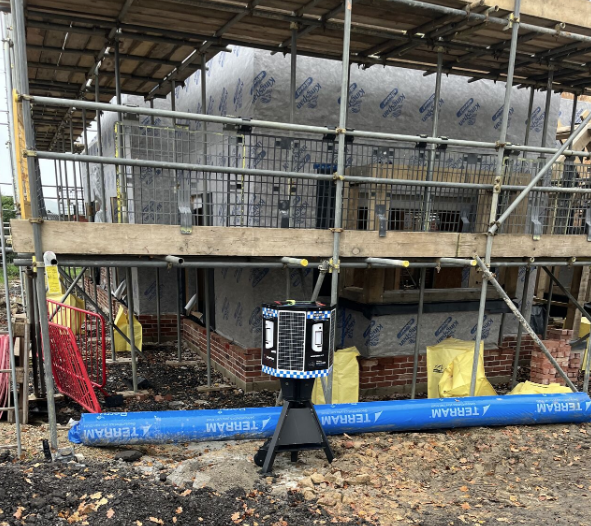
This combination of resources can monitor for any movement and identify with precision where and why an activity is a possible concern. It uses video verification to determine when an alert has been caused by something non-urgent, such as a falling branch or an animal, minimising instances where security teams are alerted unnecessarily.
What Are the Biggest Advantages of Virtual Fencing?
Virtual surveillance is increasingly used in higher-risk environments and within businesses and organisations that need to monitor and oversee larger areas of land or compounds with multiple potential entry points.
For many, the most significant benefits of a virtual fencing solution are:
- Deterring Break-ins and Intrusions: Having virtual surveillance can be more effective than a physical, unmonitored wall or fence, and provides security responders with real-time notifications when a possible security breach is underway – giving them the intelligence to quickly react, address issues or escort a prospective intruder off the premises before they get close to core assets.
- Instant Security Alerts: Rather than waiting for a vehicle or person to activate an alarm or sensor within your buildings, virtual fencing helps you stay ahead of emerging risks. Instant alerts are provided through remote communications, providing immediacy, along with video surveillance captures to help identify the correct response protocols.
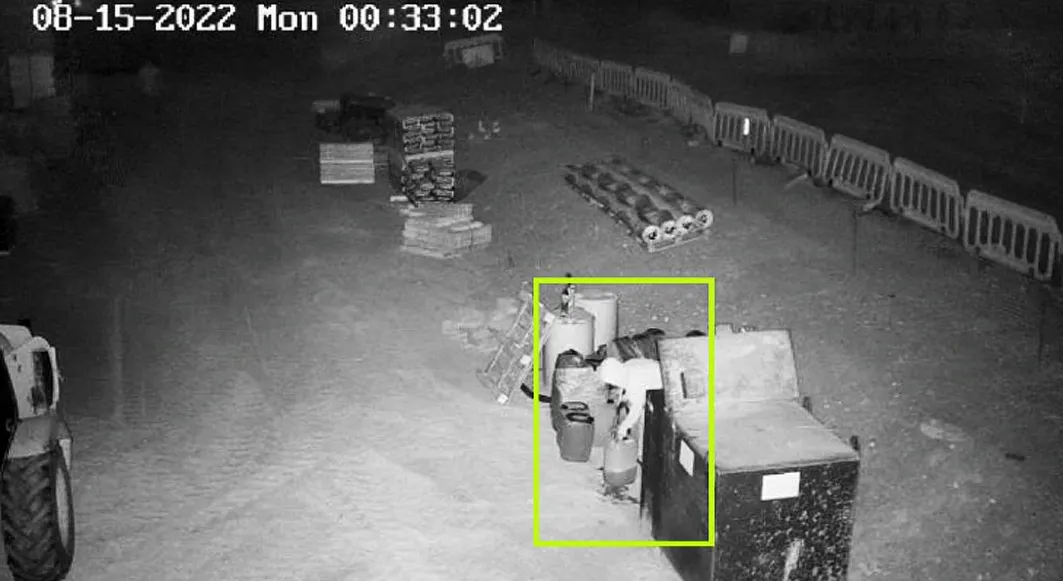
- Verified Alarms: Virtual fencing incorporates leading advancements in intelligent video analytics to ensure responders know whether an alert is genuine and can analyse footage independently to determine the right approach.
The outcomes include fewer false alarms, faster reactions to real intrusion attempts and more targeted responses with full awareness of the location, nature and severity of a threat.
Applications for Virtual Fencing in Security Strategies
Virtual fences are used in an ever-expanding array of sectors and industries. They can be useful for any organisation that needs a fast, reliable way to protect people, data, infrastructure, and assets with a large or complex perimeter or boundary.
While some of the primary applications are in governmental organisations, virtual fencing is also used in the following scenarios:
- Outdoor facilities such as oil and gas compounds, energy substations, wind and solar energy farms and dams, which cover large areas of outdoor ground.
- Construction and development sites, where virtual fencing can provide a temporary or ongoing solution for the duration of work.
- Industrial bases and compounds, including warehousing units, large storage facilities, and substantial outdoor spaces.
- High-risk sites, such as wastewater systems and plants, and sites dealing with waste materials or chemicals.
- Agricultural sites and food production plants.
In any of these settings, virtual fencing can prove a powerful aspect of a multilayered approach to perimeter security. It can provide cost efficiencies and more targeted responses, deter intrusions, and protect perimeters of any size.
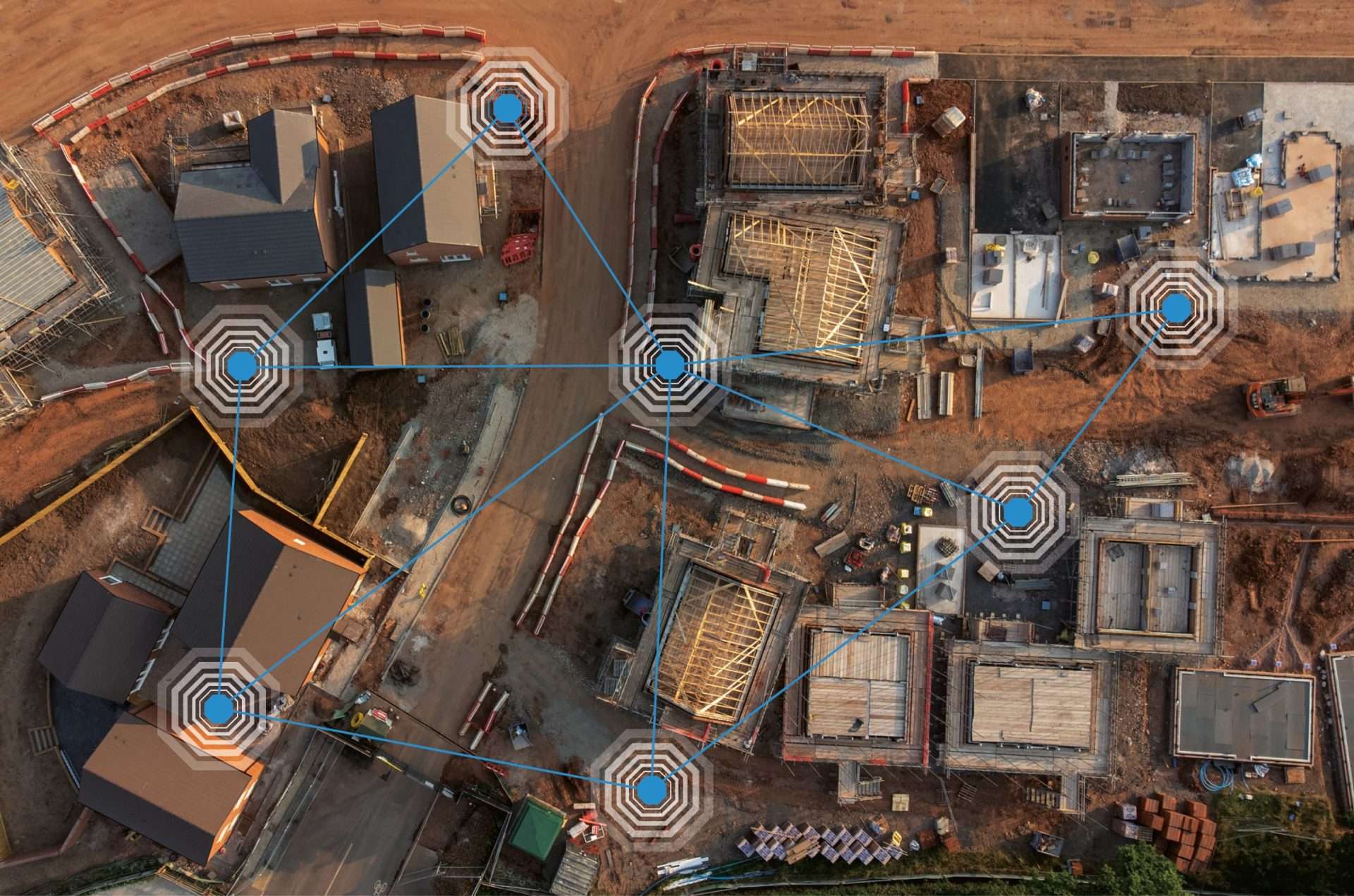
Choosing Between Physical Boundaries and Virtual Fencing
The right options will always depend on your latest risk assessments and organisational objectives.
However, for many, physical walls and fences can only cover so much ground and have limitations, as we’ve discussed, where a boundary wall can contribute to complacency but, in reality, is easily breached.
Virtual fences are ideal for organisations that need an always-on method of detecting threats at any time of day or night and in any weather conditions, particularly where intrusions are more likely to occur when visibility is limited.
Our security consultants and tech specialists can provide further information and guidance on the ideal approach to your boundary security, which may depend on the potential for future changes to the positioning of perimeters, particularly when protection is needed for a finite period, such as during construction works.
Please get in touch at your convenience, and we’ll be happy to discuss how virtual fencing could work for your organisation or enterprise or to schedule a professional, independent risk assessment review to help you make informed decisions.