


As a landlord, investor, or commercial property manager, we hold this truth to be self-evident:
Your clear-cut worst-case scenario is the premises becoming vacant – even temporarily. It costs you money in deferred rental income, but there’s more: unplanned financial outlays due to potential damage and theft can rack up substantially.
Without robust protection and security, owners can pay heavily.
Vacant and Vulnerable? Know Where You Stand
Intruders are smart; they can spot vulnerability at 50 paces.
And, most likely, your building will not be the first one they target. They’re old hands at this game. “Natural” risks are critical, too. Mother Nature has a unique way of wreaking expensive harm through snow, ice, wind and rain. There are also other critical risks, which we’ll include in this article.
So, where do you start, and how do you manage the situation?
Every property is different. Its use and function will be distinct from its neighbour’s; the location, size and contents will also count. We believe you need to know the risks and where they are. In other words, the potential weak spots. Thus, you’ll recognise the best and most robust security measures you can take to safeguard your investment.
Here, we recommend an initial risk assessment, as everything will progress from there.
Proper Prevention Prevents Poor Performance
Clearway provides in-depth security risk assessments, which we’ve explored in depth in a previous article.
We cannot overstate the importance of these.
Why? Because information is power. Quite literally. A risk assessment is an independent review of your vacant factory, warehouse, shop or office premises to determine where, if any the security gaps are. Equally, whether your current safeguarding measures are strong enough.
The result is an easy-to-read yet detailed written report and analysis and your recommended to-do list to reduce and manage threats. With Clearway’s engagement, this isn’t selling anything to you – that would be counter-productive.
However, it will offer food for thought.

So, what are the risks? In no particular order, here are the key hazards faced by unoccupied commercial properties and a couple of bigger-picture problems that could be looming over the horizon.
Squatting
We’ve referenced this issue in some earlier articles, but the uncomfortable reality is that, still in 2024, squatting in commercial buildings of any type is NOT illegal.
However, residential properties are another matter – this has been a criminal offence since 2012.
Therefore, like a TV with the volume and brightness buttons turned up, the problem has intensified. Squatters now target more business-related sites: empty storage facilities or industrial locations are a good example. While we would always extend understanding and humanity to those in need, the fact remains that they can create quite a mess. And, they may be involved in drugs-related or other illegal activity. Not to mention the hazards created by discarded hypodermic needles left behind.
(Incidentally, simply occupying a non-residential property is not illegal. When damage is caused, theft and fly-tipping are involved, the police can intervene.)
Flooding and Water Damage
Water always finds a way, it seems. It has a mind of its own.
And, it wreaks a lot of havoc – or it can do.
Generally, in commercial buildings, there are more water “features” than in those found in homes. And, they’re bigger, so there’s more to go wrong, and on a larger scale: for instance, substantial heating systems and air conditioning. Of note is the location of the toilets in office blocks, for example. They’re often the same layout and place from floor to floor. Therefore, this stacking design can lead to a cascading effect if there’s an incident on the top floor.
Did you know that according to the Association of British Insurers, Escape of Water claims (EoW) are costing UK insurers £2.5 million a day?
Suppose your property is in a more remote location, or you live several miles away without robust management and regular inspections. In that case, the damage may not be attended to for several weeks.
Theft and Vandalism
There are an estimated 165,000 vacant privately owned commercial and business premises in the UK – a surprisingly high number.
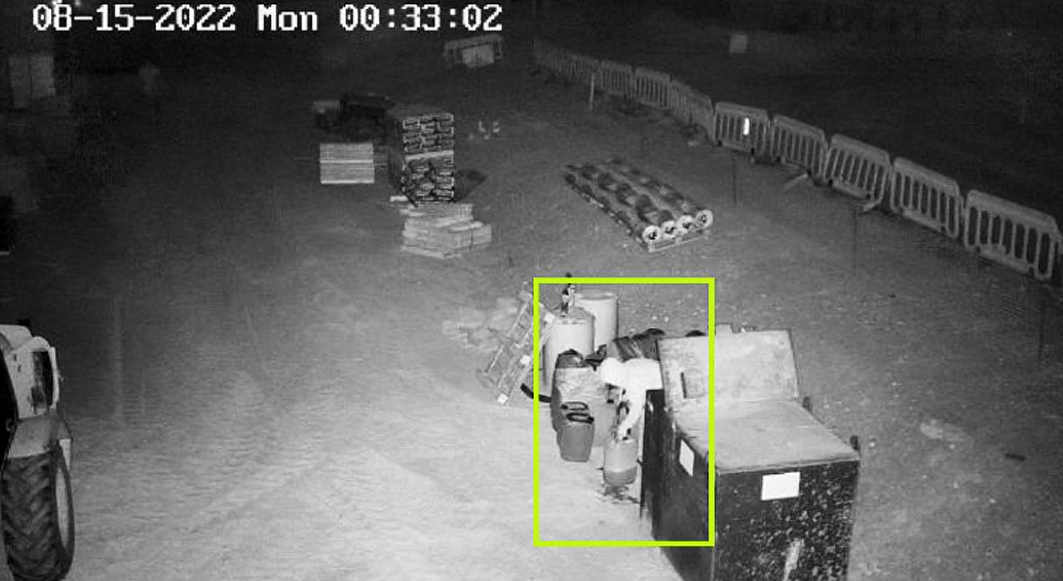
From unpleasant, anti-social graffiti to break-ins, criminal damage and thefts, sites left empty are an easy target. Should windows get broken or the building appear forlorn or unmanaged, a far-reaching siren call of vulnerability could attract all and sundry. These are easy, instantaneous, tell-tale signs that there’s no one there.
Metal theft is an issue, with high prices paid on the black market for copper, aluminium, brass, lead and bronze. As may sound obvious, these materials may not simply be lying around; most likely, they’re part of the fixtures and fittings, and their removal will cause even more harm to the fabric and structure of the building.
However, your roof tiles, landscape stones, doors, timber, and almost anything else not nailed down are also attractive prospects.
Neglect
One day, the property looks fine, and the next – almost overnight – its neglected, mismanaged appearance becomes a big issue. Clearly, dilapidation doesn’t happen this fast, but it’s easy to forget it’s happening. Until that is, maintenance checks fail to occur, property inspections fail to materialise, and everything takes on a faded air of abandonment and neglect.
A lack of care can damage morale in the local community, attract crime, put people at risk and, by and large, look like a giant eyesore. Notably, the building will draw lawbreakers.
Your repair costs could be astronomical to put things right. And, your insurance may be invalid.
Fly Tipping
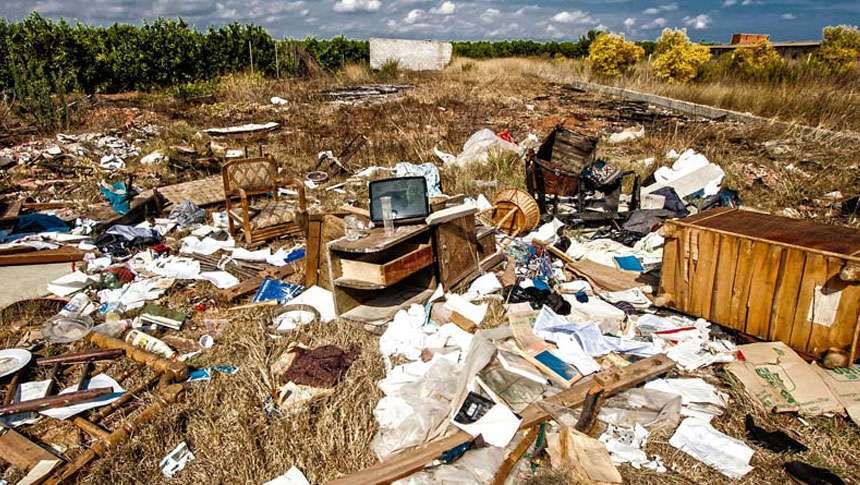
Fly-tipping is gruesome.
Council data suggests that the problem was increasing even pre-pandemic, with 55,000 fly-tipping incidents involving commercial waste in 2020, accounting for 6% of total incidents in England. No doubt, it’s a higher statistic now.
In brief, organised criminals operate waste disposal services for a fee. And, they may have designs on your vacant commercial property. It’s illegal, damages the environment and involves large sums to dispose of safely and legally. Plus, you should know that the Environment Agency will only clear it away if there is an immediate risk to the surroundings and to human health.
Arson
The most common cause of fires in commercial buildings is arson.
It threatens life, destroys assets and affects the local community. Undoubtedly, as there is no one at the property, it will spread quickly, with no alarm raised or control measures implemented.
Other Risks to Know About
The Risk of Insurance Non-Compliance
It’s easy to think that your cover is adequate, only to realise it is anything but – when something awry and you present a claim.
The fact is, property insurance for vacant sites is hard to get, and it’s expensive. Unused locations are considered high-risk. Additionally, your insurer will need evidence that you have taken strong security measures and will continue to do so.
Property inspections are an excellent case in point. Many insurers insist on them. These must be regular, relevant, detailed, and time and date-stamped. There are several best practices and regulatory requirements here, so do check your policy and ask your insurance company for clarification.
The Risk of Litigation
If you are a landlord, a trespasser can sue you if they are injured on an empty or derelict site. You have a duty of care to everyone who enters, even those unwanted incomers intent on damage or theft.
Slips, trips and falls caused by leading roofs or spilt fluids, bolts protruding from floors, boards and planks left lying around, pigeon or rat droppings, and even Legionella will be red flags.
And, if there’s an accident, they could land you in court.
So, What’s The Good News?
It’s not all doom and gloom. Far from it, in fact.
There are plenty of actions you can take, and in our opinion, forewarned is forearmed. You need to know where you stand and work forward from there.
Clearway offers the following high-quality security solutions:
- Alarms
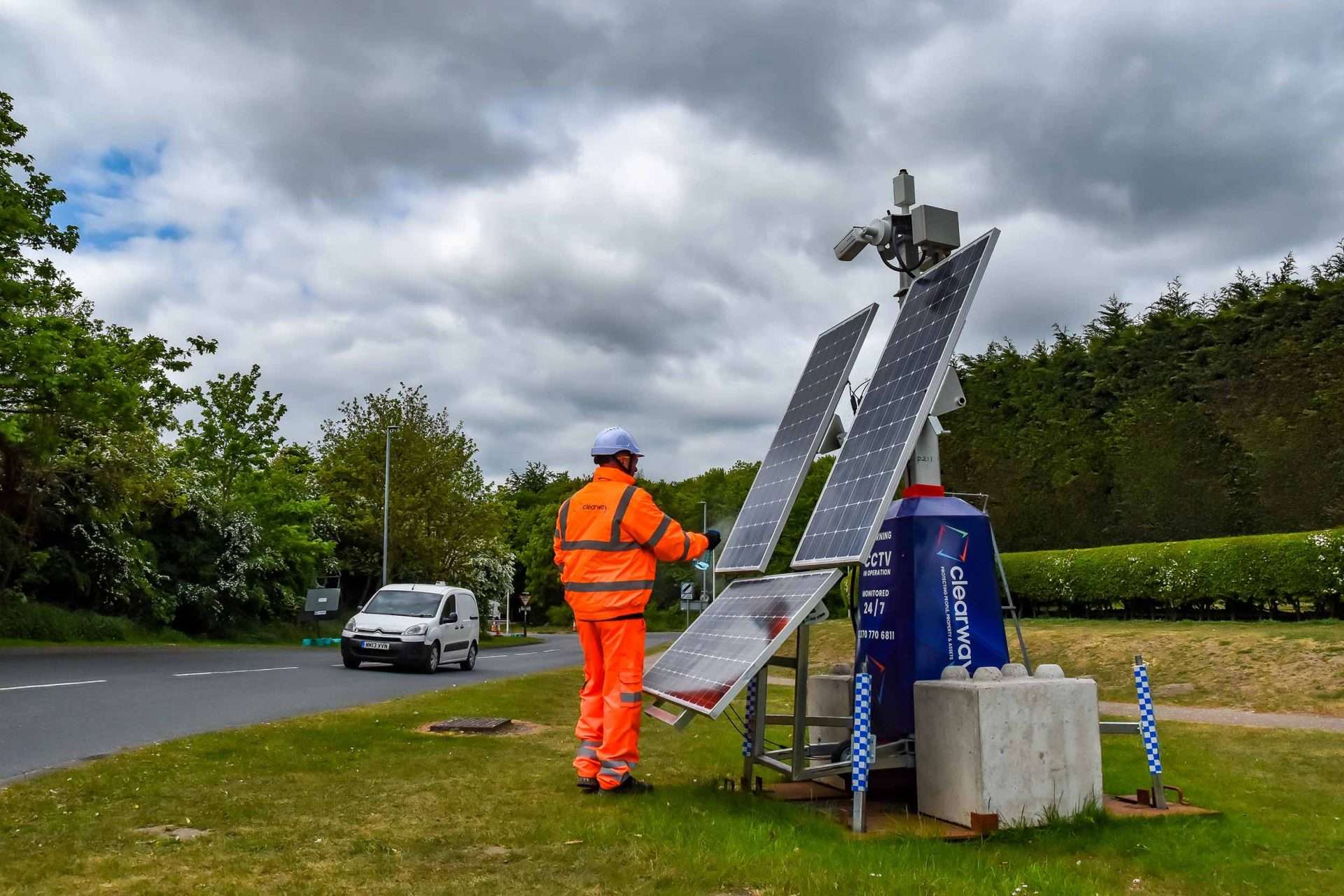
- CCTV
- Fire Alarms
- Security Windows and Doors
- Property Inspections
- Security Guards and K9 dogs
- Keyholding Services
- Hazardous Waste and Fly-Tipping Removal
- Perimeter Security
But we’ll return to the beginning:
Start with a risk assessment. Your consultant has the experience and skills you need to review and analyse your whole premises from the outside in. They see everything. They miss nothing.
They’re your fresh pair of eyes in the war against threats and risk. Don’t take a chance. Play safe with Clearway.

Gideon Reichental 
Vacant Property Security Consultant
Gideon is an experienced property specialist with a commitment to excellent customer service and support. With over eight years dedicated to the niche field of vacant property security and services, Gideon has been at the forefront of developing and implementing best practices and successful strategies for safeguarding vulnerable properties, demonstrating a profound understanding of the complexities involved. His hands-on experience includes managing portfolios of over 200 vacant properties directly, alongside senior management roles overseeing broader portfolios that encompass more than 2000 properties.
Related content
Sat Feb 14 2026
Mon May 5 2025
Fri Jan 14 2022