

Essential, But Are You Resentful?
Insurance is, in many ways, a bit of a grudge purchase.
Whatever you need it for – your car, your home contents, or for just-in-case or longer-term health scenarios, you know it’s a good idea. Yet, being super-sensible regarding insurance doesn’t exactly bring you unbridled joy.
The truth is that you only need it when you need it. And then, you could really need it.
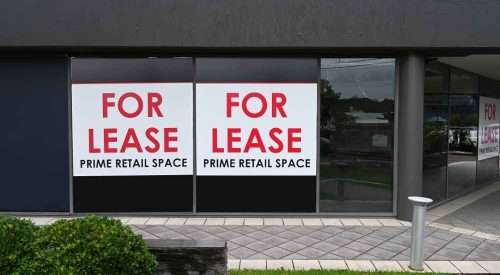
It’s no exaggeration to say that not being financially protected could spell complete disaster. Of course, the same applies to vacant commercial property insurance, but perhaps on a larger scale. The right policies safeguard your investment, shielding landlords from financial losses due to the risks linked to empty properties.
And there are risks. Significant ones, in fact.
Left to its own devices, as it were, your factory, warehouse, office or retail premises is defenceless against intrusion, vandalism, squatters, arson and every sort of nefarious, illegal activity.
Should any of the above happen, commercial insurance can cover the costs of repairs, which can be exceptionally high.
Everything You Need To Know
Therefore, forewarned is forearmed. This article is all about insurance for unoccupied or vacant commercial properties and how to achieve compliance.
Do be aware that we’re not insurers and, as such, are offering general rather than specific information. Insurance companies sell a wide range of policies to suit specific needs, and they aim to be flexible, so we would advise that you seek qualified guidance.
However, one thing we can most definitely say: Clearway is proud to provide a full suite of insurance-compliant products and services.
They’re designed to fortify and defend your vacated property and, wherever possible, ensure that you retain the total value of your assets. A Clearway consultant will conduct a thorough security risk assessment, which enables us to recommend the best, highest-quality security procedures to meet the needs of the premises and your insurer’s “rules”.
The team will install and maintain everything, too.
The result? Your building – secure and safe. Your policy provider – happy.
Let’s start with the basics.
Is Commercial Insurance for Vacant Properties a Legal Requirement for Landlords?
The answer may surprise you: No, not always.
If you own the building outright, you are not legally required to have insurance – unlike owning and driving a car, for instance. While we think that neglecting cover would be a grave mistake, it’s not a legal proviso. However, it all looks very different if you have a commercial mortgage.
To qualify, you must put proven stringent security measures in place; and they must meet stricter standards than those for an occupied commercial property.
Equally, you will likely need to inform your insurance company in advance of its vacant status – although this notice period will vary.

What Can You Get Cover For?
Typically, you can find policies to protect your asset against the following:
- Fire, lightning, storms, explosions, and earthquakes
- Fallen trees
- Subsidence
- Vandalism, theft
- Property Owners’ Liability (risk of injury to third parties)
And What’s Not Covered?
- Wear and tear
- Any tenants’ property left there, such as stock or furniture
- Damage caused by vermin and pests or faulty build design
What Insurance Companies Will Ask You
In an ideal world, insurance offers peace of mind and financial protection.
Nevertheless, your chosen insurer would prefer, if at all possible, to hold onto as much of their money as possible. So, to comply with lender requirements, the underwriting questions coming your way are in-depth. It’s all about analysing risk, with the cost of the policy reflecting this.
Aside from its location, age, size and construction type, you will also be asked why the property will be empty. Also, for how long, and what will happen to the utilities, as there’s a possible issue here.
In addition, whether the area attracts crime and who the site is likely to attract from a negative point of view – squatters, young people, etc.
Your broker or insurer will need details about how you will manage the empty property – regular inspections, collecting the post, recording and controlling keys, maintaining the site’s cleanliness – and much more.
As a landlord, you are responsible for the care and protection of third parties, such as tradespeople, surveyors, employees, estate agents – and even children, who may not realise the danger they are in. Intruders, however unwelcome, are also in your care, so prepare to deal with potential risks to visitor safety and well-being risks in a fair amount of detail.
Finally, have you made a previous claim? If so, they’ll want to know all about it.
Most importantly (and this is where Clearway’s expertise adds value), you will definitely need to confirm the security measures that will be firmly in place. Here, you will need to consider, in equal measure, monitoring, deterrence and the prevention of unauthorised access.
Actions for Insurance. It’s Time to Get Compliant
Ask us about:
CCTV
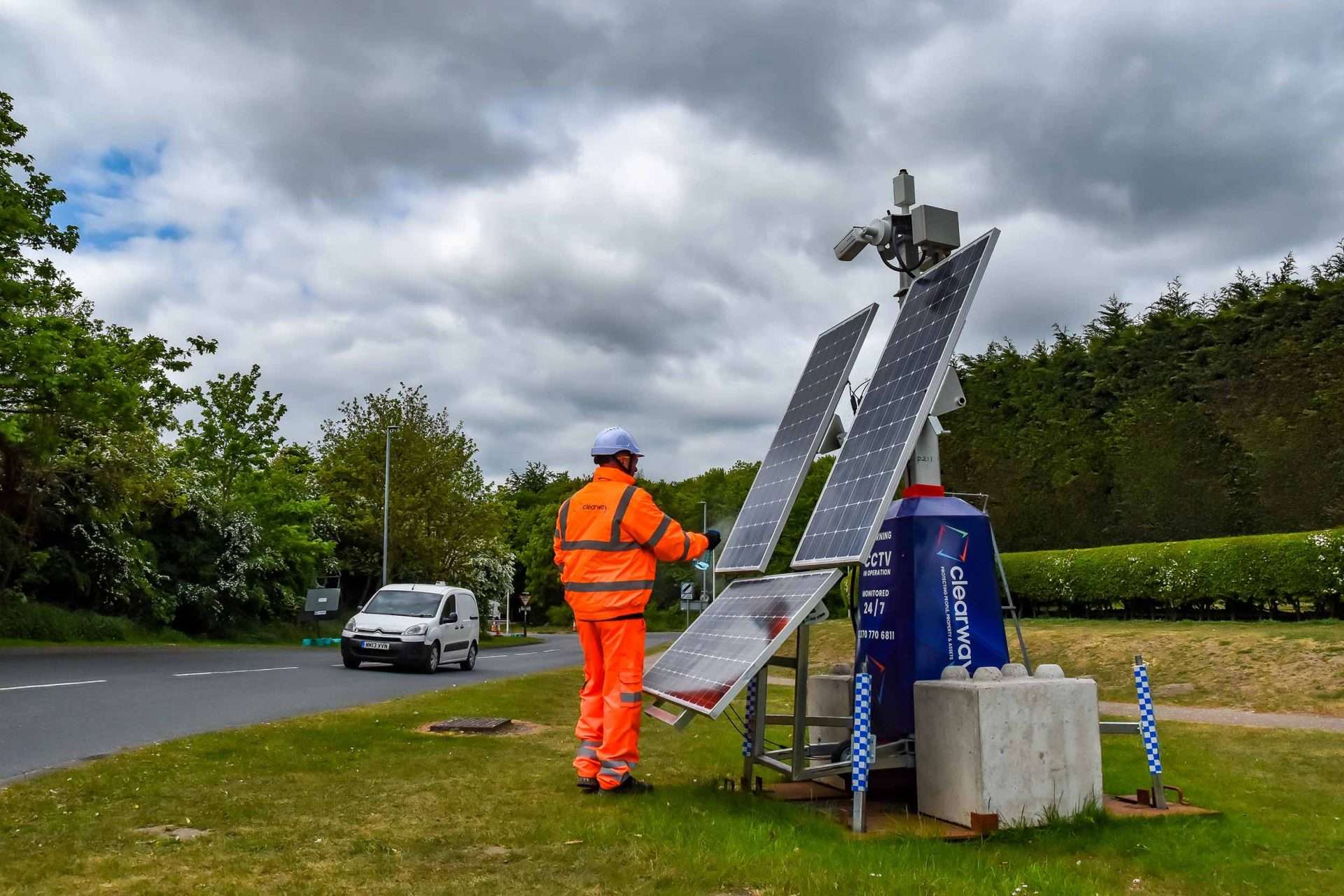
Mounted high up on the property or mobile towers, CCTV cameras work 24/7 to monitor activity. They pan, rotate, focus and record events in super-high quality. And, they can be set up to emit a deafening noise, sending any intruder scuttling back the way they came.
Trained staff at an Alarm Receiving Centre receive the images and can respond accordingly.
Steel Screens and Steel Sheets
Screens fitted to the outside of a property, completely covering each window and frame, are impenetrable. Similarly, steel sheets can be cut and fixed to unusual or awkwardly shaped openings. Nobody is getting past these.
Wireless Alarm Systems
Ideal where there is no phone line or mains power, these high-standard products detect intruders or fire, with instant alerts to our NSI Gold Standard monitoring station. After verification, the team will advise the emergency services for immediate action.
In most cases, property owners will need CCTV, as visual evidence will be required.
Security Guards and K9 (Dogs)
Security guards manage empty construction sites, retail stores, public buildings etc. And they do it extraordinarily well. They provide an essential human touch, not only in observational skills but also in people-handling skills, should they encounter trespassers.
Trained dogs can indeed be Man’s Best Friend, but these incredible animals aren’t pets when they have a job to do. Late-night prowlers in and around your commercial property will not wish to encounter security dogs like these. They’re a ferocious visual deterrent, too.
Property Inspections
As a landlord, you may be required to ensure that someone inspects your unoccupied property, perhaps once a week.
This outstanding service leaves no stone unturned. Clearway’s property inspections will fully meet your insurer’s requirements through external and internal checks and thorough, evidential reporting. Not to mention prompt alerts to recommend immediate or deferred remedial action.
For further insurance-proof expertise, Clearway also offers concrete blocks (ideal for your perimeter), video alarms, vacant property doors, and services for fly-tipping and waste clearance.

Some Final Useful Tips From Clearway
Obviously, you will need to be adequately insured. But, numerous pitfalls are out there, just waiting for you to fall into them. Be aware of the following:
- Generally, due to significant risk elements (hazardous materials, etc) factories attract higher insurance costs, with shops and offices incurring the lowest.
- Many insurers aren’t terribly keen to offer cover for vacant commercial properties. In fact, it’s quite hard to obtain. And, premiums can be much higher than for occupied properties.
- However, your quote may appear astonishingly reasonable. Don’t be sucked in and sign on the dotted line until and unless you have read the small print. You may find that the cover you thought comprehensive has many, many holes.
- It’s worth repeating that, in many cases, your security requirements may be somewhat demanding to achieve insurance compliance. If you’re unsure where to start, don’t risk falling foul of the process and being unable to claim. You need value for money and industry know-how.
Get in touch with Clearway for practical, expert advice to protect your bricks and mortar in the best way possible.

Gideon Reichental 
Vacant Property Security Consultant
Gideon is an experienced property specialist with a commitment to excellent customer service and support. With over eight years dedicated to the niche field of vacant property security and services, Gideon has been at the forefront of developing and implementing best practices and successful strategies for safeguarding vulnerable properties, demonstrating a profound understanding of the complexities involved. His hands-on experience includes managing portfolios of over 200 vacant properties directly, alongside senior management roles overseeing broader portfolios that encompass more than 2000 properties.
Related content
Vacant Property Insurance Compliance
Sat Sep 7 2024
Pre-Risk Survey for Insurance Companies
Fri Oct 27 2023
Mon May 5 2025