


A lone working risk assessment identifies and controls hazards for employees working alone, focusing on the job, environment, and people to prevent harm from things like violence, isolation, accidents, or health issues, ensuring they have support and emergency plans.
Lone working is far from rare, with the British Safety Council reporting that as many as a fifth of all working adults are always or sometimes considered lone workers. The Health and Safety Executive (HSE) defines as a person who is working by themselves and without any close supervision – this might cover a broad range of roles, from construction workers to healthcare staff, delivery drivers, security guards, and retail assistants.
Employers and lone workers both have duties of care to ensure that working arrangements aren’t putting anybody at risk.
To help any organisation unsure about their mandatory obligations and the measures they are expected to implement to protect lone workers, we’ve collated a detailed guide to the legislation, lone worker risk assessment process, and policies businesses should have in place.

Protecting Lone Workers: Quick Facts
- UK-based businesses that have staff working alone, in remote areas, or in isolation are required to protect their personnel – this is a legal obligation, and there is no space for lone workers to be left vulnerable or exposed.
- Compliance is incredibly important, and businesses may be expected to demonstrate they have effective lone working policies, have carried out up-to-date risk assessments, and have taken reasonable steps to mitigate identified risks.
- A lone worker risk assessment should be comprehensive and identify as many risks as possible.
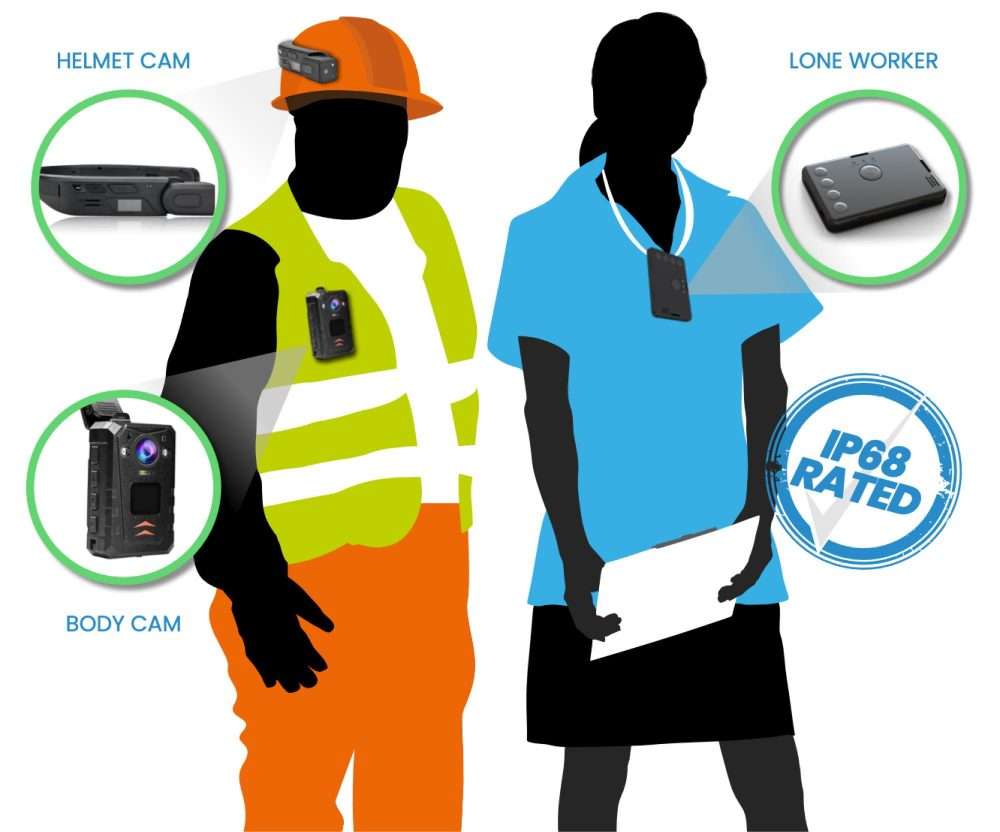
- For many businesses, advancements in AI-enabled and automated security have made regulatory compliance for lone workers simpler, with options such as bodycams, fall detectors, GPS devices, and two-way communication systems.
Rules and Regulations for Businesses Employing Lone Workers
The specific legislation that businesses are required to adhere to may depend on the nature of the role where a person is lone working, but the primary laws relevant to lone worker safety are as follows:
- Health and Safety at Work Act 1974: All employers have a legal duty to safeguard the health, safety, and general welfare of every employee.
- Management of Health and Safety at Work Regulations 1999: Businesses must complete sufficient risk assessments and show that they have taken action to reduce, remove, or lower any risks identified.
- The Reporting of Injuries, Diseases and Dangerous Occurrences Regulations 2013 (RIDDOR): Companies are required to report specific types of injuries, incidents, accidents, and near-misses, including those related to lone workers.
Employers must ensure they understand how these rules apply to their businesses and the repercussions of non-compliance, at which point additional legislation, such as the Corporate Manslaughter and Corporate Homicide Act 2007, may come into play.
Why Employers Are Expected to Have Lone Working Policies and Risk Assessments
A lone worker policy is a document that should be updated periodically or whenever anything changes, and that sets out a structured approach to lone worker safety. During a health and safety inspection, the lone worker policy may be reviewed to ensure it meets the required standards.
Policies provide details about how the business manages these aspects:
- General lone worker management – why the policy has been developed, who it applies to, and why it is relevant.
- Responsibilities of managers, supervisors, employers, and lone workers themselves.
- Procedures related to lone worker risk appraisals, incident reporting, and communicating with lone workers during each shift or working day.
- Responses to emergencies – how alarms can be raised, in what situations, how the employer will react, or the response mechanisms they’ve put in place.
Importantly, policies aren’t documents a business writes once – they need to be monitored and updated, especially if working conditions change or lone workers are asked to work in different settings or take on new roles.
What to Include on a Lone Worker Risk Assessment
Our risk assessment process is comprehensive and designed to identify any and all issues, security gaps, or potential scenarios that the employer needs to address, even if they’ve never arisen before. This involves:
- Identifying issues and risks, and any situation or incident that could impact the safety or well-being of the lone worker.
- Measuring that risk, determining which are urgent and severe, and those that are less serious but still need to be controlled.
- Recommending solutions, from wearable safety devices to 24/7 panic alarm monitoring, auto fall detectors, and GPS systems.
- Continuing to update risk assessments as often as necessary, or when changes occur that may require new, separate, or additional controls.
Reviewing risk assessments is vital because risks rarely remain static over time. For example, a lone worker operating on a construction site might be exposed to risks around working at height during project phase one, but be exposed to different risks related to heavy machinery during the next phase.
| Assessment Area | What to Assess | Key Questions to Ask | Controls / Evidence to Record |
|---|---|---|---|
| Worker Details | Role, experience, training | Is the worker competent and trained for lone working? | Training records, inductions, certifications |
| Nature of Work | Type of tasks undertaken | Are tasks routine, hazardous, or high-risk when alone? | Task descriptions, method statements |
| Working Environment | Location and setting | Is the location remote, isolated, or public-facing? | Site maps, access details |
| Time of Work | Hours and duration | Is work carried out at night or for extended periods? | Shift patterns, rotas |
| Level of Isolation | Degree of separation | How long could someone go without contact? | Check-in schedules |
| Health & Fitness | Physical and mental suitability | Any medical conditions affected by lone working? | Occupational health confirmation (where appropriate) |
| Personal Safety Risks | Violence, aggression, abuse | Is there risk from members of the public or intruders? | De-escalation training, panic alarms |
| Environmental Hazards | Physical site hazards | Slips, trips, confined spaces, weather exposure? | PPE, site safety controls |
| Equipment & Tools | Machinery and equipment used | Is specialist equipment being used alone? | Equipment checks, lock-out procedures |
| Communication | Ability to stay in contact | Is there reliable phone or radio signal? | Lone worker devices, backup comms |
| Monitoring & Supervision | Oversight arrangements | How is the worker monitored? | Check-in systems, GPS tracking |
| Emergency Procedures | Response to incidents | What happens if the worker is injured or unresponsive? | Emergency escalation plan |
| First Aid | Immediate medical response | Does the worker have first aid training/equipment? | First aid kits, training records |
| Fatigue & Stress | Mental and physical strain | Could fatigue increase risk? | Break schedules, workload limits |
| Travel & Transport | Journey risks | Is travel alone or to high-risk areas? | Journey planning, vehicle checks |
| Lone Working Technology | Safety systems in place | Is technology used to protect lone workers? | Wearables, apps, man-down alerts |
| Reporting & Escalation | Incident reporting | How are near misses or incidents reported? | Reporting procedures |
| Review Frequency | Ongoing suitability | How often is the assessment reviewed? | Review dates, change triggers |
The Importance of Lone Worker Risk Assessments
Risk assessments are mandatory and enforced by the Health and Safety at Work regulations we’ve mentioned – with businesses required to complete evaluations that identify potential risks and assign a ‘score’ indicating how likely the risk is and how serious the outcomes might be.
These can be considerable, with HSE data showing that, according to RIDDOR reporting:
- 32% of non-fatal accidents involve slips, falls, or trips
- Heavy lifting and carrying cause 17% of incidents
- 11% of reports occur after a moving object has hit a person
- 8% involve falls from height, and a further 8% relate to violence
Organisations can appoint a senior member of staff, manager, or supervisor to conduct risk assessments and take appropriate action. Still, it’s advisable to outsource this to an independent professional team if there are serious risk factors or if the company engages in high-risk activities, including lone working.
That is because it can be easy to overlook vulnerabilities, such as having no way for a lone worker to call for help during a night shift, because this is simply a part of the way the business has always worked.

Find out more about Lone Worker Devices
The right actions following a lone worker risk assessment will depend solely on the outcomes and the types and severity of the threats identified, but there are many potential resolutions that can make a significant difference to lone worker safety and employer compliance.
For further information, we welcome you to visit our Lone Worker Device page or get in touch with the Clearway team to discuss your current policies and setup, and to arrange a professional risk assessment.