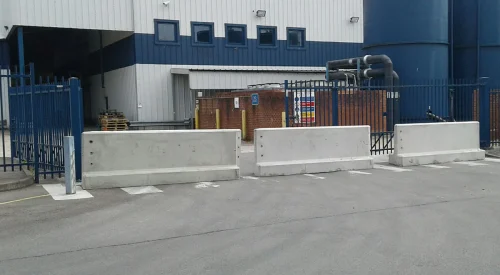



Warehouse managers and owners juggle a number of security threats. Premises on industrial sites with high-value inventory and equipment are often exposed to targeted intrusions, break-ins, vandalism, and arson.
For many of the warehouse and logistics companies we speak with, warehouse security can be a minefield. It’s often hard to know for sure that all risks are covered and that the setup meets insurance requirements.
To make things easier, we’ve put together a simple checklist with key security measures we recommend to help keep your warehouse secure.
Key Takeaways:
- Warehouse Security Is More Than Just Locks and Cameras – Effective warehouse security requires a layered approach — from perimeter protection and access control to intelligent CCTV systems and 24/7 monitoring. Each element plays a critical role in deterring, detecting, and responding to threats.
- Regular Reviews Are Essential – Security risks evolve, so it’s vital to regularly audit your setup, review staff training, refresh fire safety plans, and ensure all protocols and permissions (like keyholding and entry codes) are current and clearly understood.
- Smart Tech Enhances Safety and Compliance – Modern surveillance and access solutions, powered by AI and automation, help detect suspicious behaviour early, reduce human error, and support compliance with insurance and data protection regulations.
A Step By Step Guide to Warehouse Security
1. Review the Date of the Last Security Audit and Refresh if Necessary
Periodic security risk assessments and audits are essential. They ensure that any changes in your security profile or variations in the likelihood of a risk emerging are addressed – without complacency about whether existing controls will remain suitable.

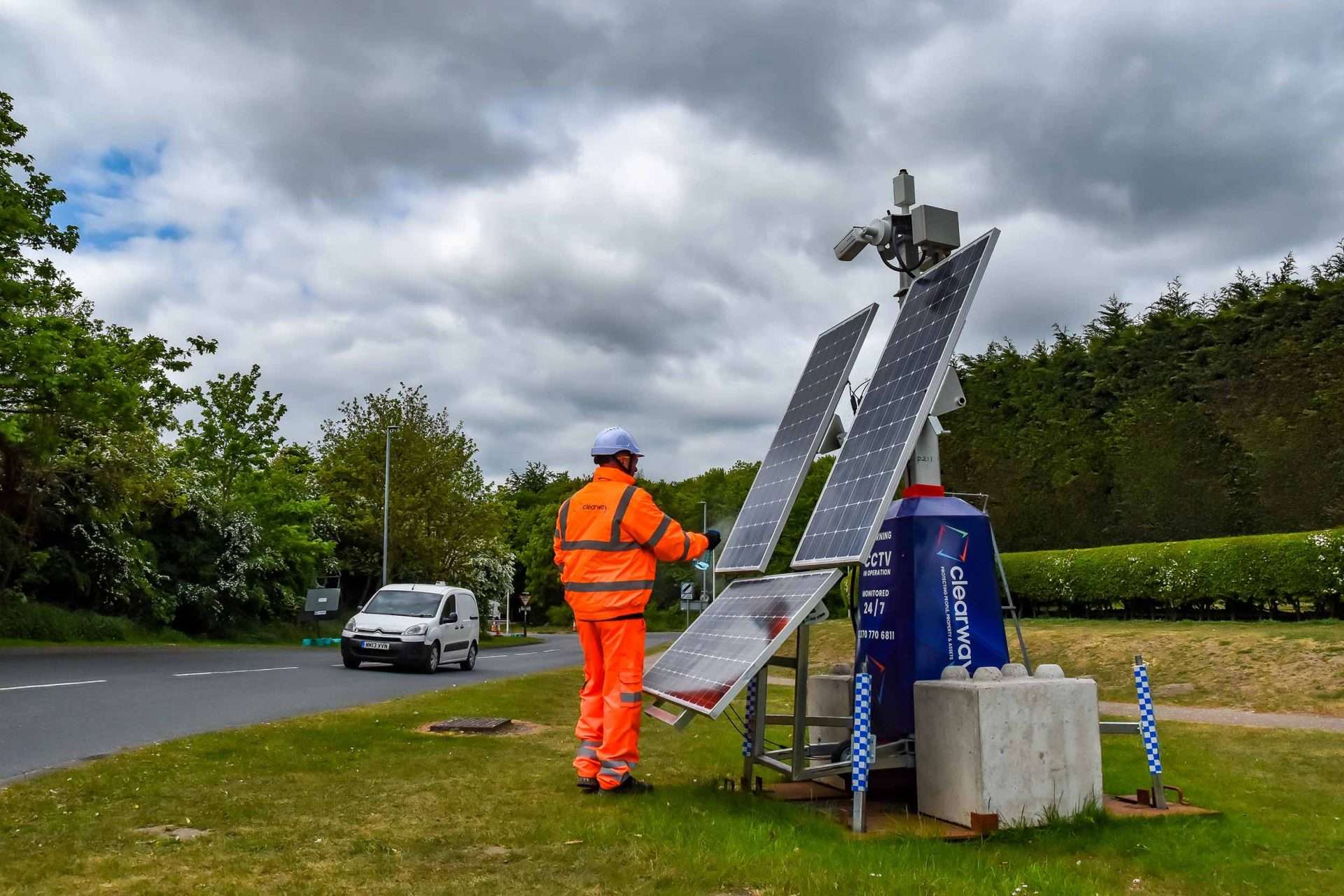
2. Mitigate Site-Wide Warehouse Risks With Strategically Positioned CCTV Surveillance
Commercial CCTV cameras are widely recognised as one of the best deterrents against criminal activity for warehouses. We can recommend:
- Advanced CCTV systems with the functionality to cover complex warehouse layouts, blind corners and larger land between warehouse buildings and perimeters.
- Ideal placements and configurations to ensure cameras offer full coverage.
- Camera technologies, such as bullet, PTZ and dome cameras.
- Signage and CCTV policies to comply with data protection and employee privacy regulations.
The right cameras, configurations, and systems may differ between warehouses. Still, the presence of surveillance, clear signage warning of live recording, and a combination of cameras for indoor, outdoor, and wide-scale coverage can significantly improve your security risk profile.
You can read more about warehouse CCTV here.
3. Upgrade Camera Systems to Incorporate Intelligent Analytics
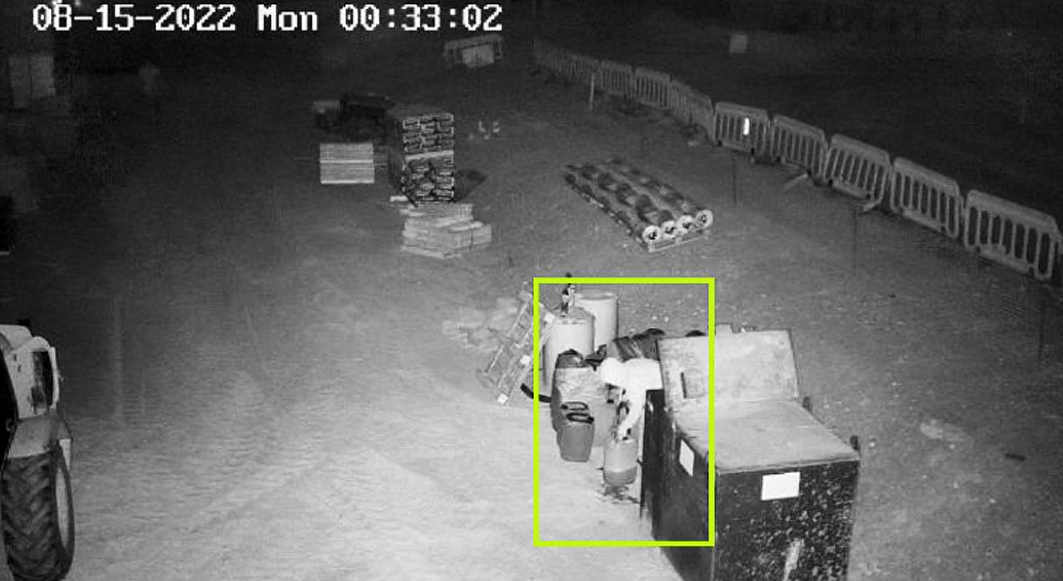
AI is changing the security landscape as it is across all industries. The next wave of CCTV systems includes next-gen tech that can detect suspicious activity, raise alarms proactively, and alert supervisors and security responders when there is an elevated risk of a threat.
AI-enabled cameras can, for instance, use facial recognition to identify when a person is loitering, returning repeatedly, or a car has been parked for an unusual amount of time.
They can also cross-check activities and patterns against the norm to pinpoint movements requiring investigation.
4. Install access controls to monitor movement
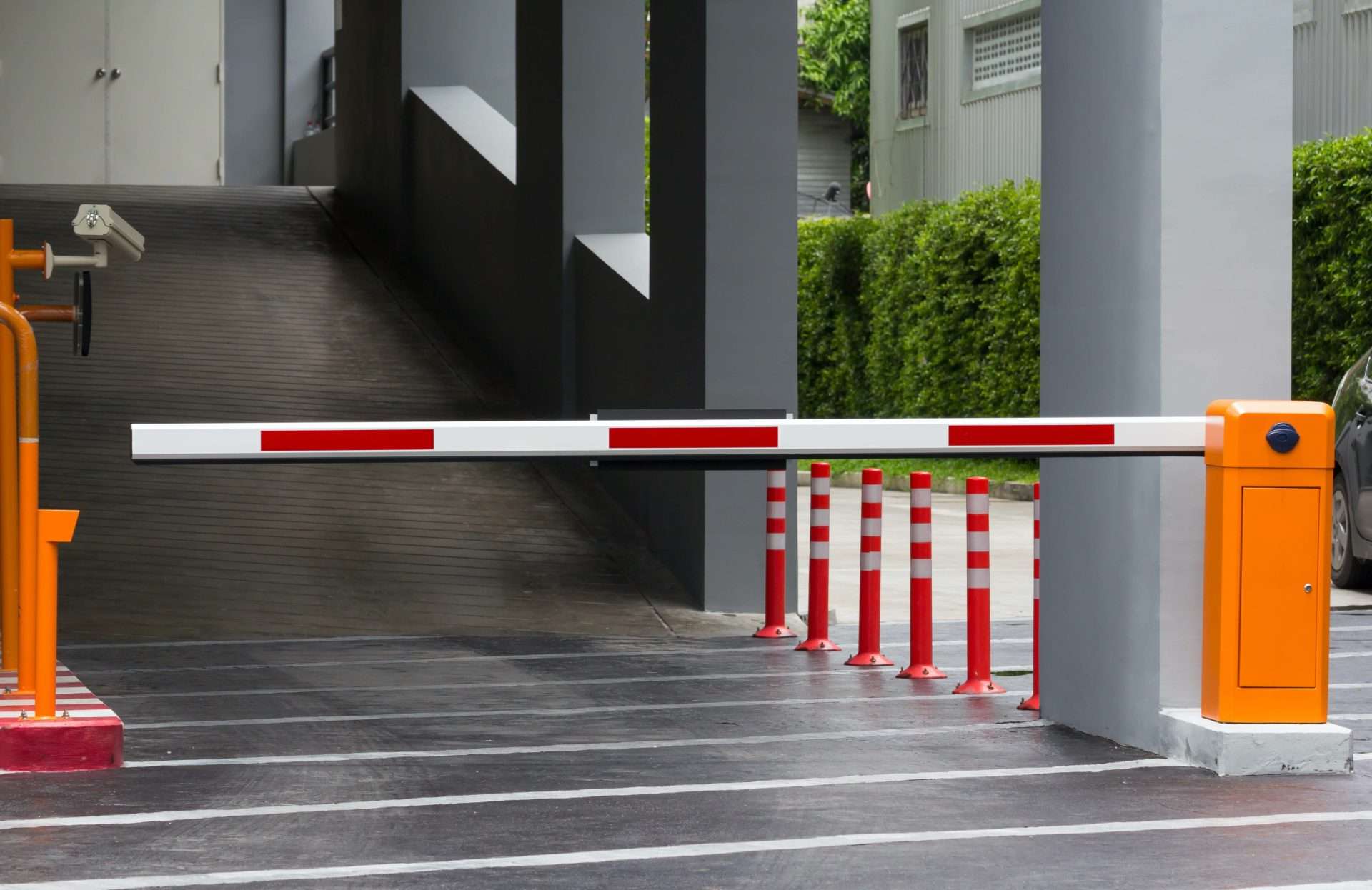
Access controls reinforce the effectiveness of physical doors, locks, electric fences, bollards, and biometric entry systems.
They use facial recognition, fingerprint and iris scanning, security fobs, keycards and tags, and automatic number plate detection (ANPR) to verify the identity of any person or vehicle attempting to enter the warehouse site.
These systems are ideal for warehouses requiring 24/7 access while ensuring that any unknown person or vehicle that hasn’t been registered on your secure database cannot enter the warehouse without having their identity and credentials checked.
5. Make sure your perimeter is monitored and secure
One of the common mistakes in warehouse security is to assume that locks will be sufficient. In reality, perimeter security is just as vital because:
- Once criminals have accessed a site, they are less likely to be detected or seen by passersby or perimeter security patrols.
- Early detection of trespass attempts, such as cutting fences or climbing gates or barriers, can prevent crimes before they happen.
- Instant notifications direct responders to the exact position of the intrusion attempt, reducing the likelihood of trespassers succeeding in a planned theft.
Secure perimeters with appropriate signage act as a strong deterrent, and devices like our autonomous, rapid-deployment Perimeter Intrusion Detection devices (PIDS) provide continual, smart protection against all threats.
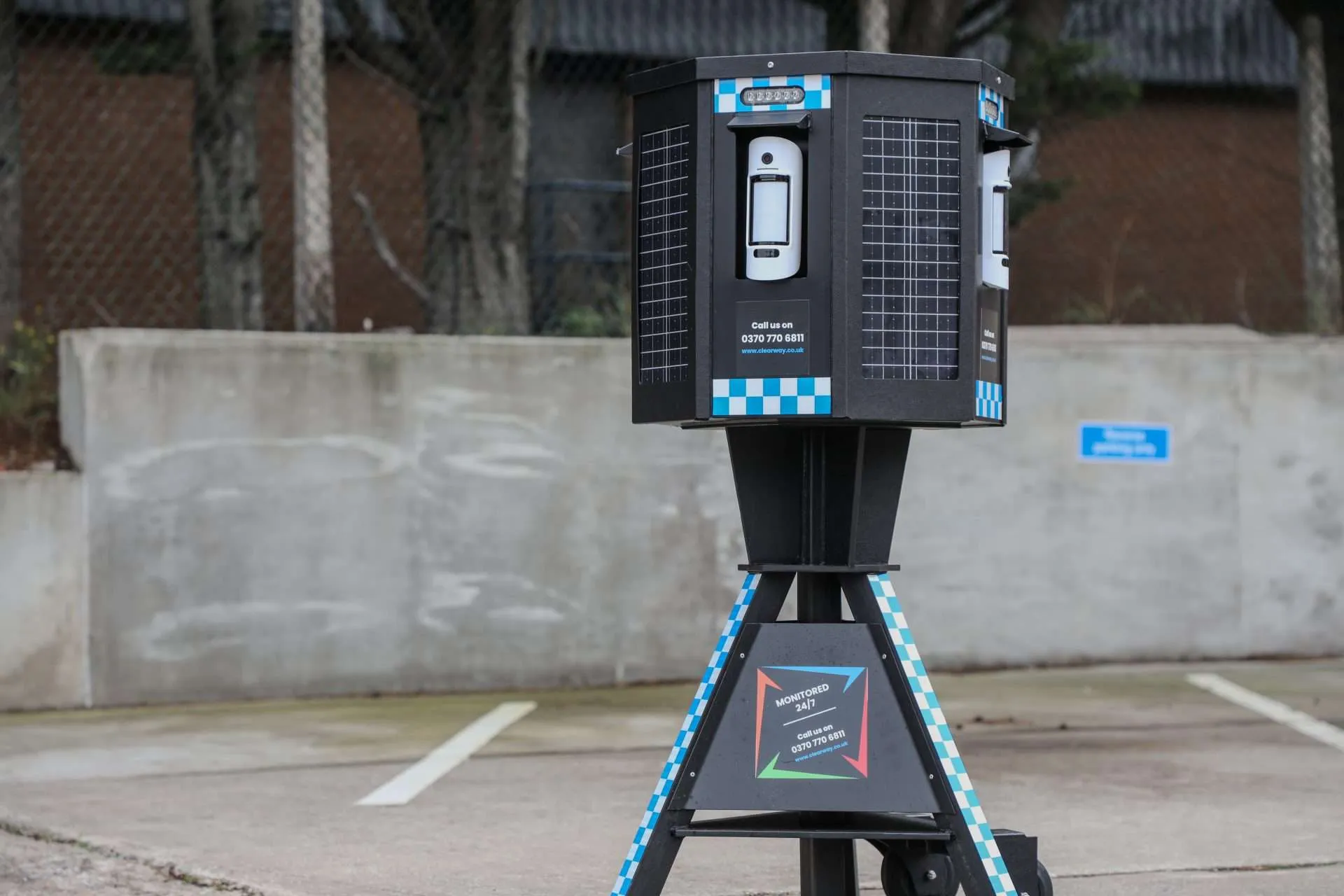
6. Identify Zones or Entrances That Would Benefit From Automatic Security Lighting and Movement Sensors
CCTV cameras are often equipped with low-light sensors and infrared, but installing property security lighting that is visible to the naked eye remains a good idea. This deters thieves and opportunist intruders looking for ways to enter facilities undetected.
Security lighting, ideally fitted with automatic motion sensors, can be used around entrances, perimeters and concealed spaces, augmenting the way technological and physical security safeguards perform.
7. Review the Standards of Staff Security Training and Latest Refresher Courses
Even the most advanced approach to security can be impacted by human error, a lack of knowledge or simple mistakes such as leaving a window unlocked or forgetting to arm a sensor.
Checking when your workforce last received training and updating this where necessary may be pivotal, ensuring all colleagues understand:
- How and where security controls are in place.
- Their responsibilities for locking windows, closing fire doors or complying with site security policies.
- Indications of concern or signs that they should report a potential issue, threat or developing situation to a manager or security responder – and know the protocol for logging a problem or reporting a possible issue.
- The right response in an emergency, such as using fire alarm call points, raising an alert, or evacuating the warehouse premises.
Vigilant, trained staff can enhance the way your warehouse security operates and ensure there is a minimal likelihood of security challenges being escalated by human error.
8. Integrate 24/7 Monitoring for Continual Supervision
Clearway’s Alarm Receiving Centre (ARC) is on standby 24/7, 365 days a year, monitoring alarms, alerts, and notifications from every device, from panic alarms and fire systems to CCTV security networks.
Our role is to log and investigate every potential security threat, verifying the location, nature, and severity of the issue and activating your protocols accordingly—whether evacuating the warehouse, contacting the police or emergency services, or liaising with on-the-ground responders.

9. Recap the Rules and Access Permissions for Key Holding and Entry Codes
Warehouse managers should ensure that all staff understand the systems for controlling the use and distribution of keys, entry codes, and security passes.
Regular recaps, such as stressing the importance of never sharing an access code, only using a key fob for personal use, and reminding staff that entry and exit events are logged, can avoid complacency about sharing, lending or leaving keys unsupervised.

10. Build Fire Safety Risk Assessments Into Warehouse Security
Finally, it is always important to incorporate fire safety into your warehouse security strategy.
This is in recognition that criminal activity such as arson and fly-tipping can elevate safety risks and that the speed and accuracy with which a fire risk is recorded, verified, and eliminated may be just as crucial to warehouse operations as those used to control security threats.
Related content
Mon Jan 20 2025
Tue Feb 11 2025
Sat Feb 10 2024
Fri Mar 14 2025