

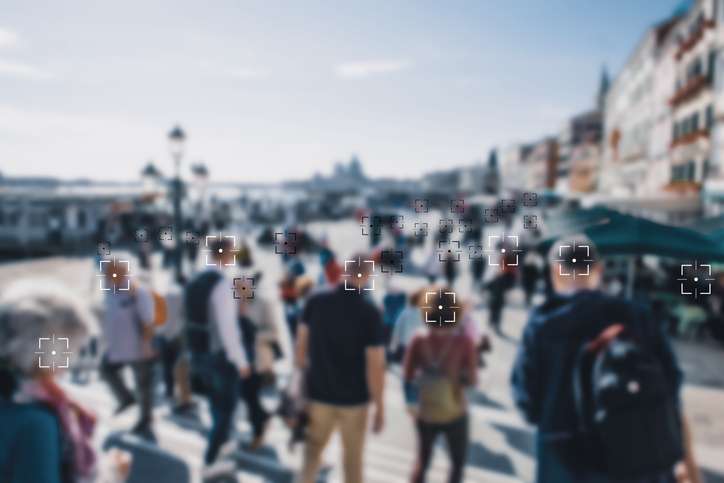
Facial recognition is an advanced biometric technology that uses artificial intelligence (AI) to identify individuals based on their unique facial features. By analysing patterns, distances, and contours in a person’s face, facial recognition software can accurately match faces to stored profiles in a database.
Facial recognition systems aren’t just reserved for the high tech, covert operations we see in films! We’ve seen this technology gaining widespread adoption across a range industries, from event security to warehouse security, retail and workplace management. The primary goal of facial recognition in security is to enhance surveillance capabilities, improve access control, and enable faster identification of individuals in high-risk environments.
Key Takeaways
- Facial Recognition Strengthens Security & Access Control – Our advanced AI-driven solutions enhance surveillance, automate access control, and provide real-time identification, reducing security breaches and unauthorised access.
- Integration with Existing Security Systems is Crucial – At Clearway, we ensure seamless integration of facial recognition with IoT security measures, making it a scalable and efficient solution for various industries.
- Ethical Considerations and Compliance are Essential – While facial recognition enhances security, we prioritise GDPR compliance, data protection, and responsible AI usage to address privacy concerns and regulatory requirements.
How Facial Recognition Systems Enhance Security
There are lots of ways in which facial recognition systems are revolutionising security including:
1. Real-Time Identification
Facial recognition cameras can instantly identify individuals as they pass through security checkpoints or enter restricted areas. This real-time verification enables quicker responses to unauthorised access attempts.
2. Automated Access Control
Instead of traditional key cards or passwords, businesses can use facial recognition to grant or restrict access to secure areas. This reduces the risk of lost credentials and unauthorised access by stolen or duplicated key cards. At Clearway, we implement facial recognition for access control on construction sites, ensuring only authorised personnel gain entry, improving safety and security.
3. Enhanced Surveillance & Threat Detection
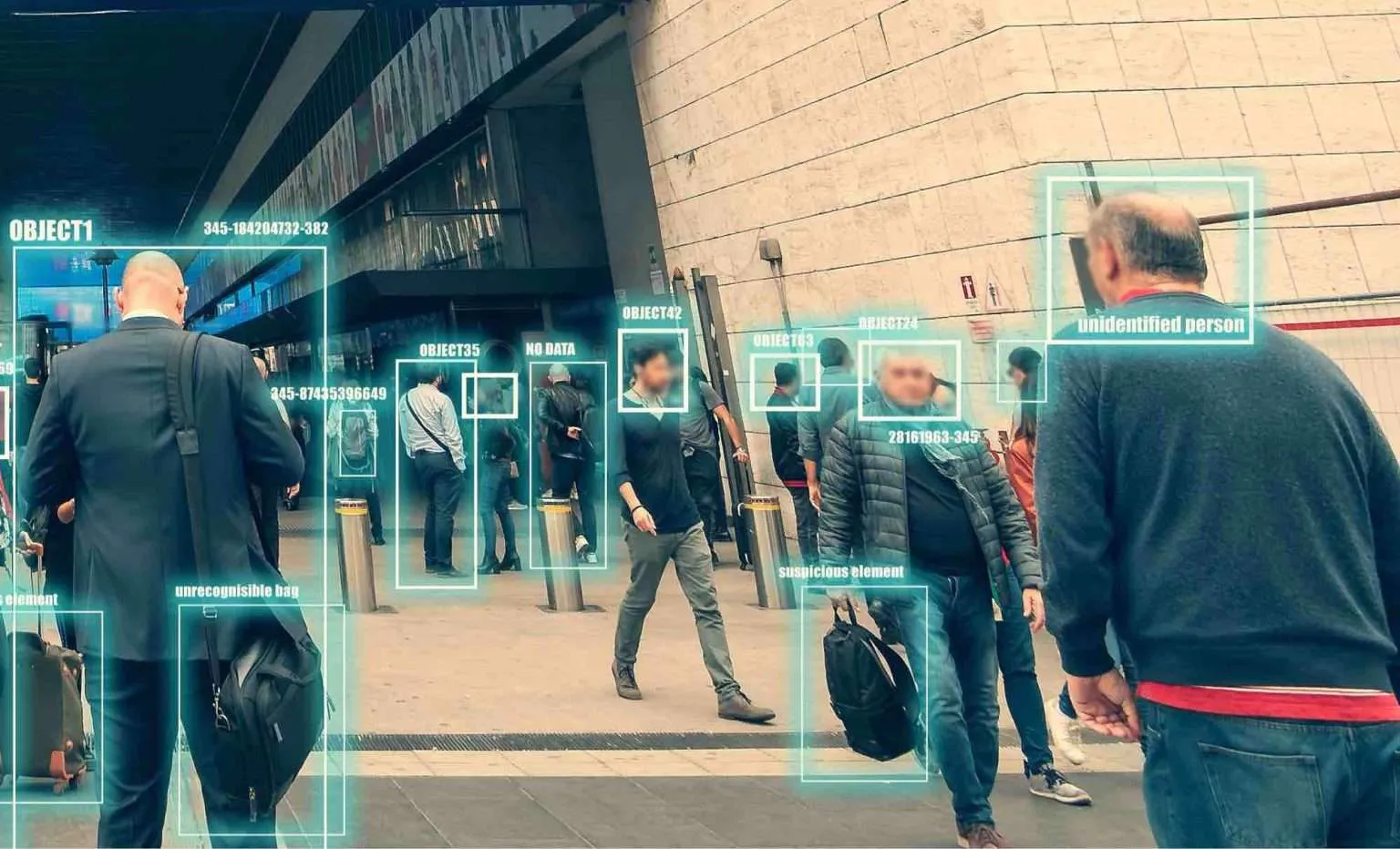
Facial recognition integrated into CCTV systems can help security personnel track persons of interest, identify blacklisted individuals, and detect unusual activity in real time. Our AI-driven surveillance solutions provide event security by identifying individuals in crowds and flagging suspicious activity before incidents escalate.
4. Reduced Human Error
Traditional security systems rely on human operators to monitor surveillance footage, which can lead to oversights. AI-driven facial recognition automates the process, ensuring accurate identification and minimising false alarms.
5. Improved Incident Response
When an unauthorised individual is detected, facial recognition systems can trigger automatic alerts, notifying security teams or emergency responders for swift action. Our systems enhance rapid intervention at high-risk locations such as logistics centres, large-scale events, and critical infrastructure sites.
6. Integration with Other Security Measures
Facial recognition technology can be integrated with existing security systems such as motion detectors, alarm systems, and access control systems for a comprehensive security strategy. At Clearway, we integrate our AI facial recognition with intelligent monitoring platforms to provide seamless security oversight.
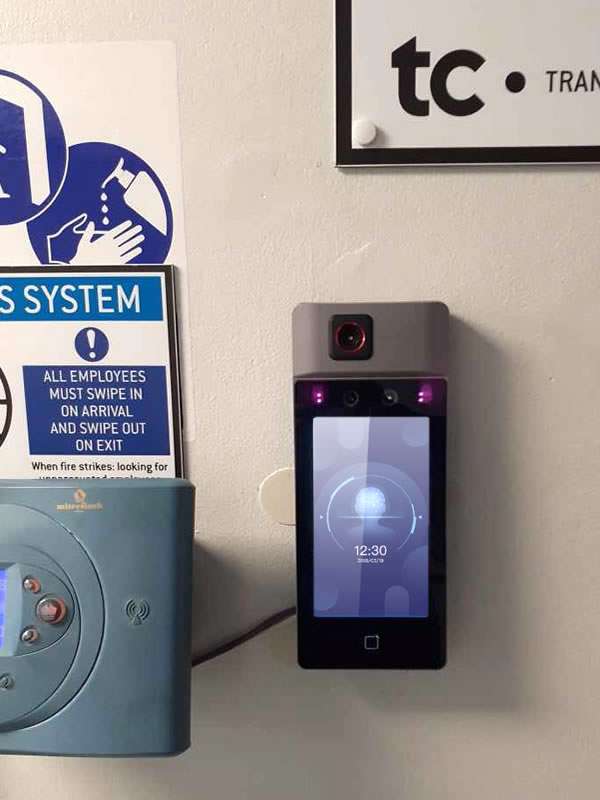
Facial Recognition Body Temperature Detection System
Data considerations
While facial recognition provides significant security benefits, it also raises concerns around privacy, accuracy, misuse, data quality, and cybersecurity. The collection and storage of biometric data must comply with strict regulations to prevent unauthorised access or surveillance overreach.
Accuracy challenges, particularly with diverse facial features and lighting conditions, can lead to false positives or negatives. There is also a risk of misuse for mass surveillance, infringing on civil liberties. Furthermore, the technology relies on high-quality images, and factors like masks or poor lighting can impact effectiveness. Lastly, facial recognition databases must be safeguarded against hacking and data breaches, necessitating robust cybersecurity measures.
Clearway’s Applications of Facial Recognition
At Clearway, we leverage facial recognition technology for various security applications, including:
- Access Control for Construction Sites – Ensuring only authorised workers gain entry, reducing the risk of theft, trespassing, and health & safety violations.
- Event Security Management – Identifying potential threats in crowds, monitoring VIP access areas, and detecting banned individuals.
- Retail Security & Theft Prevention – Flagging known shoplifters and ensuring safer shopping environments.
- Perimeter Surveillance – Monitoring restricted zones in logistics hubs, warehouses, and transportation facilities.
- Workplace Compliance Monitoring – Ensuring employees comply with PPE regulations and access control policies.
FAQs About Facial Recognition and Security
Q1: How does facial recognition work in security systems?
Facial recognition security systems capture and analyse facial features, comparing them to a database of authorised individuals or flagged persons. If a match is found, the system either grants access or issues an alert.
Q2: Where is facial recognition commonly used for security?
Facial recognition is widely used in airports, corporate buildings, law enforcement, banks, stadiums, retail stores, and high-security government facilities.
Q3: Is facial recognition better than traditional security methods?
Facial recognition offers advantages over traditional methods like ID cards and passwords by eliminating risks associated with lost, stolen, or duplicated credentials. However, it works best when combined with other security measures.
Q4: Can facial recognition work in low-light conditions?
Yes, advanced facial recognition systems use infrared cameras and AI algorithms that can identify faces even in low-light environments.
Q5: What are the legal concerns surrounding facial recognition?
In many regions, the use of facial recognition is subject to data protection laws such as GDPR in the UK and EU. Companies must ensure compliance with these regulations to protect user privacy.
Q6: Can facial recognition be fooled by masks or photos?
Modern facial recognition systems use anti-spoofing technology to detect real human features and differentiate them from printed photos or deepfake attempts. However, masks and facial coverings may still impact accuracy.
Q7: How secure is facial recognition data?
Data security depends on how well the facial recognition system is implemented. Encrypted databases, strict access controls, and compliance with data protection laws are essential for securing biometric information.
Interested in adopted facial recognition systems?
Facial recognition technology is transforming security, offering faster, more efficient, and automated ways to identify individuals and prevent unauthorised access. At Clearway, we provide leading facial recognition camera solutions designed to enhance security across various industries, from construction and logistics to retail and event management. Speak to our AI surveillance experts today!
Related content
Facial Recognition CCTV and Tracking cameras
Mon Oct 7 2024
Sun Aug 11 2024
Fri Jan 12 2024