

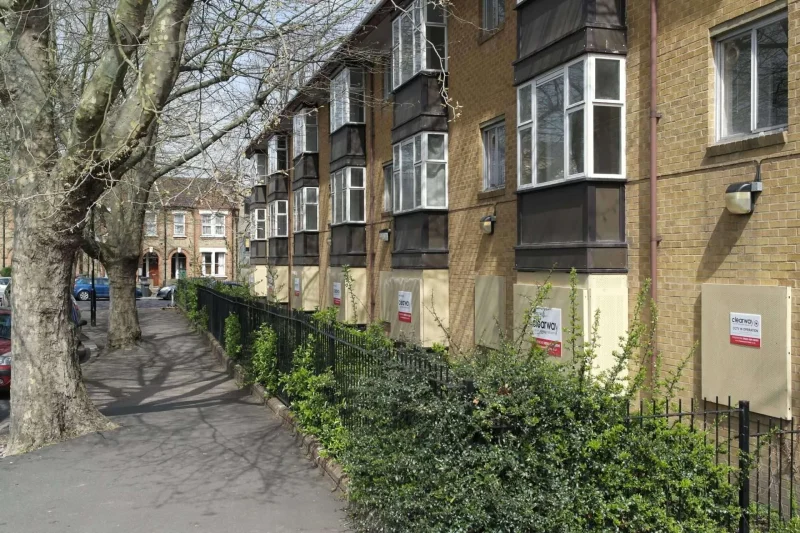
If you’re the owner or landlord of a residential property which is currently empty, you might be wondering – do landlords have to pay council tax on an empty property?
Most landlords will be liable for the council tax on empty properties however, local councils have the discretion to offer discounts or exemptions based on the property’s status and duration of vacancy. In this article, we’ll explain the government regulations on UK council tax for empty properties, as well as some of the exemptions for which your property may be eligible.
Firstly – a recap on council tax.
It’s worth recapping what council tax is for your understanding.
Council tax is a local tax collected by councils in England, Scotland and Wales to help pay for local services. If you live in Northern Ireland, you’ll pay rates instead.
Here’s what council tax typically covers:
- Rubbish collection and recycling
- Police and fire services
- Street cleaning and lighting
- Libraries and leisure facilities
- Education and social care (partially)
Does a landlord have to pay council tax on an empty property?
In short – yes. When your property is occupied by residents, the responsibility for paying the council tax falls on the shoulders of those residents.
However, when your residents’ lease is up, you’ll once again be responsible for paying your property’s council tax bill in full.
There may be some leeway for landlords to obtain council tax relief or exemption if they’re sitting on an empty property. (I’ll get to that further on in the article.)
In the past, you could be offered up to a 50% discount on your council tax bill if your property was empty (and unfurnished.) However, as the housing shortage continues to impact Britain, most councils will now severely penalise empty properties – regardless of how long the property has been empty.
Many councils in England will penalise long-term empty properties by doubling or even tripling your council tax bill, and these premiums are bound to increase the longer your property remians empty.
That being said, it’s important to point out that council tax rules on empty properties may vary depending on your local council.
In order to get clued up about the rules where you are (or where your property is), you’ll need to read up on your local council’s policy when it comes to empty properties.
Do I pay more council tax if my property is empty?
To encourage the use of vacant properties, councils can impose an ’empty homes premium’ on homes that have been unoccupied and substantially unfurnished for extended periods. As of April 2025, councils in England can charge this premium on properties empty for one year or more, with the premium amount increasing with the length of vacancy:
- Over 1 year: Up to 100% additional council tax – This is also known as the empty home premium.
- Over 5 years: Up to 200% additional council tax.
- Over 10 years: Up to 400% additional council ta
Can you avoid paying council tax on an empty property? Council tax exemptions explained
There are a number of exceptional circumstances where a landlord is not required to pay council tax on an empty property:
1. Refurbishment and Renovation
If your property is empty due to ongoing renovations and refurbishments, your local council may be willing to offer a discount on your council tax.
This will come down to the discretion of your local council, as well as the motivation for the refurbishments. If your refurbishments are being carried out for the purpose of letting the property as soon as the work is complete, you’re more likely to land a discount on your council tax.
2. Inhabitable Property
If your property has sustained significant damage from fire, flooding, electricity malfunctions or other forms of damage, you may have a case for reducing your council tax bill on an empty property. In order for your application to be considered, you’ll first need to prove that the damage makes it impossible for tenants to take up occupancy.
3. If the property owner recently died
If the property owner recently died and you were next of kin, you won’t be obliged to pay council tax on the property until after a 6-month probate period has passed. If a property is unoccupied due to the owner’s death, it is exempt from council tax until probate is granted. After probate, a further exemption of up to six months may apply if the property remains unoccupied and ownership hasn’t changed.
Find out more about vacant property rules
If you’re new to the nuances of vacant property, get in touch with Clearway today and enquire about our vacant property services. We’re experts in empty property security and property management inspection, offering everything from temporary alarms to metal security doors and screens.
Frequently Asked Questions
What is the Empty Home Premium?
The Empty Home Premium is an additional charge added to the council tax bill for properties that have been unoccupied and unfurnished for more than two years. Local councils can charge up to 100% extra council tax, or even more in some cases, depending on how long the property has been empty. The aim is to encourage owners to bring unused homes back into use.
Do you pay council tax on an empty property when someone dies?
When someone dies, their property may be exempt from council tax for a limited time. If the property was solely occupied by the deceased and remains unoccupied, it is usually exempt until probate is granted, and for up to six months after. After this period, council tax may become payable, depending on the circumstances and local council policies.
What renovations qualify for a reduction in council tax?
Certain major structural works or repairs may qualify a property for a temporary council tax reduction or removal from the valuation list altogether. These can include:
- Subsidence
- Fire damage
- Flood damage
- Replacement of floorboards and joists
- Major repairs to roof structures
- Moving or removing internal or supporting walls
- Reconstitution of the interior of the property (e.g. converting a house into separate flats)
Each case is assessed individually, and you’ll typically need to provide evidence of the work. Contact your local council or the Valuation Office Agency (VOA) to find out if your renovations qualify.
How long can a house be empty without paying council tax?
Most councils offer a council tax exemption or discount for empty properties for up to one month if the property is unfurnished. After that period, full council tax is usually payable unless the property qualifies for a specific exemption or discount. Rules can vary by local authority.
Do you pay council tax on a second home?
Yes, you usually have to pay council tax on a second home. Some councils may offer a discount, particularly if the property is not used as your main residence, but others charge the full amount or even a premium. It’s best to check with your local council.
Do you pay council tax on an empty property in Scotland?
In Scotland, you usually still have to pay council tax on an empty property. However, local councils may offer a discount for unoccupied and unfurnished homes for a limited time. After this period, a higher rate may be applied if the property remains empty long-term.
What if the property is unfurnished?
If a property is unfurnished and unoccupied, many councils offer a council tax exemption or discount for up to one month. After that, the standard council tax rate usually applies unless a longer discount is available locally. Always check with your council for specific rules.

Gideon Reichental 
Vacant Property Security Consultant
Gideon is an experienced property specialist with a commitment to excellent customer service and support. With over eight years dedicated to the niche field of vacant property security and services, Gideon has been at the forefront of developing and implementing best practices and successful strategies for safeguarding vulnerable properties, demonstrating a profound understanding of the complexities involved. His hands-on experience includes managing portfolios of over 200 vacant properties directly, alongside senior management roles overseeing broader portfolios that encompass more than 2000 properties.
Related content
Fri Jan 14 2022
Mon May 5 2025
Sat Feb 14 2026