

![How to position CCTV Cameras: Where can I point my CCTV cameras [UK guide]](webp/where-can-i-point-cctv-cameras-in-the-uk-800x533.webp)
CCTV is doubtless one of the greatest preventatives to avoid illegal entry, thefts and damage to your property.
However, it remains crucial to identify the best positioning to ensure you cover all of the highest risk locations at your premises and have sufficient lines of sight to capture activity in and around your entrances.
You also need to be aware of privacy laws and ensure that your surveillance equipment doesn’t overlook neighbouring properties. Finding the best position isn’t always obvious and often requires a thorough site assessment.
Here the Clearway team explains the key factors to consider when deciding where to point your CCTV Cameras.
Why Does It Matter Where I Point my CCTV Cameras?
Even the highest performance CCTV system won’t prove useful if it is positioned in the wrong place.
There are thousands of scenarios where, when you come to rely on your surveillance footage to resolve an incident or assist the police in their enquiries, you’ll find that your system hasn’t produced adequate results.
- Covering the primary entrance ways but not back doors, car park entrances, stairwells or windows which can divert criminals to another part of the building.
- Poorly angled cameras might deliver exceptional quality footage of surrounding trees, walls or pavements, and fail to oversee your intended location correctly.
- Obstructions such as vehicles or plants may render CCTV cameras redundant – and therefore, positioning needs to be tamper-proof and not exposed to anything that might block the view.
- If your CCTV installation doesn’t have an infrared capacity, it may need to be installed in a suitable place with sufficient natural or artificial light so that the footage is clear.
- Positioning CCTV cameras where they infringe on privacy rules can result in complaints, fines, and contravening regulations such as GDPR or the Data Protection Act.
All these points considered, it’s vital to think through your CCTV positioning and what areas of highest risk you want to protect before fitting any cameras or recording equipment.
Where to place my CCTV Camera System to best capture activities?
The best location to place your CCTV cameras depends very much on the type of property or premises you are defending, where your most significant risks arise, and what you are using your CCTV security system for.
In most cases, say for a business surveillance system out of hours, you’ll want to consider:
1. Entrances and Exits
Why it matters: Monitoring all entry and exit points helps you record who enters and leaves the building, providing valuable footage in the event of a break-in, theft, or other incident.
Best practice:
- Position cameras at eye level or above, angled downward for clear facial recognition.
- Make sure all main doors, delivery bays, and fire exits are covered.
- Use wide-angle lenses for larger doorways or multiple access points.
2. Reception and Lobby Areas
Why it matters: These high-traffic areas are where visitors, contractors, and customers first arrive – making them critical for access control and visitor monitoring.
Best practice:
- Place cameras behind or above reception desks to capture clear footage of everyone entering.
- Combine with access control systems for added security and auditing.
- Signpost that CCTV is in use to act as a deterrent.
3. Internal Corridors and Stairwells
Why it matters: Cameras in these spaces help track movement within the building and prevent unauthorised access to restricted areas.
Best practice:
- Position cameras at corridor intersections and stairwells to monitor all directions.
- Use vandal-proof indoor cameras for resilience.
- Ensure sufficient lighting to maintain image quality.
4. Stockrooms and Storage Areas
Why it matters: These areas are often targeted for internal theft or break-ins due to the high value of goods stored.
Best practice:
- Mount cameras high up to cover the entire room.
- Avoid blind spots behind shelving.
- Integrate with motion detection to flag out-of-hours activity.
5. Car Parks and Loading Bays
Why it matters: Vehicles, deliveries and staff safety are all at risk in poorly monitored exterior areas.
Best practice:
- Use weatherproof cameras with night vision or infrared for 24/7 monitoring.
- Focus on vehicle entry/exit points and loading bay doors.
- Capture number plates clearly using ANPR-compatible systems where appropriate.
6. Cash Handling Areas
Why it matters: Tills, safes and cash rooms are high-risk zones for theft or fraud.
Best practice:
- Position cameras above or beside tills to monitor transactions.
- Use high-resolution cameras for clear footage of money being handled.
- Restrict who can view this footage for data protection compliance.
7. Server Rooms and IT Infrastructure
Why it matters: Data is just as valuable as physical assets – and server rooms can be prime targets for sabotage or espionage.
Best practice:
- Install discreet indoor cameras with motion alerts.
- Monitor doors and inside the room where possible.
- Pair with access logs for audit trails.
8. Perimeter Fencing and Gates
Why it matters: Early detection is key to stopping intruders before they get near your building.
Best practice:
- Mount cameras at key perimeter points and access gates.
- Use PTZ (pan-tilt-zoom) cameras for flexible viewing across wide areas.
- Integrate with motion detection or virtual tripwires for alerts
Remember that CCTV isn’t purely used for guarding properties – you might decide to install surveillance equipment at vehicular access points, around your perimeter, at storage yards or delivery points.
For exterior surveillance, other factors come into play, such as:
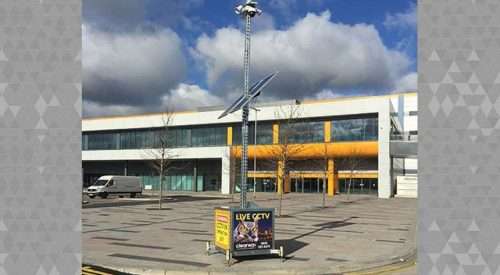
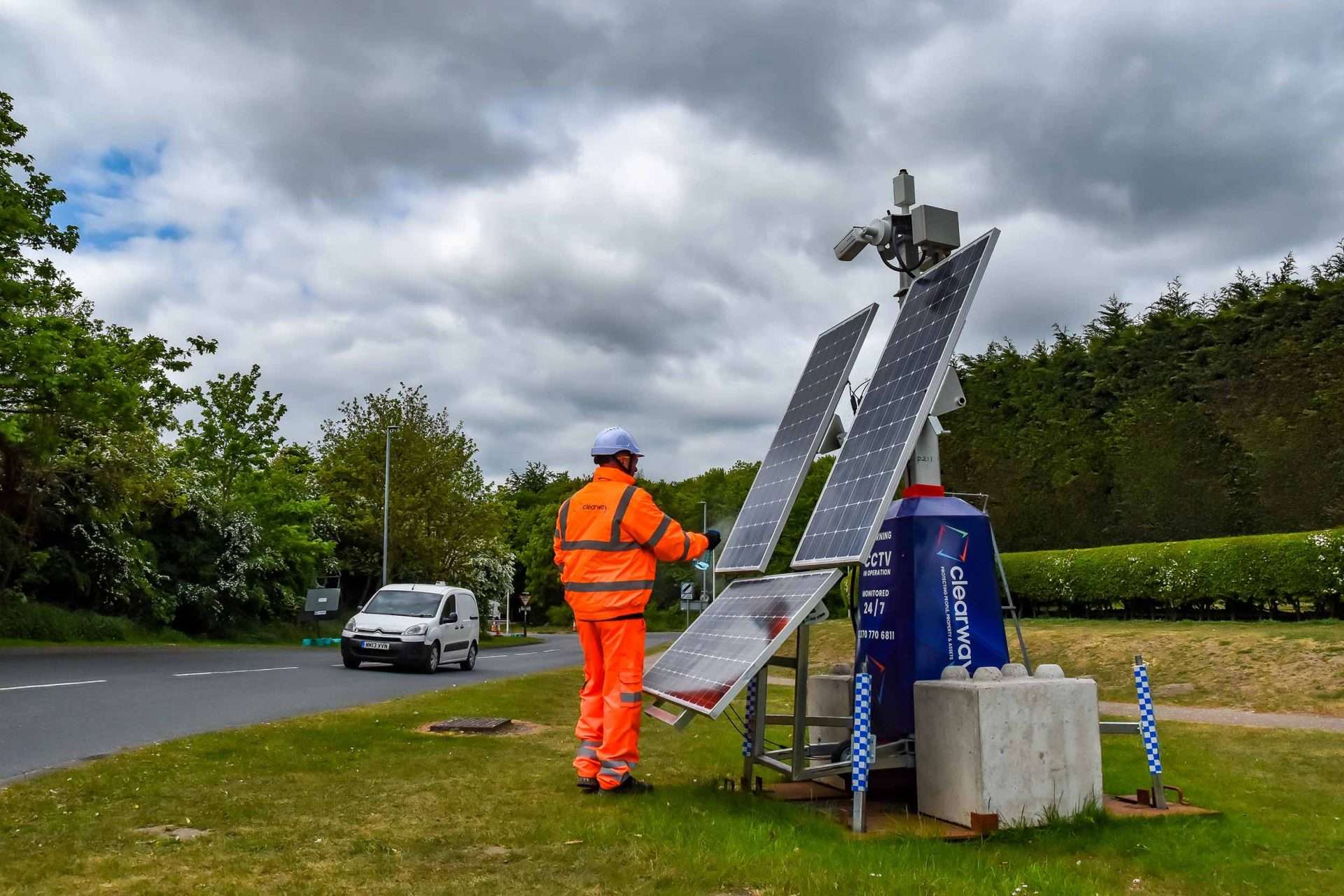
- How easy it would be to access the cables or power supply for hard-wired CCTV systems (wireless mast-mounted cameras can mitigate that risk).
- The scope of the coverage, whether your cameras provide a comprehensive enough angle view to survey the whole area, or whether you need multiple cameras in several locations.
- Blind spots – it’s always wise to seek professional advice to understand how far your CCTV can see and ensure overlap between two cameras if you have a vulnerable position that needs comprehensive coverage.
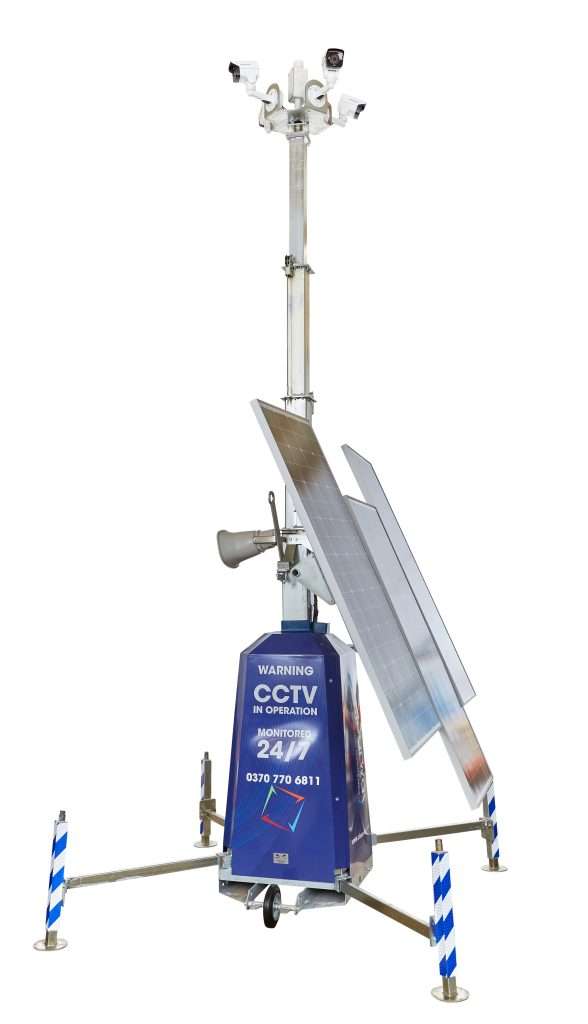
Is There an Optimal Way to Position a CCTV Camera?
There certainly is! CCTV cameras come in multiple sizes, capacities and mount types, so it’s important to consider whether you are using hard-wired, wall-mounted, battery-powered, mast-mounted or overhead cameras.
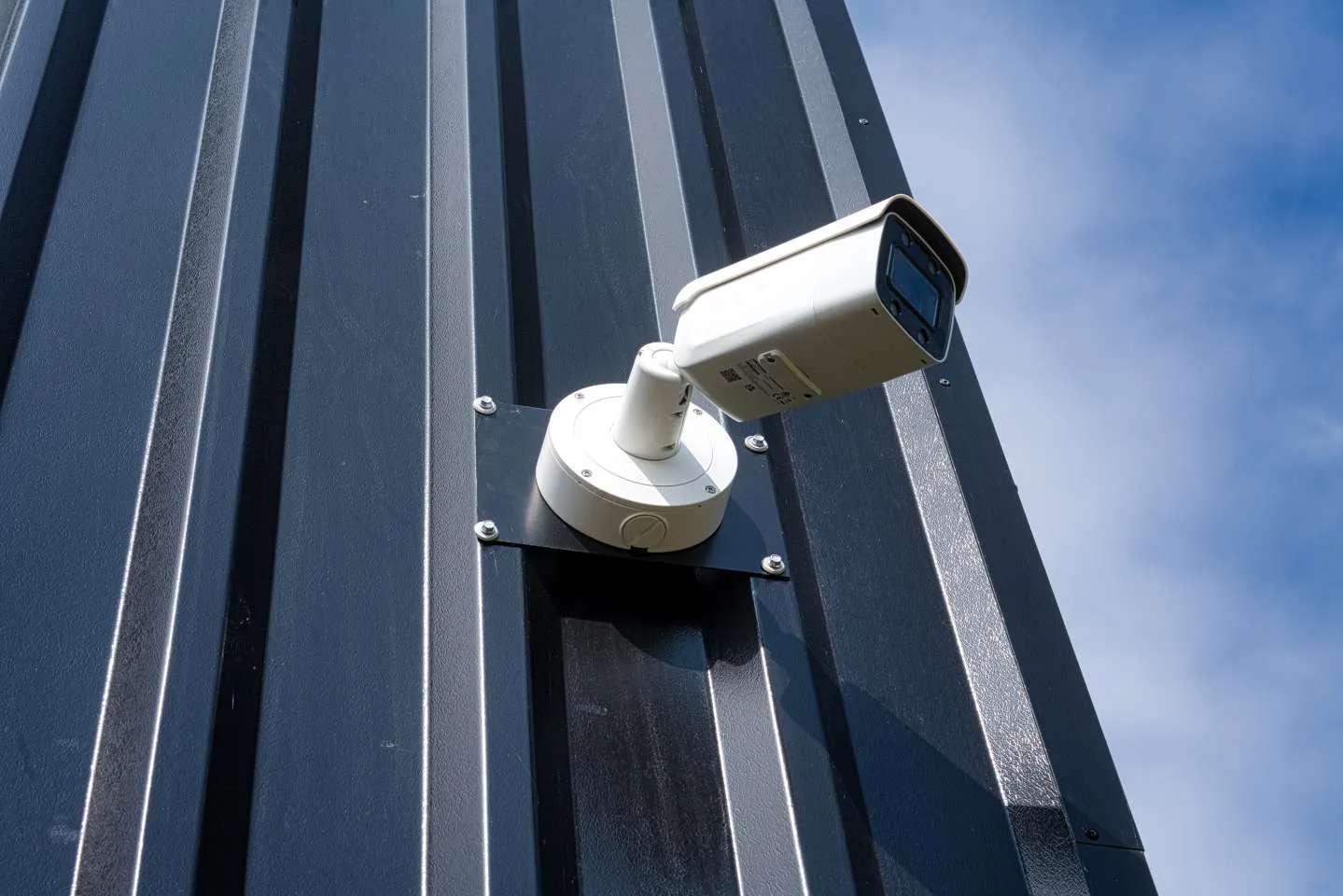
- Most CCTV installations are installed at around 2.5m to 5m above the ground, although that depends on whether you are using a CCTV tower and size of nearby walls or buildings.
- Installing cameras at lower levels means you get a closer-range view of any activity, but if they’re positioned too low, they’ll be exposed to vandalism and easy tampering by thieves.
- Higher, mast-mounted cameras will typically provide a broader angle, such as for open spaces, but may, potentially, risk a lower quality image which may be an issue for crucial risk points, as video footage quality may be compromised.
- The camera angle is also crucial, and you’ll almost always find professionally installed CCTV systems at a height, angled down towards the area they are surveilling. A lens angled downwards can focus on objects and provide a greater view across the surrounding area.
Therefore, installing your CCTV for maximum opportunity isn’t as simple as mounting a camera on the nearest wall. There is a lot to think about and multiple options for camera types, power supplies, angles and areas of coverage.
Where You Can and Can’t Point CCTV Cameras in UK
To stay compliant with UK law (particularly the Data Protection Act 2018 and UK GDPR), it’s important to understand where CCTV can legally be directed. We’ve compiled a table below to show you where you can and can’t point CCTV in the UK:
| Area | Can You Point CCTV Here? | Notes |
|---|---|---|
| Your own business premises | ✅ Yes | Make sure cameras are relevant to security needs and not overly intrusive. |
| Entrances/exits facing public areas | ✅ Yes, with justification | You must justify the use and ensure minimal intrusion into public space. |
| Public roads or footpaths | ⚠️ Only if necessary and proportionate | You must demonstrate a legitimate reason (e.g., repeated vandalism). |
| Neighbouring properties | ❌ No, unless with consent | This is a breach of privacy and could lead to legal action. |
| Shared entrances or communal areas | ⚠️ Only with agreement and signage | All parties must be informed, and consent is usually required. |
| Inside private areas (e.g. toilets, changing rooms) | ❌ Absolutely not | Invasion of privacy and illegal under most circumstances. |
Frequent Asked Questions
1. Where can I and can’t I point a security camera?
You can point CCTV cameras at areas within your own property, such as entrances, internal rooms, car parks, and storage areas, as long as they are necessary for security purposes. However, cameras should not be directed at private spaces you do not own or control — such as neighbouring properties, private gardens, or through windows into homes or offices — unless you have explicit consent. If your system captures any part of a public space or shared area, you must ensure it’s justified, proportionate, and compliant with data protection laws.
2. Do I have to inform people that CCTV is in use?
Yes. Under UK data protection law, you are legally required to inform people that they are being recorded by CCTV. This is typically done through clear signage that states CCTV is in operation, explains the purpose (e.g. crime prevention), and provides contact details of the system operator or data controller. Transparent use of surveillance helps build trust and keeps you compliant with GDPR and the Data Protection Act 2018.
3. Can CCTV be monitored 24/7?
Absolutely. Many commercial CCTV systems are monitored 24/7 by professional security teams or through remote monitoring centres. This allows for real-time response to suspicious activity, intrusions, or emergencies. Continuous monitoring can be especially valuable for high-risk sites or out-of-hours security, and can often be combined with audio warnings or emergency service alerts for fast action.
For more advice about the ideal positioning for your CCTV cameras, give the security experts at Clearway a call.