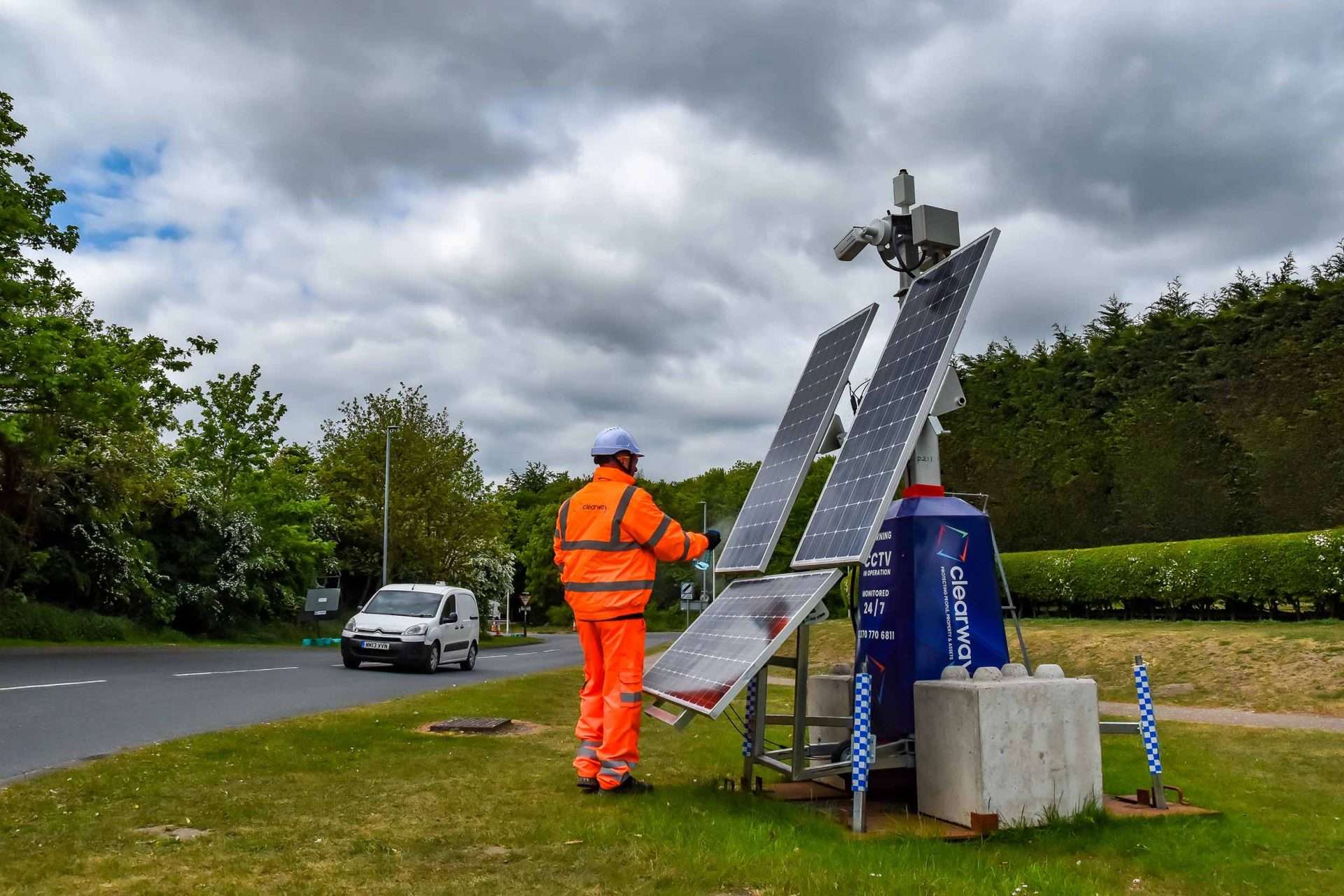



The technologies, devices, integrations and remote functions available within the security landscape have evolved dramatically in recent years, and there is little doubt that innovation is the key to future-proof security systems and infrastructures.
Many advancements have resulted from a shifting threat dynamic, where conventional controls and processes have become outdated or where criminals and intruders can easily circumvent security to gain entry to controlled spaces.
Security technology is a broad and continually expanding area. We’ll provide a snapshot of the core aspects and elements we are introducing and new dynamic security installations expected to reach the market soon.
The Future of Security: A Summary
- Security tech is poised to become more relevant than ever as businesses, organisations, and public sector bodies seek to protect their sites, personnel, and assets from ever more sophisticated threats and risks.
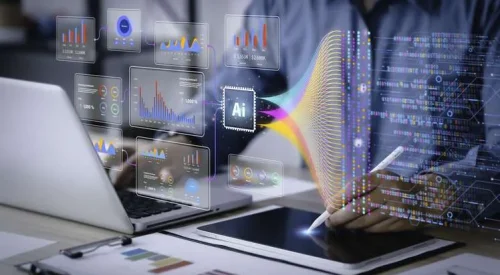
- Upgrades to conventional devices, such as video security designed for any environment, can incorporate technologies like AI analytics, open network platforms for comprehensive integrations, and real-time notifications – these options are already available.
- Further advancements such as identity and security convergence are anticipated to have a big impact, creating a backdrop where all controls, cameras, alarms, and surveillance systems work cohesively to detect and prevent security threats.
An Introduction to Security Tech
Security technology isn’t a specific approach or device but a broad area that includes varied components, policies, and devices used to protect physical assets and properties and defend against known and unknown threats.
Depending on the risk profile of a business, compound or organisation, the security solutions we suggest may already rely on multiple types of security technology, where cloud-based software, remote automation and AI-powered analytics have revolutionised the speed and accuracy with which security teams can respond.
The big contrast between conventional security technologies and dynamic, highly developed alternatives is the capacity to integrate and combine approaches rather than depend on largely segregated systems.
Examples might include multiple instances of attempted entry by one person recorded across several surveillance cameras or repeated logs of an alarm breach at a similar time of day over the course of a few weeks – which might have been missed without manual reviews of the footage or alarm logs.
Modern, advanced systems cross-check and integrate their data, which means even two different cameras or alarms with contrasting coverage areas would filter their data into a centralised system – allowing responders to identify a pattern that may require further investigation and preventative action.
Key Aspects of a Future-Proof Security Protocol
Importantly, the future of security is less about detection and more focused on prevention – giving security professionals and trained responders intelligence to identify possible concerns or suspicious activities far before they become an active threat.
Previously, most security devices were designed to provide an audible or digital alarm when a movement or activity was detected outside of the norm, indicating a breach already in progress, such as:
- A window or door being opened after the premise has closed.
- Physical movement inside a restricted-access perimeter.
- The presence of smoke, fire or smashed glass.
Future-ready security approaches take a different approach. They collate real-time data to analyse the possibility that any incident, however subtle or benign, could evolve into a risk. This includes using intelligent video analytics to map and comprehend patterns that represent the norm.
Reconfiguring the Priorities of a Security System
The easiest way to visualise how a future-proof security system might work in practice is to outline the order of priorities—which are almost the opposite in rank of importance when compared to a conventional or present-day security system.
- Prevent: Security technologies are configured to recognise threats and evaluate activities on an ongoing basis to determine when anything new might constitute a threat. This preemptive approach means that anything untoward that could become a risk is addressed or eliminated before it escalates.
- Deter: Visibility remains essential, although the nature of deterrents will change. Rather than wall-mounted cameras, advanced security may focus on access control readers, biometric scanners and smart locking systems alongside conventional alarms and security gates.
- Detect: If prevention and deterrents are not effective, the next phase is for security tech to determine whether a real threat exists, eliminating false callouts. The faster an intrusion or risk is identified, the lower the likely cost of any resulting damage, with an increasing interest in automation and access controls that can rapidly pick up on unauthorised activity.
Security responses will become the last and final resolution rather than the first line of defence. They will be required only where an active and advanced security system has not already prevented an incident from occurring.
Emerging Technologies that will shape the Future of Security
Some of the cutting-edge security technologies are already in action, whereas others are in their infancy and are expected to become more prevalent in the coming months and years.
1. Smart Machine Learning and AI
 While we’ve mentioned the uses of AI in current and new-to-market security devices, the power and scope of machine learning algorithms continue to significantly impact security. New integrations are being designed that can augment and optimise a huge number of physical security technologies.
Functions like automatic incident detection, the immediate recognition of anomalous events, and the ability to map and verify whether a risk is emerging without manual intervention can all reduce security costs while improving responsiveness to actual threats.
The critical aspect of AI in future security applications is the ability to extract and understand security intelligence in real time, ensuring that responders have precise, accurate, and reliable information with which to act.
2. Identity and Security Convergence
Another aspect we touched on earlier was convergence – the concept that systems, technological, physical, and logical, can all share one integrated data bank and cross-reference all the data collected across all systems and devices to provide a more accurate real-time picture.
Examples would include recognising similar actions, movement patterns and activities, even if seemingly unrelated, to determine whether a pattern of events could constitute a risk.
IoT integration also links into this element, where smart cameras and sensors powered by AI-enabled technologies provide additional automation and independently manage access control systems and entrances.
3. Autonomous and Touchless Security
Finally, the growth in autonomous solutions and those that can perform security tasks, scans or checks independently and without human or manual programming is expected to continue.
Access control systems are already a huge trend in the security field for the current year, and as more businesses and higher-risk organisations migrate to autonomous credential solutions that can check and verify the identity of any individual or vehicle, this trend is set to continue.
If you’re looking to future proof your security protocols, get in touch with Clearway and speak to our security experts about our recent Clearway Labs innovation.

Daniel Meeajane 
Business Development Director, Clearway Fire and Security
Daniel Meeajane is a Business Development Director for Clearway Fire and Security.
Having been involved in some major projects and achieving successful results Daniel uses his knowledge and experience to leverage awareness in Fire Protection. To do this a deep understanding of the BS 5839 PT1 is required along with keeping updated on the latest technology.
Related content
Fri Jan 12 2024
AI Crowd Control and People Analytics Systems
Mon Sep 16 2024
Sun Aug 11 2024
Wed Nov 6 2024