

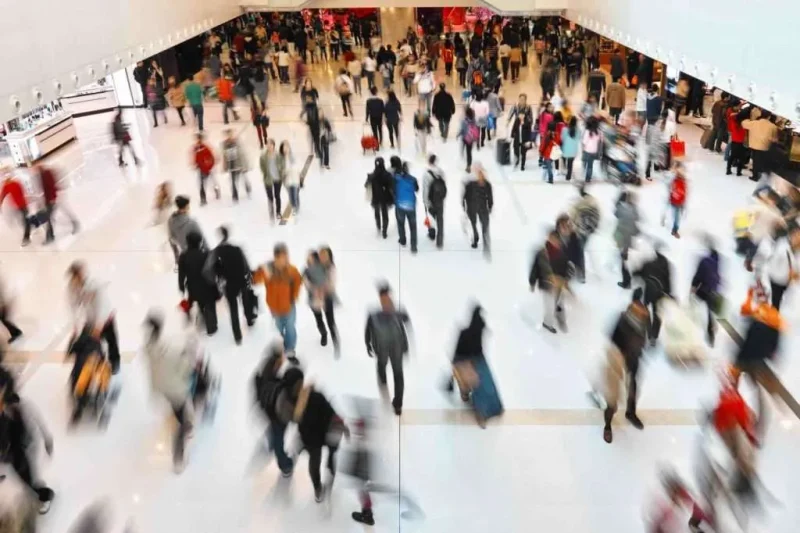
CCTV surveillance cameras are used in countless scenarios. They act as a deterrent to prevent thefts and intrusions, monitor businesses and compounds outside working hours, and improve workforce management. But can CCTV cameras identify people or individuals?
While traditional CCTV was often grainy, black and white, and of too low a quality to identify individuals or determine the identity of an intruder, advanced surveillance cameras today far exceed this functionality.
AI-enabled smart security systems can scan huge crowds of people or trace activities over broad premises, cross-check the identities of individuals with databases of banned entrants or approved personnel, and extract previous data to assess whether a person is a repeat visitor.
Key Takeaways
- Yes, CCTV can identify people, but only when the system combines clear footage with facial recognition software and a matching database.
- Image quality decides everything: sharp resolution, good lighting, correct camera angle, and enough face detail massively improve identification accuracy.
- “Facial detection” is not the same as “facial recognition”: detection spots a human face, recognition tries to match that face to a known identity.
- There are specific laws about identity capturing.
AI CCTV: How Surveillance Cameras Identify Individuals
The technology and capabilities within your CCTV systems and cameras will dictate the extent to which you can identify a person captured on your footage, determine whether an individual is known to you, or reference your own data to see if someone has been on the premises before.
Cameras with the latest in cutting-edge tech also need to be installed and programmed properly to be effective since the clarity of your footage and the accuracy of intelligent AI algorithms will depend on factors like:
- The pixel density, which relates to the quality of the images or footage.
- The tilt and angle of each camera – determining the areas it can ‘see’.
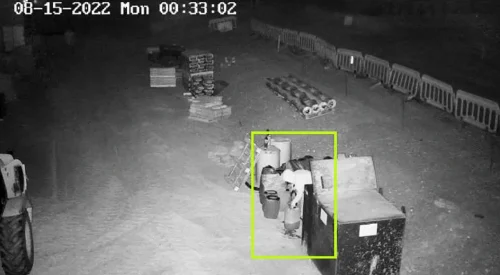
- The lighting or in-built infrared and low-light tech to ensure identities are clear even in the dark.
CCTV cameras with excellent resolutions, low-light visibility and wide-angle views over the space, with the ability to zoom, tilt and pan in closer on suspicious activity, are ideal and work to automate much of the work a physical security team may have needed to perform in the past.
There are also various types of intelligent AI CCTV, and the right options may depend on the risk profile of your business or venue and how much you would benefit from automated identity detection.
Simpler CCTV systems with baseline facial detection can differentiate between people and wildlife or vehicles and record that data for review. Adding facial analysis technology means the cameras don’t just know whether a movement is caused by a person but can scan and record their facial characteristics and check that data against databases.
The most advanced facial recognition CCTV cameras can use this same process, checking whether an individual is a permitted employee, site user, or somebody without the authority to be on the premises and then using that knowledge to activate an onward response.
Whether that means unlocking a door, lifting a barrier or opening a gate, tracking the movements of any unrecognised individual, or alerting security teams to the presence of an unauthorised person, the functions are varied and tailored to the site or environment.
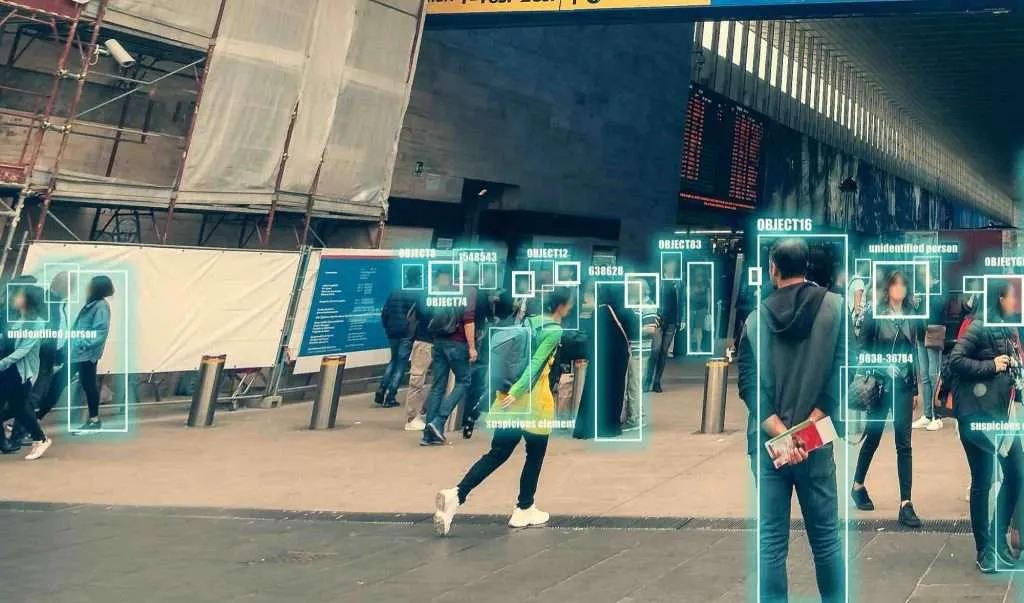
Applications of CCTV Facial Recognition
As we’ve indicated, facial recognition can be deployed as a biometric security capability. Cameras work like a guard at an entrance, permitting access only to people with an approved profile—without any need for manual interventions.
Biometrics can also scan fingerprints, voices, retinas, and irises, which are used within high-security settings and by emergency services. For most businesses, facial recognition is as advanced as their security systems need to be.
While facial detection and AI monitoring might seem very new, they have been around for some time and are a technology we use daily, commonly to unlock a phone or log into a banking app. Social media sites also use FaceID functions to suggest the identity of a person you might tag in a photo.
Importantly, facial recognition cameras don’t perform any actions other than those for which they are programmed. They identify the individual using dynamic patterns and mathematical sequences that map the person’s face shape, bone structure, and angles.
Rather than storing information about a person or being fooled by make-up, hats or glasses, most high-performance CCTV systems can identify an individual regardless of any cosmetic changes to their appearance and will disregard all footage that hasn’t flagged a concern.
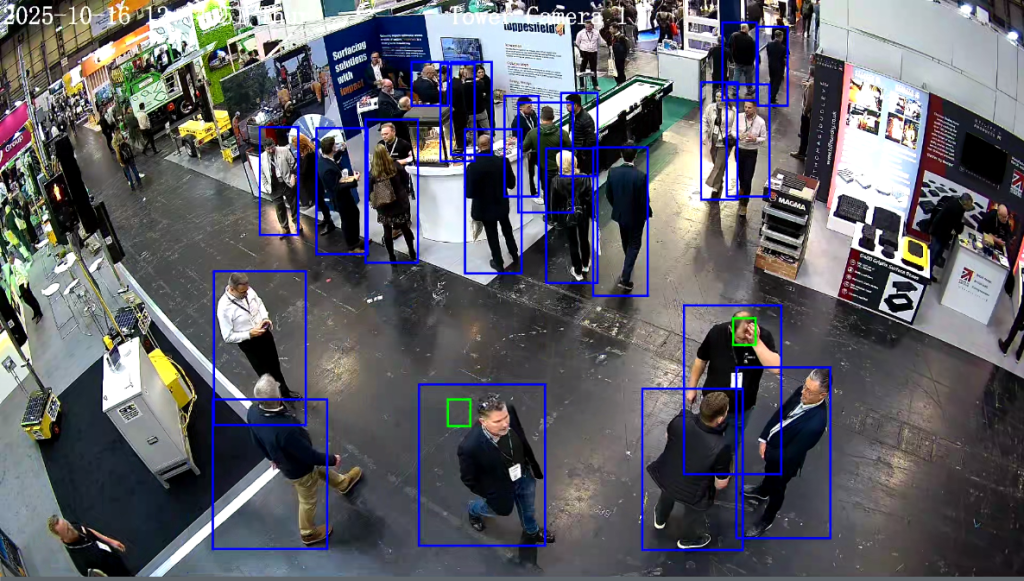
What Is the Advantage of AI-Enabled CCTV With Facial Recognition?
AI has had a transformative impact on security and has enabled many businesses, compounds, and public spaces to improve their approaches to security, crowd control, and risk mitigation.
Particularly in event security, where busy venues with large footfalls may have previously relied on guards to spot the first signs of aggression or search bags and check the ID and tickets of every individual, facial recognition can act as a first line of defence that functions continuously.
Changes to UK legislation, primarily related to Martyn’s Law, will require bigger venues to comply with much more rigorous safety requirements. Larger venues are more vulnerable to safety challenges due to overcrowding, deliberate attacks, and suspicious behaviour concealed within the flow of traffic.
CCTV cameras with AI-enabled automatic facial recognition never take a break and can scan even the densest crowds and queues to identify individuals who are banned or prohibited.
They can also pick up on subtle signs of stress, tension and aggression and direct security teams to potential loitering, unusual movement patterns or areas of concern far before an emergency occurs.
This same functionality also provides substantial improvements in cost and efficiency for secure sites, where AI-enabled cameras can automate entrances, locks and barriers around the clock, providing seamless entry for approved personnel while ensuring anybody without the right authority or credentials is barred from entering.
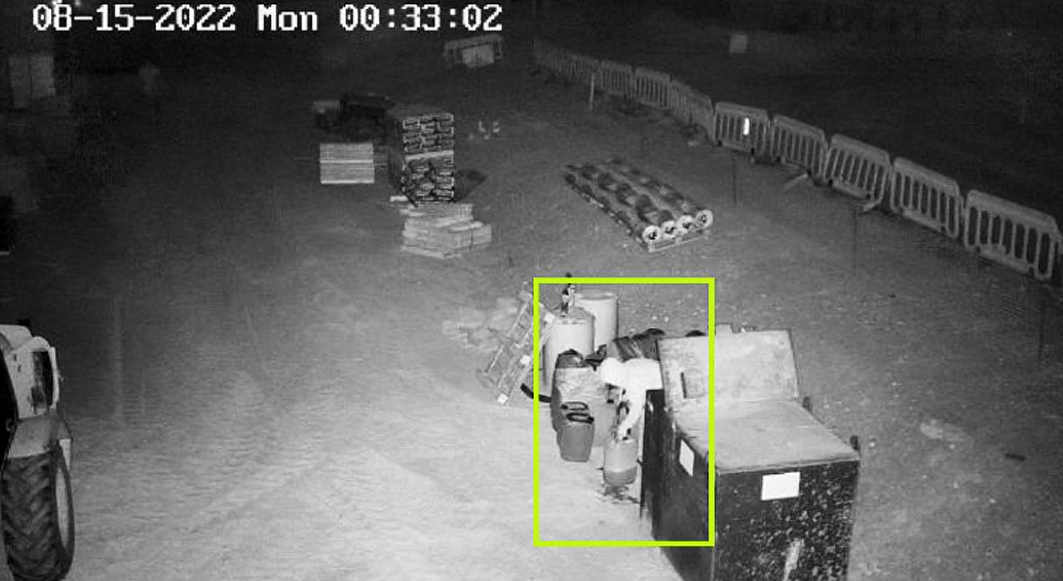
Are there any rules around facial identification and CCTV in the UK?
Whilst we’ve learned that indeed, CCTV cameras can identify people, this doesn’t mean that any organisation can install and use facial recognition cameras without following the legal proceedings.
In the UK, the use of facial recognition cameras is governed by a combination of legal frameworks, regulatory guidance, and specific court rulings to ensure it respects privacy and human rights. Here are the key rules and considerations for using facial recognition technology (FRT) in the UK:
1. Legal Basis and Compliance
Facial recognition use must comply with data protection laws, primarily the UK General Data Protection Regulation (UK GDPR) and the Data Protection Act 2018. Organisations deploying this technology must demonstrate a lawful basis for processing personal data, such as consent, public interest, or legitimate interest.
You can read more about GDPR-compliant CCTV here.
2. Data Minimisation and Necessity
Organisations must ensure that facial recognition is necessary and proportionate for its intended purpose. The data collected should be limited to what is required for that specific purpose, and there should be a clear rationale for its use. Unnecessary collection of personal data, or using it beyond its initial scope, is prohibited.
3. Transparency and Public Awareness
The public must be informed when facial recognition technology is in use. This includes clear signage in areas where cameras are deployed, explaining who is operating the system, the purpose of its use, and the lawful basis for processing. Transparency is crucial to maintain public trust and compliance with privacy laws.
4. Impact Assessments
Organisations must conduct a Data Protection Impact Assessment (DPIA) before deploying facial recognition technology. The DPIA should evaluate the necessity, proportionality, risks, and potential impacts on privacy and civil liberties. The Information Commissioner’s Office (ICO) may require access to this assessment to ensure compliance.
5. Accuracy and Fairness
The technology must be accurate and free from bias. Organisations must take steps to mitigate the risk of false positives and negatives, which could disproportionately affect certain groups, potentially leading to discrimination. Regular testing and calibration of the system are recommended to maintain high accuracy standards.
6. Retention and Security of Data
Personal data obtained through facial recognition must be stored securely and retained only for as long as necessary for its stated purpose. Organisations should implement appropriate security measures to protect data from unauthorised access, loss, or misuse.
7. Oversight and Accountability
Organisations using facial recognition must have a governance framework to ensure oversight, accountability, and adherence to regulations. They must also have processes in place for responding to data breaches, public complaints, and requests for information under the GDPR.
8. Specific Use by Law Enforcement
Law enforcement agencies have additional rules under the Surveillance Camera Code of Practice and must also comply with the Human Rights Act 1998. The use of facial recognition by the police must be necessary and proportionate, and it should align with a specific, legitimate policing purpose. Recent court rulings have emphasised that the police must not use facial recognition in a way that is overly broad or discriminatory.
9. Challenges and Court Rulings
Overall, while facial recognition technology is permitted in the UK, its use is subject to strict rules to protect individuals’ privacy rights and prevent misuse. Organisations must ensure they are fully compliant with all legal and regulatory requirements before deploying such technology.
Are you interested in finding out more about upgrading your CCTV system to have the ability to identify people? Contact Clearway today and find out about our suite of cutting edge AI CCTV solutions.
So, Can CCTV Really Identify Someone?
CCTV can identify people when the cameras capture usable facial detail and the system includes facial recognition software that can match faces to a reference database.
In real environments, accuracy depends on basics like lighting, angle, distance, motion blur, and face coverings, so “can identify” often means “can narrow down with a confidence score,” not a perfect ID every time.
In the UK, facial recognition is allowed, but it needs lawful, proportionate use with clear transparency, strong security controls, and a documented impact assessment before deployment.
FAQs
Can CCTV cameras identify a person without facial recognition?
Sometimes, but it is limited. Standard CCTV can help identify someone by clothing, gait, tattoos, or context, yet it usually cannot reliably confirm identity without facial recognition and a matching database.
What is the difference between facial detection and facial recognition?
Facial detection spots a face in an image. Facial recognition goes further by analysing facial features to create a biometric template and then matching it to known images or profiles.
How accurate is facial recognition on CCTV?
Accuracy varies a lot. High-quality, front-facing images with good lighting typically perform far better than low light, angled shots, motion blur, or crowded scenes.
Can CCTV identify someone wearing a mask, hat, or glasses?
It can struggle. Occlusions like masks and hats reduce usable facial features, so match confidence often drops and false matches become more likely.
Does facial recognition work at night?
It can, if the camera has strong low-light performance and the subject’s face is captured clearly. Infrared and low-light sensors help, yet distance, glare, and fast movement still degrade results.
Are you interested in finding out more about upgrading your CCTV system to have the ability identify people? Get in contact with Clearway today and find out about our suite of cutting edge AI CCTV solutions.
Related content
Sun Aug 11 2024
AI Crowd Control and People Analytics Systems
Mon Sep 16 2024
Fri Jan 12 2024