

Let’s unpack an unpleasant, contemporary issue.
How big a problem is fly-tipping in empty commercial properties? To answer the question directly, the short answer is:
Quite a serious one.
In theory, waste should be relatively easy to dispose of. There are more and more recycling plants in the UK each year, and they do a great job. Councils are strict when it comes to rubbish and waste. It’s fair to say that they play a significant role in helping to preserve our environment.
And, they fight tirelessly to reduce the horrible detritus that, left lying around is harmful to health and revolting to look at.
Yet, it’s not quite enough.
Businesses like Clearway have never been more busy dealing with illegally disposed of waste.
What’s Happening with Fly-Tipping?
While fly-tipping UK-wide has decreased slightly (a measly 1%, in fact) over the last year, 1.08 million incidents were still reported to local authorities.
However, the capital knocks things on the head. In certain London boroughs, this issue looks to have spiralled out of control during the same period.
Government figures reveal an astonishing 93% year-on-year increase in fly-tipping in Tower Hamlets, while in Barnet and Westminster, it went up by 65% and 64% respectively. And, did you know there were 35,000 occurrences alone in Brent during 2022-23?
And in Tower Hamlets, it’s nearly doubled?
These horrifying statistics are stark, and in our opinion, they need to be addressed. Let’s look at fly-tipping in more detail, its potential causes and what companies such as Clearway are doing about it. Our expertise notwithstanding, this is a wider problem for society and something all of us should be thinking about.
First things first.
What Is Fly-Tipping?
It’s not littering, as this refers to disposing of relatively small amounts of rubbish in situ. Fly-tipping involves transportation from A to B.
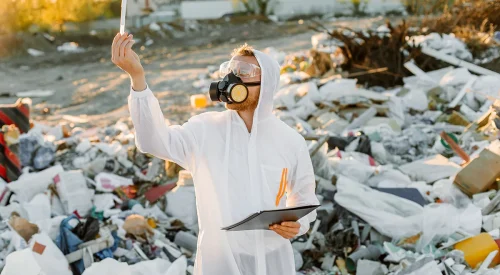
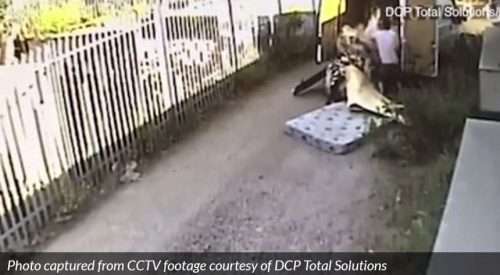
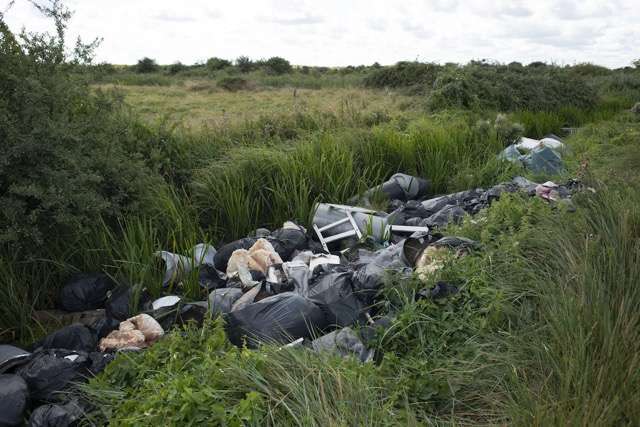
Broadly, it’s the illegal dumping of waste on land without the landowner’s permission or a valid license to dispose of it. Fly-tipping could mean a single bin bag or, at the other end of the scale, vast truckloads of unspeakable stuff literally tipped onto somewhere it has no place to be.
The term comes from the verb “tip” which means to “throw out of a vehicle”, and is mixed with the expression “on the fly” – to do something casually or carelessly. It has rather dull etymological origins, but its impacts are anything but ordinary.
Fly-tipping is illegal and contrary to Section 33(1)(a) of the Environment Protection Act 1990. It goes without saying that it affects local authority resources and is a continuous headache for the Environment Agency, both of whom have responsibilities in this area. Interestingly, the police have robust powers here: they can seize, impound, and indeed crush any vehicle used for fly-tipping.
Plus, they can prosecute both the driver and the owner of the vehicle.
What is being Fly-Tipped?
Everything and anything. Or, so it appears.
Practically any random, unused, bulky thing can be forsaken – discarded unceremoniously onto vacant commercial land and property. In this case, unfortunately, that vacant building and its surroundings could belong to you.
Illegal waste can be liquid or solid.
There are endless “rubbish” options for lawbreakers:
From construction, demolition, scrapyard waste, broken white goods, household appliances, to furniture, old bedding, and so on. Nothing is off-limits. Other arbitrary items found dumped have included a stolen cash machine (empty), a picture of Adolf Hitler and a complete Roman soldier statue.
Amusing as these latter instances no doubt are, when we look at the bigger picture, it’s no laughing matter.
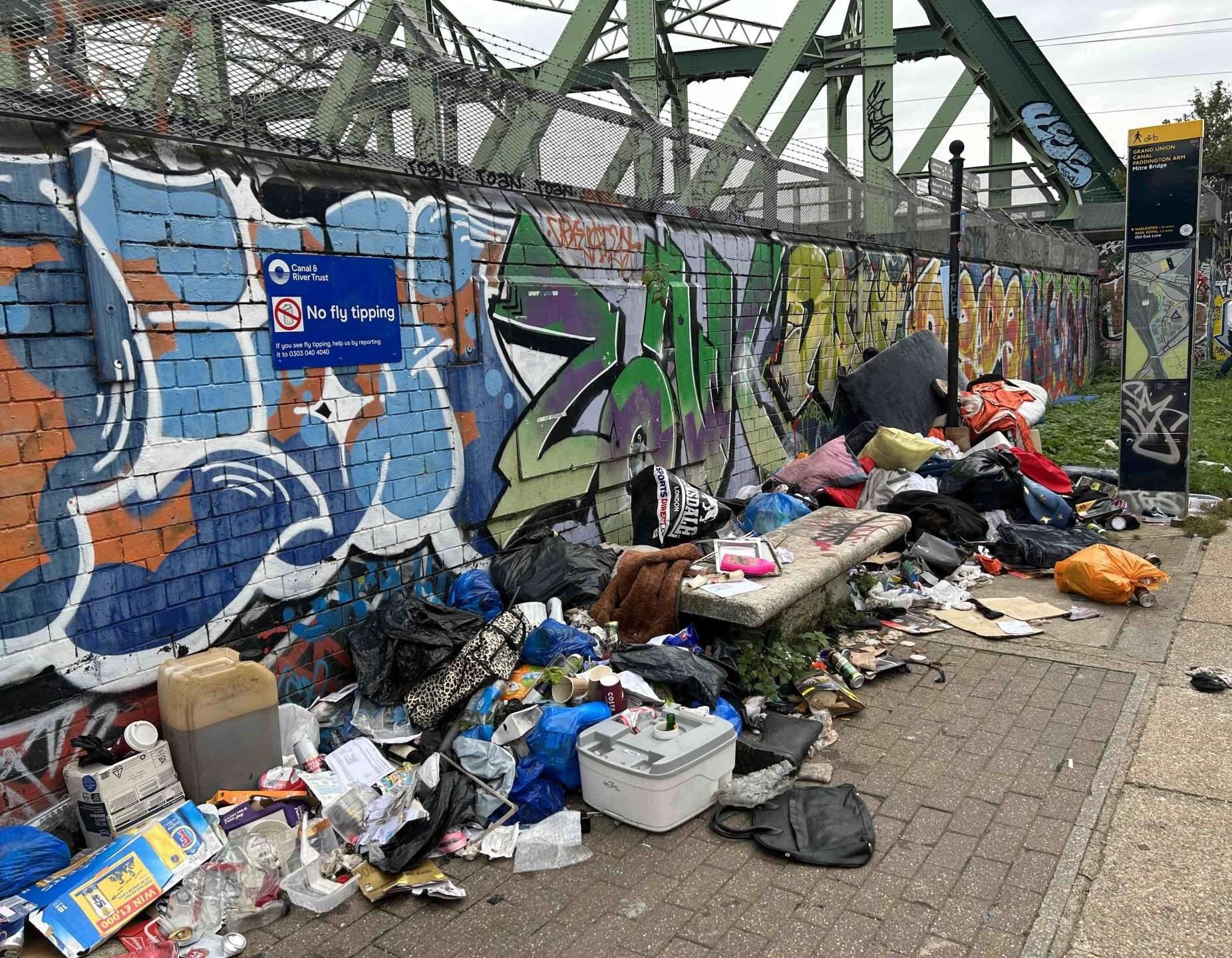
What Problems Does Fly-Tipping Cause?
There’s a stretched-out list.
Danger to Health and a Risk to Life
It’s downright dangerous to everything and everyone, not least if it includes sharp objects – for instance, discarded drug needles, which are easy to slip into other illegal waste “consignments”. We should not underestimate the risks fly-tipping can cause to humans, our environment, farmland, and wildlife.
Likewise, jettisoning illegal waste can encourage rodents and pests to take up residence in the local neighbourhood.
And of course, waterways and soil quality are vulnerable; our ecological balance, once disturbed, is hard to repair. And let’s not forget: asbestos is still around.
Expensive
Most likely, councils would prefer to spend their budgets allocated for fly-tipping on more frontline public services.
Ugly
Let’s not pull any punches. Fly-tipping spoils the world around us. Not only does it make us shudder in revulsion, repeated offences could start to devalue a local area
Encourages Others to Dump Waste
Like attracts like, and there’s a knock-on effect; once fly-tipping has happened, it delivers bright-green “over here” lights to those looking for opportunities to join the wrecking party.
Attracts Anti-Social Behaviour
An unkempt and hostile area with piles of illegal waste attracts graffiti, vandalism and other unlawful activity. Everyone loses.
How and Why Does Fly-Tipping Happen?
In general, trash is usually dumped on commercial land (or any land) to avoid disposal costs.
Perhaps there’s a sudden surplus of commercial or residential refuse that won’t fit or suit a regular collection. And, getting rid of it is tiresome. It all seems complicated and above all, expensive.
Just on a slight tangent, you may be surprised to learn that even upstanding citizens can unknowingly acquire the status of fly-tipper.
If you leave a bag of rubbish or recycling next to a full council bin, then yes – this actually is you. Why? Because the law deems it to be the illegal disposal of household waste. Beware.
However, common perpetrators are cash-only, rogue trader-types without a council license to carry the waste they dispose of. The sad truth is that while these individuals operate totally outside the law, they’re also discreet, go-to “problem solvers”.
They’ll charge considerably less, take everything away, and no questions will be asked; job done. Nevertheless, unwittingly engaging these services contributes to the problem, and those going down this route could face a substantial fine.
What Is Fly-Tipping Clearance?
This is absolutely no job for amateurs.
It’s a challenging task that only the experts should undertake.
Step forward, Clearway.
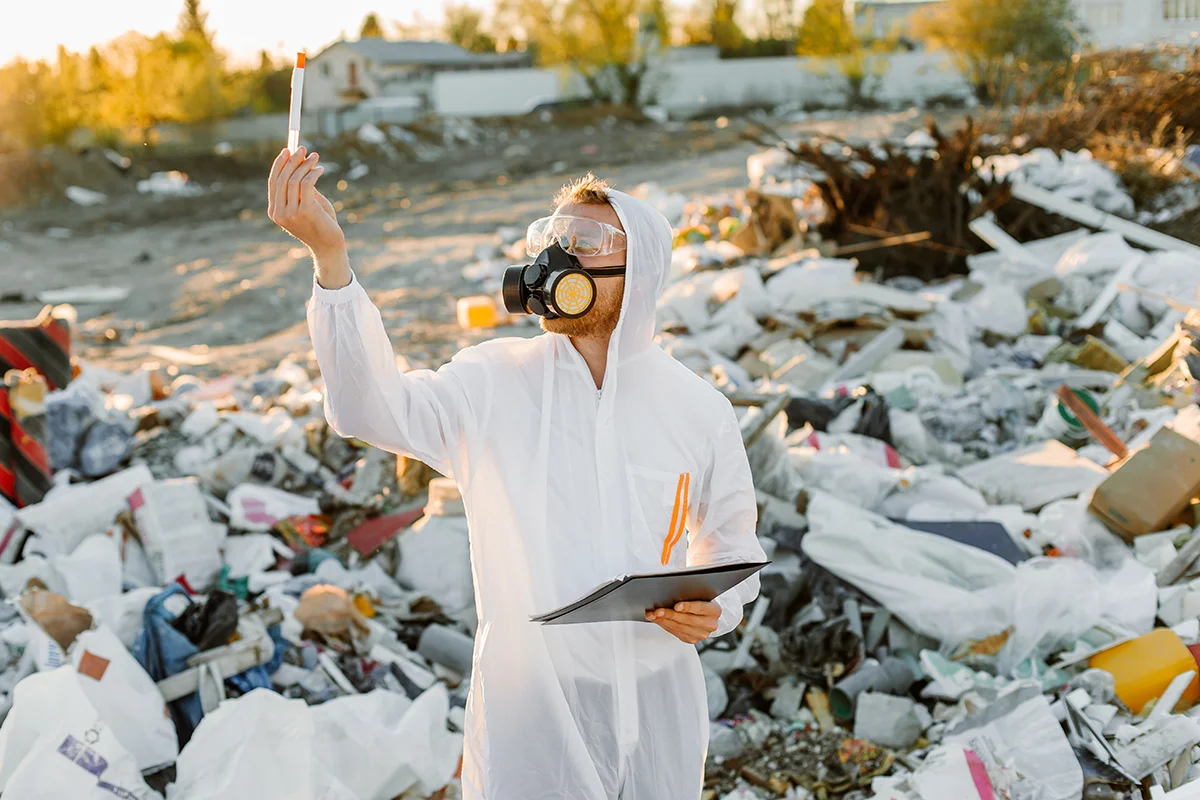
We will safely and professionally clear fly-tipped rubbish from vacant commercial properties to the highest professional standards. And then, transport it to a registered waste transfer agent for processing. This ensures that it’s disposed of strictly in line with all environmental regulations.
With over 30 years’ experience, Clearway works with local authorities, commercial organisations and landowners on the following:
Private land clearance: Our meticulous cleanup service will reduce the impact of waste on your land while ensuring its prompt, secure removal.
Hazardous substance removal: Sharp, toxic or illegal substances may be left illegally or as a by-product of the waste breaking down. Our experts can safely remove most types of waste and deliver it to accredited waste transfer stations for processing.
Public land clearance: Public areas such as open spaces, recreation areas and parks will quickly become highly dangerous if fly-tipping occurs on or near them. We’ll clear and clean everything. It will seem as if it was never there.
We’re proud of our disposals team.
They go above and beyond, and as a business, we’re known for taking on “difficult” projects that our competitors may refuse. While there are problems fly-tippers, we’re here to offer a swift, highly effective solution.
Final Thoughts from Clearway
Fly-tipping is a deliberate, destructive act.
Although careless, inconsiderate and not necessarily with malice aforethought, it’s done on purpose with little or no thought to the consequences to the lives of those it may impact. Quick, tax-free cash is the prize.
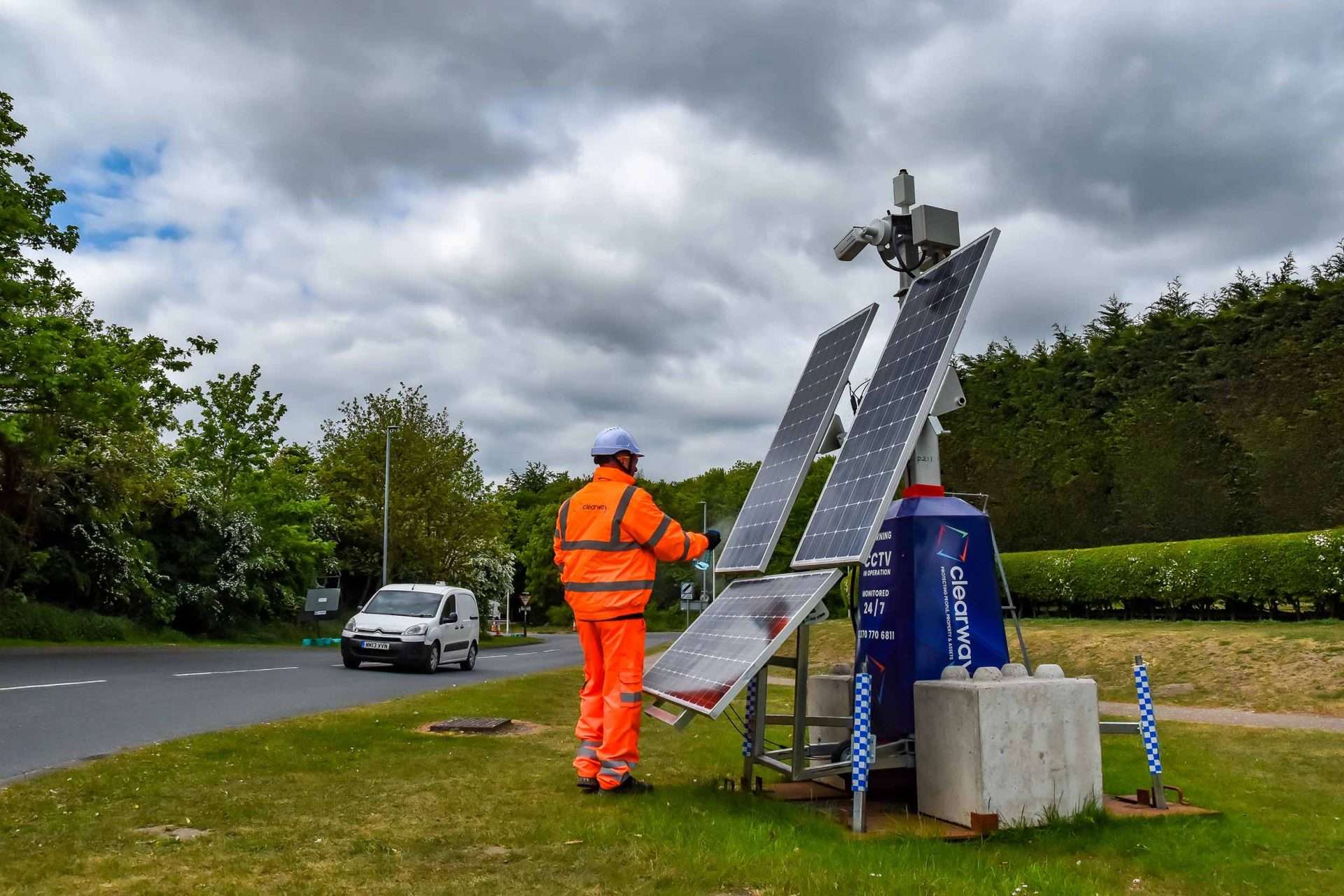
Without robust security measures, you may be more vulnerable than you wish. As a commercial property owner, feel free to speak to us about Commercial CCTV and wireless alarms to monitor the comings and goings around your premises. Plus, if appropriate, security guards – their presence is a deterrence in and of itself.
Prevention is better than cure, yet we live in the real world with real-world problems.
None of us can prevent all the bad things that happen. We’ll always remain vigilant, but it’s good to know that high-quality resolutions are available whenever and wherever you need them.
Get in touch with Clearway to discuss our fly-tipping clearance services.
References
https://www.data.gov.uk/dataset/1388104c-3599-4cd2-abb5-ca8ddeeb4c9c/fly-tipping-in-england

Gideon Reichental 
Vacant Property Security Consultant
Gideon is an experienced property specialist with a commitment to excellent customer service and support. With over eight years dedicated to the niche field of vacant property security and services, Gideon has been at the forefront of developing and implementing best practices and successful strategies for safeguarding vulnerable properties, demonstrating a profound understanding of the complexities involved. His hands-on experience includes managing portfolios of over 200 vacant properties directly, alongside senior management roles overseeing broader portfolios that encompass more than 2000 properties.
Related content
Sun Aug 10 2025
Sun Sep 8 2024
Sat Feb 14 2026