

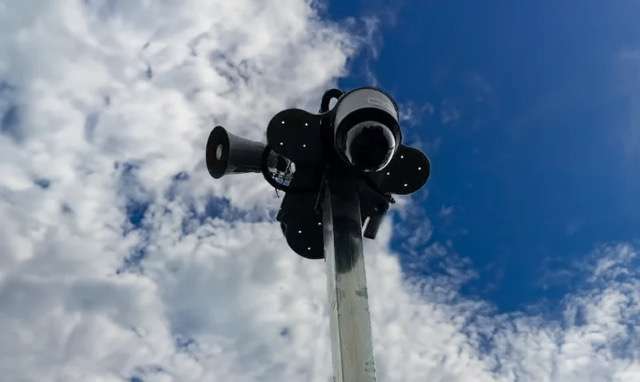
CCTV cameras are commonplace in many commercial environments – they’re proven to be a highly visible, highly effective form of advanced security.
However, a drawback of many standard CCTV cameras is that they have a limited scope of vision and may be unsuited to larger areas, expanses of land between a business and a perimeter, or open, empty spaces such as warehousing units or construction sites.
Combined with 24/7 alarm monitoring services, a set of CCTV cameras and the appropriate signage are a robust deterrent and can supplement the security protection provided by other controls such as guard patrols and alarm systems. But what about CCTV for large empty sites?
In this article, we explain the contrasts between conventional and long-range CCTV, why it adds an extra layer of protection to particular sites and layouts, and the types of CCTV assets you can implement to enhance the efficacy of your surveillance.
Key Takeaways
- Long-range CCTV improves coverage across large or open sites – Long-range CCTV cameras provide extended visibility across large spaces such as construction sites, warehouses, agricultural land and vacant properties, reducing blind spots that standard cameras cannot cover.
- Advanced surveillance features enable proactive security monitoring – Technologies such as PTZ (pan-tilt-zoom), infrared night vision, AI analytics and ANPR allow long-range CCTV systems to detect movement, verify alarms and capture detailed footage from significant distances.
- Long-range CCTV systems provide a cost-effective and visible deterrent – Elevated cameras and CCTV towers can monitor wide areas with fewer devices, creating a strong visual deterrent while reducing installation costs and simplifying remote monitoring.
What Is Long-Range CCTV?
Long-range CCTV refers to surveillance cameras designed to monitor and capture clear footage over large distances or wide areas, often far beyond the capabilities of standard fixed CCTV cameras.
As the name suggests, a long-range CCTV camera can see over an extended field of vision. These cameras have a wider scope of coverage and the functionality to pan, tilt and zoom in and out (PTZ) to verify whether suspicious activity requires further attention.
For many businesses, a short-range camera is only suited to contained, smaller areas, such as an entry area or reception desk, an access gate to a business car park, or a secure room such as a server storage space.
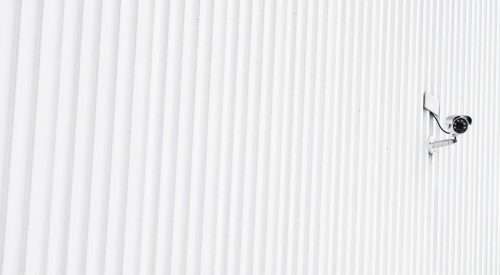
Fixed CCTV cameras can be a great way to demonstrate that your site or facility is under surveillance. Still, if those cameras are limited, cannot cover blind spots, or don’t extend to the edges of your property boundary, they may have limited use.
As surveillance technology advances, there are a number of ways to introduce longer-range coverage to your security surveillance systems. Most long-range cameras are engineered for outdoor usage with casings, components and lenses that continue to function perfectly even during wet or stormy weather and with infrared vision to continue working throughout the night.
Unlike a generic indoor camera, a commercial-grade long-range CCTV unit has exceptionally high resolution. It can capture footage and images in crystal clear definition, even at a distance and in poor weather conditions.
What Types of CCTV Offer Long-Range Vision?
There are several types of long-range CCTV systems, each designed to monitor large areas or detect activity at distance depending on the environment and security requirements.
1. PTZ CCTV Cameras (Pan-Tilt-Zoom)
PTZ cameras are one of the most common long-range surveillance solutions. They can rotate horizontally, tilt vertically, and zoom in on specific objects or movements.
These cameras allow operators or monitoring centres to track vehicles, people, or suspicious activity across wide areas, making them suitable for large commercial sites, stadiums, industrial yards and logistics hubs.
2. CCTV Tower Systems
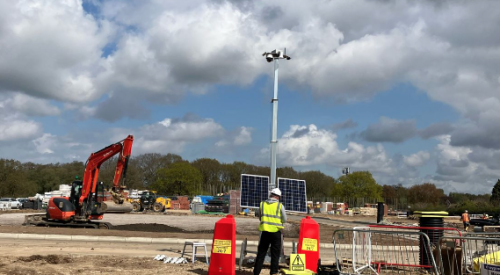
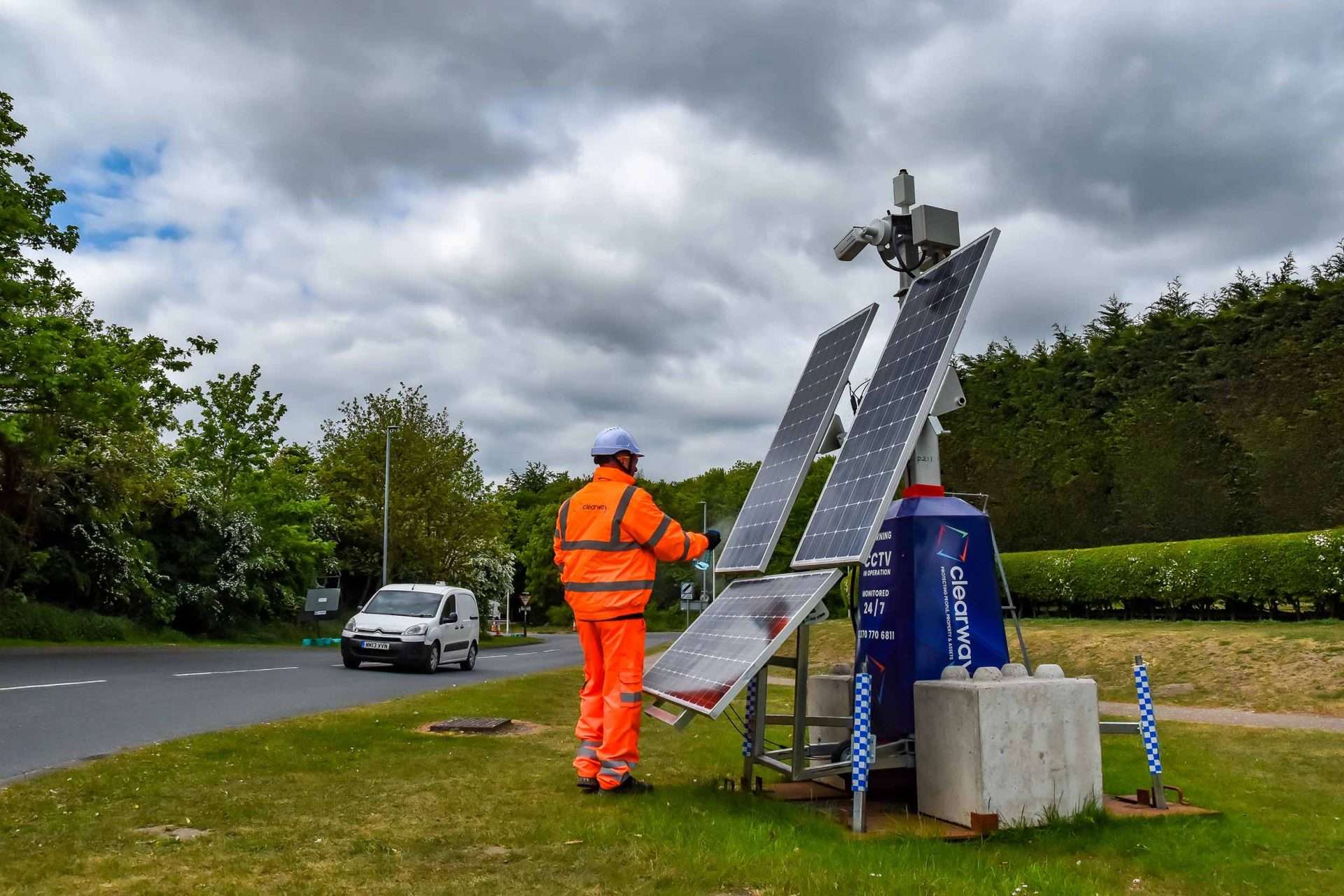
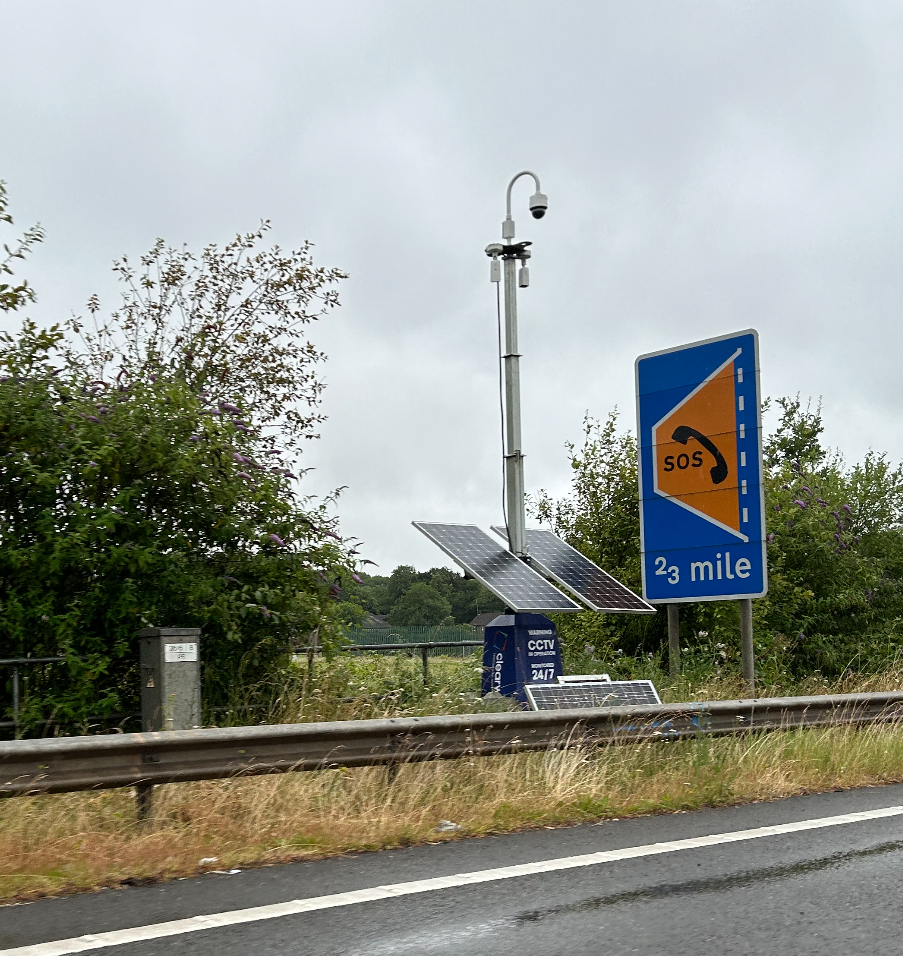
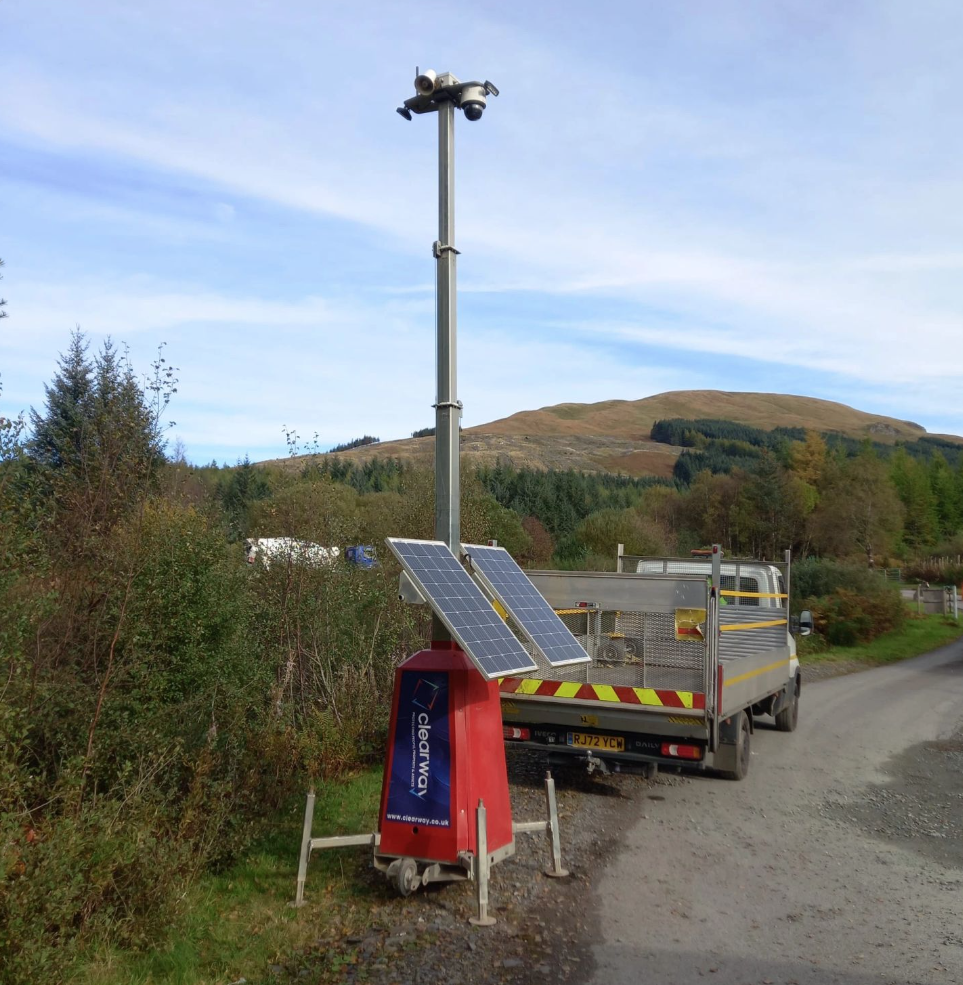
CCTV towers are elevated surveillance units mounted on a mast or tower, typically around 4–6 metres high. They are often used on construction sites, vacant land, and temporary locations.
Many towers are solar-powered and rapidly deployable, allowing security teams to install surveillance in remote areas without a fixed power supply.
3. Thermal CCTV Cameras
Thermal cameras detect heat signatures rather than visible light, enabling them to identify people or vehicles at long distances even in darkness, fog, smoke or poor weather.
These systems are commonly used to protect critical infrastructure, large perimeters, industrial sites, and border areas.
4. Long-Range Bullet Cameras
Bullet cameras are fixed cameras with long focal length lenses designed for distance monitoring. Their narrow field of view allows them to focus on specific zones such as long driveways, gates, fences or perimeter boundaries.
They are widely used for perimeter security and access control points.
5. Infrared Long-Range Cameras
Infrared CCTV cameras use built-in IR illumination to capture footage in low light or total darkness. Many long-range models can detect movement 40–100 metres or more at night, depending on the lens and sensor.
These cameras are common in industrial sites, warehouses, car parks and outdoor facilities.
6. AI-Enabled Long-Range CCTV
Modern surveillance systems combine long-range cameras with AI analytics that can detect behaviour patterns, identify objects, recognise number plates (ANPR), and trigger alerts when unusual activity occurs.
This allows security teams to verify threats remotely and respond quickly.
In practice, many large-site security systems combine multiple long-range CCTV technologies such as towers, PTZ cameras and sensors to provide full coverage across large or open environments.
Our security consultants can provide more tailored recommendations on request. Still, the first step is to consider the area of the space you need to protect – and whether you need a surveillance set-up to provide comprehensive coverage around corners and the sides of buildings.
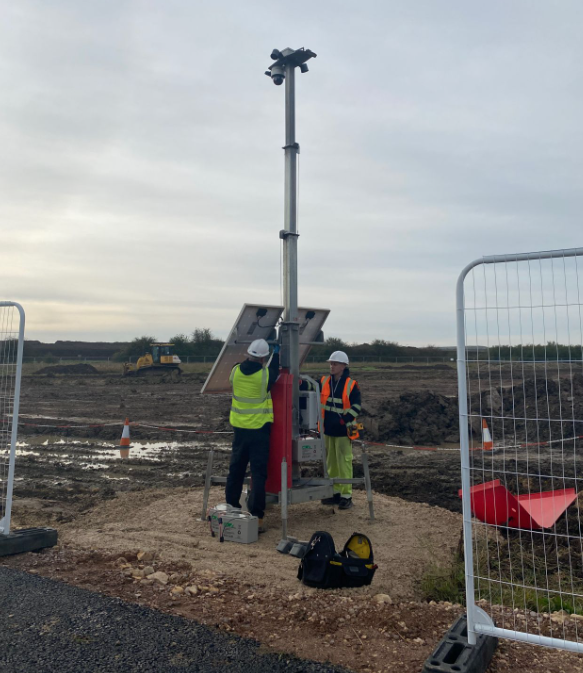
These Solar-powered tower cameras are ideal for larger areas. They are used for events, development sites and open land, where the six-metre-high camera unit is distinctly visible to any prospective trespassers.
We combine a series of eight remote, wire-free PIR sensors in strategic locations around your site, facility or perimeter that integrate with your CCTV tower. This combination ensures that movement is detected up to an approximate 30-metre range, with each sensor able to be positioned up to 100 metres away from the tower.
If movement is detected, your CCTV system can zoom in, focus and capture the cause of the alert.
Can Long-Range CCTV Cameras Offer Advanced Functionality?
CCTV is often seen as a deterrent but can be a proactive way to stop an attempted break-in in its tracks or verify that an alarm activation was caused by harmless wildlife to avoid deploying security teams or emergency services unnecessarily.
Businesses, landowners, agricultural professionals and event managers commonly opt for rapid-deployment long-range CCTV towers since a smaller unit simply wouldn’t be appropriate to cover the full scope of their property. However, these innovative cameras also have optional additional smart features that broaden their use cases:
- Automatic number plate recognition, or ANPR, is used for sensitive or restricted access bases and compounds alongside public facilities such as car parks and retail centres. Cameras can quickly raise an alert if a logged number plate is detected or be used to assist with investigations into vehicular thefts.
- Analytical cameras utilise AI tech to help with enhanced safety protocols, tracking objects, movements and patterns, signalling an alarm when something happens that is outside of the norm, and prompting a security response when an object or piece of equipment is missing.
- Introducing time-lapse recording ensures that site supervisors and managers can evaluate any changes between intervals, assisting with health and safety management, monitoring of environmental risks and other supervisory requirements.
Please get in touch if you would like to discuss the relevance of advanced CCTV analytics for your business or site.
What Are the Benefits of Long-Range CCTV Cameras?
Long-range CCTV cameras improve your security coverage and can capture recordings and images from a far greater distance than a standard CCTV unit, preventing criminal activity and recording evidence of an incident to help with further investigations or prosecutions.
Using CCTV cameras mounted at height, either on a mast, tower, or the side of your building, provides improved visibility where your cameras can oversee large areas of land or the full perimeter of a space, ensuring there are no blind spots or areas outside of the scope of coverage.
Installing one long-range CCTV camera is also considerably more cost-effective than investing in multiple cameras. It means that security supervisors or your monitoring service can manage one feed rather than splitting their time between numerous cameras.
Finally, a long-range camera designed for superior coverage provides fantastic versatility, whether you need to cover a car park, construction site, warehouse, event or open land with multiple potential mounting options depending on the risks you need to protect against.
Related content
Mon Jan 24 2022
inView Detect PIDS Security System
Sun Jun 9 2024
inView Highway Technology Tower
Tue Feb 15 2022