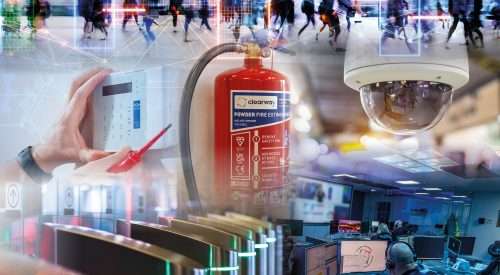


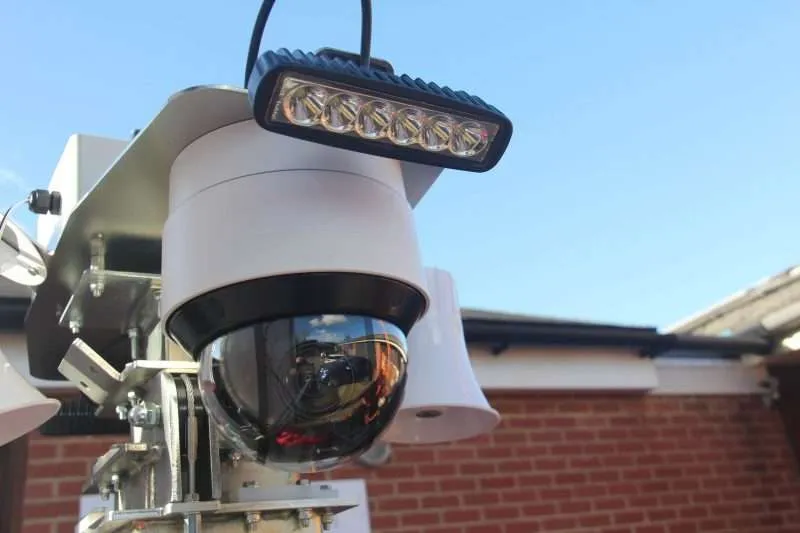
CCTV surveillance is a vital security asset for many homes, businesses and public spaces throughout the UK. It is used to streamline safety checks, protect properties when they are uninhabited, and monitor movements. But how many CCTV cameras are there in the UK?
Key Takeways
- The British Security Industry Association (BSIA) reported that there are approximately 21 million UK CCTV surveillance cameras are in operation.
- This is a big jump from the 7.5 million recorded back in 2013 – so the numbers are growing. This number also depends on which website you visit as the number of CCTV cameras in the UK varies.
- There are approximately just under 1 million CCTV surveillance cameras in London, with the vast majority used by the private sector.
- Manchester has approximately 250,000 cameras in operation with Birmingham operating over 100,000 and Liverpool following with 82,000.
How CCTV Is Used Today
We often think of CCTV as something you’d see at a bank or a retail park, and used to record potential criminal activity. However, with technological advances throughout security solutions, it is far more diverse:
- Automatic triggers can activate a security response instantly.
- Movement capture can identify regular footfall, bottlenecks and busier trading periods to help managers plan their workforce.
- Body temperature detection can be used as an essential health and safety measure.
- Private CCTV systems are installed in homes to help owners keep an eye on their property when away, identify when they have a visitor, or even make sure their pets are behaving themselves!
- Road traffic cameras can record live footage of accidents, dangerous driving or speeding offences.
As these applications expand, and we all become more familiar with tech such as video doorbells and connected home entertainment systems, CCTV has transformed from a corporate security device into something integral to our daily lives.
The History of CCTV Usage in the UK
CCTV was first developed back in the 1940s, designed to capture footage of rocket launches during WWII with early commercial systems available to businesses in 1949.
Following the devastation of the 9/11 attacks in 2001, it was recognised as a vital strategy to deter and prevent crime. CCTV cameras can be adapted to multiple uses, including infrared night vision, facial recognition, and smart sensors to pick up any suspicious movements.
Surveillance has come a long way over the last 70 years:
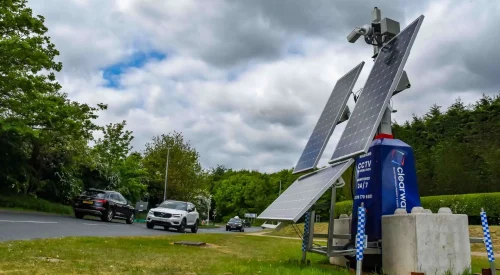
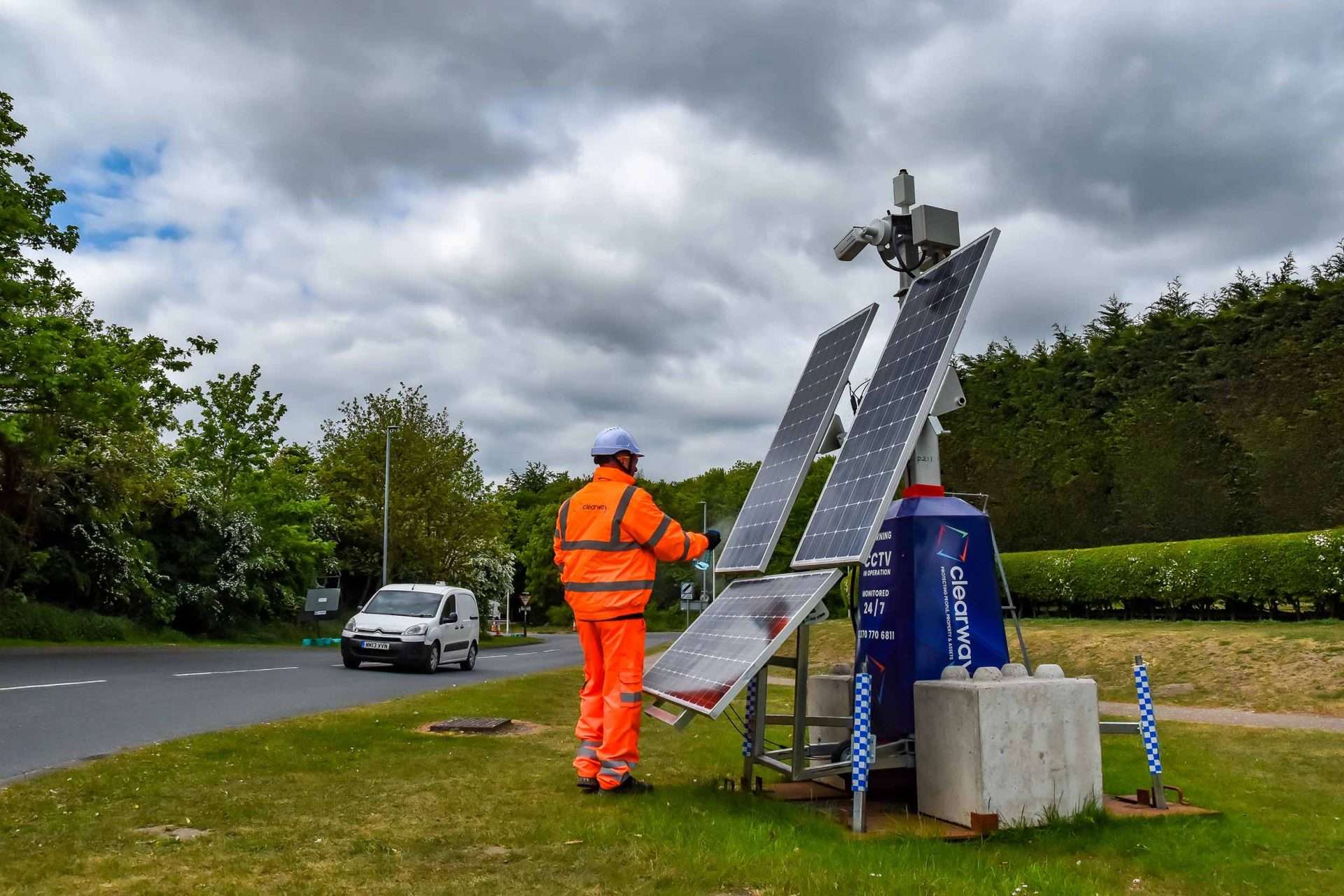
- Solar-powered batteries mean engineers can fit CCTV solutions in even the most remote locations.
- High power lenses can capture movement at broad distances.
- Pictures can be live-streamed, in high definition colour, rather than grainy black and white.
- CCTV footage can be accessed securely via an app on a smartphone.
- Tiny cameras can be installed in almost any location, and swivel to pick up movements at any angle.
How Many CCTV Cameras are there in the UK?
The British Security Industry Association (BSIA) reported that there are roughly 7.5 million cameras in the UK which is around one camera, for every eleven people.
These days, cameras provide a fast, cost-effective solution for many businesses and domestic users.
It is cheap to run, flexible, takes very little time to fit, and can be set up to record on any number of activations.
Whenever you have an asset, a property, or an event where there is any risk, or need to monitor activity, CCTV is one of the lowest-cost options, and substantially more affordable than a full-time security presence.
The BSIA estimates that there are now somewhere between four and six million CCTV cameras in the UK. That means between 16 and 24 cameras for every square kilometre.
In comparison:
- China uses more CCTV cameras than any other country, with an estimated 200 million systems.
- The US has around 50 million CCTV cameras in place.
- In Germany, there are approximately 5.2 million CCTV installations.
It’s worth remembering that, while being under surveillance might not sound appealing, there are strict rules about responsible CCTV usage. Therefore, in most cases, if you are going about your day, there is little chance that any recordings will be made, or stored. What CCTV does do is make us all safer.
There is a significantly reduced risk of criminal activity, where signage indicates the presence of CCTV.
Public transport is safeguarded, roads are monitored, and emergency services can respond faster, and more appropriately when they can see exactly what is happening in real-time.
For your business or home, a CCTV system acts as a preventative, defending your property from break-ins. And, should an intrusion occur, you’ll be able to assist the police with tracking down the criminals.
CCTV in London and Other Major UK Cities
CCTV coverage is often discussed at city level because large urban centres tend to have denser camera networks than rural areas.
These figures are still estimates, though, since most cameras are privately owned and there is no single official register.
In London, the total is commonly cited at just under 1 million CCTV cameras, with the majority operated by the private sector rather than local authorities.
This includes cameras used by businesses, transport operators, and private property owners, not only public space systems.
Other major UK cities are also frequently cited with substantial numbers of cameras in operation. For example, Manchester is often estimated at around 250,000, Birmingham at 100,000+, and Liverpool at around 82,000.
It’s worth treating city totals as directional rather than exact, since different studies count different types of devices.
Some figures focus on traditional CCTV systems, while others include newer video security like smart doorbells and connected cameras, which can shift the totals significantly.
CCTV and Police Usage
Just as in any private setting, there are regulations around the use of CCTV by the police.
There are rules about storing CCTV, which we’ll explain later, but if you do capture footage that may be used in a criminal investigation, it’s essential to allow the authorities access to this.
Police forces in the UK may request your CCTV footage – for example, if they are investigating a crime, believe that your cameras may have captured a particular person or vehicle, or if your systems overlook an area where suspicious activity has occurred.
This applies to both homeowner CCTV systems and commercial business CCTV.
If you refuse access to your CCTV, the police can demand this with a search warrant – although in most cases this is never required, since a private CCTV owner will be happy to assist in official police enquiries.
The Information Commissioner’s Office publishes a CCTV Code of Practice around the police usage and scope of CCTV surveillance, including how the forces can identify individuals, and privacy protection rules for other footage.
For example, if you have been filmed on CCTV as a passer-by, and that footage is later used in a criminal investigation, your face, number plate or any images that might identify you must be blurred out.
What are the Rules of CCTV?
If you are considering installing a CCTV system to protect your home or a commercial CCTV system for your business, it’s essential to understand the regulations, mainly around data protection.
You can review the full guidance online, produced by the Surveillance Camera Commissioner, but to summarise the most important rules:
- You must inform neighbours, or neighbouring businesses, that you are installing CCTV, and put up signs that advise people that live recording is in place.
- You must only use the footage captured for the identified purposes; i.e. protecting your property from criminals.
- You cannot record staff at a place of work in most cases – and they must be aware of the CCTV system, when, where and why it is in operation.
- Data protection rights apply. Therefore, if somebody requests access to CCTV footage in which they are identifiable, you may need to permit this, and/or destroy the footage depending on whether it is required for any other purpose.
- CCTV captures that relate to a crime should be shared with the police.
- You must delete recordings regularly. There isn’t a specific rule about when this should be, but typically you should not retain surveillance for more than 30 days.
These rules are there to protect privacy and ensure that CCTV isn’t used for anything other than its stated purpose. So you can install cameras outside your home for safety reasons, but cannot secretly film your neighbours, for example.
You can also reference the Surveillance Camera Code of Practice when discussing responsible surveillance principles and expectations, particularly where systems cover public space or are used by public authorities.
As digital security technology advances, it seems very likely that UK homeowners and businesses will use CCTV in more and more applications.
One example applies to supermarkets and retailers, where CCTV can be used alongside body temperature detection cameras to instantly identify high heat signatures and a potential health and safety risk.
CCTV is, therefore, here to stay – and if you are considering ramping up your security, either at home, at work, or both, it’s a failsafe option to protect your properties and assets at every time of day or night.
What These CCTV Numbers Mean for You
Estimates for how many CCTV cameras are in the UK vary widely, mainly because there’s no single official register and different sources count different types of systems.
The headline figures are useful for context, yet the practical takeaway is simpler: CCTV is now a normal part of daily life across homes, businesses, and public spaces.
What matters most is using CCTV responsibly. Have a clear purpose for recording, avoid capturing more than you need, keep access secure, and retain footage only for as long as it’s genuinely required.
This keeps your setup effective while staying aligned with UK data protection expectations.
If you’re planning a CCTV setup for a site, premises, or vacant property, Clearway can help you choose the right approach and keep it compliant from day one.
Frequently Asked Question
How many CCTV cameras are in the UK?
Estimates vary because most cameras are privately owned and not registered, so totals are based on research and modelling.
The most-cited figures range from millions of CCTV cameras to much higher counts when broader video surveillance devices are included.
Why do different websites give different CCTV totals?
Some sources count only traditional CCTV systems, while others include doorbell cameras and wider surveillance devices. There is no single official register, so methodology matters.
Can the police request my CCTV footage in the UK?
Yes, police can request footage if it may help an investigation, and they may use a warrant if needed. If your system captures relevant evidence, sharing it usually supports public safety and due process.
How long should CCTV footage be kept in the UK?
Retention should be limited to what’s necessary for the stated purpose, and many organisations use short retention windows as standard practice. Follow ICO guidance and document your retention rationale.
Do I need signs for CCTV at home or at a business?
If you capture images beyond your private boundary or operate CCTV as an organisation, clear signage and transparency are key expectations under data protection guidance. ICO guidance explains how to do this lawfully.
Related Reading
Related content
Wed Jun 5 2024
Sun Aug 3 2025
Sun Aug 11 2024
Sun Nov 24 2024