


If your business uses CCTV for security, safety or operational oversight, it’s vital to stay compliant with the latest legal requirements. As we head into 2026, regulations around workplace surveillance remain unchanged are as strict as ever, covering how footage is captured, stored, accessed and disclosed.
Business owners need to comply with regulations and legislation that safeguard data privacy, protect employees from unwarranted or intrusive supervision, and ensure surveillance is used appropriately and in a controlled and justifiable manner.
This guide outlines the key CCTV rules businesses must follow in 2026 to remain lawful and avoid penalties. If you’re unsure whether your current system is compliant or how updates in legislation may affect you, speak to the Clearway team for expert, tailored advice.

Key Takeaways: Here are four main CCTV rules businesses must follow in 2026:
- Lawful Purpose and Justification: You must have a clear and legitimate reason for using CCTV—such as crime prevention or health and safety—and be able to demonstrate this if challenged.
- Data Protection and Transparency: CCTV usage must comply with the UK GDPR and Data Protection Act 2018. This includes clear signage, a defined data retention policy, and informing staff and visitors that they are being recorded.
- Limited Access and Secure Storage: Footage must be stored securely and only accessible to authorised personnel. You must prevent unauthorised access or sharing of recorded images.
- No Excessive Monitoring: Surveillance must be proportionate. Monitoring of staff, particularly in private areas (e.g. break rooms or toilets), is still strictly prohibited in 2026 and may be considered intrusive or unlawful.
What are the biggest workplace CCTV challenges to be aware of in 2026?
1. Tighter Data Protection Regulations
In 2026, enforcement of UK GDPR and data protection laws is more rigorous than ever. Businesses must not only have a lawful basis for CCTV use but also prove it through documentation such as Data Protection Impact Assessments (DPIAs). There’s increasing pressure to manage subject access requests (SARs) efficiently, ensuring individuals can access footage they appear in within the legal timeframe—usually one month. Failure to comply can lead to serious fines and reputational damage.
2. Employee Privacy Concerns
As employees become more aware of their rights under the Human Rights Act and data protection laws, businesses face greater scrutiny over how CCTV is used in the workplace. Monitoring must be proportionate and clearly justified. Surveillance in areas where privacy is expected—like rest areas or locker rooms—is generally prohibited and could result in legal action if deemed intrusive or unjustified.
3. Cybersecurity Risks
Modern CCTV systems often operate over IP networks, making them vulnerable to hacking if not properly secured. Without strong encryption, regular updates, and access control, businesses risk unauthorised access to live feeds or stored footage. A data breach involving CCTV can expose sensitive footage, create legal liabilities, and undermine customer or employee trust.
4. AI Surveillance and Ethical Boundaries
As artificial intelligence becomes integrated into surveillance systems—through facial recognition, object tracking, or behavioural analysis—businesses must tread carefully. These tools raise ethical questions around consent, fairness, and data profiling. In 2026, using AI without clear justification, transparency, and safeguards could lead to legal challenges and public backlash, especially where individuals are unknowingly monitored or categorised.

What do our experts say?
“In 2026, businesses can’t afford to treat CCTV as a simple box-ticking exercise. With CCTV AI integration, rising cybersecurity threats, and stricter data laws, every camera must be justified, every recording protected, and every employee informed. Failing to strike the right balance between surveillance and privacy isn’t just a legal risk — it’s a reputational one.”
The number 1 rule: Have a clear and legitimate reason for CCTV in the Workplace
Essentially, business owners have a right to install security measures and assets as necessary, but must ensure employees are aware of the presence of live recording or intermittent surveillance and know the reasons behind this.
Having a clear, thorough set of CCTV policies and procedures available to all staff, included in company logs and available for inspection, is essential. This can protect the company’s interests while ensuring surveillance is used properly for security and productivity reasons without breaching any of the applicable laws.
Some industries have specific compliance regulations, which is why we always advise company owners to contact our surveillance consultants first-hand to discuss any particular legislation or CCTV usage regulations they need to comply with.
Legislation in the UK Impacting the Use of Workplace CCTV
The right way to use workplace CCTV is to balance the security needs of the business with the privacy rights of employees and anyone else who enters the premises.
Although there are numerous laws that affect employee rights, the applicable legislation includes:
- The Data Protection Act 1998: Requires businesses to handle CCTV footage as personal data, meaning it must be collected, stored, and used fairly, lawfully, and securely.
- The Human Rights Act 1998: Protects individuals’ right to privacy, meaning CCTV must not be excessive or used in areas where people reasonably expect privacy (e.g. toilets or break rooms).
- The Regulation of Investigatory Powers Act 2000 and 2016: Regulates how surveillance is conducted, restricting covert CCTV use unless properly authorised for serious investigations.
- The Telecommunications Regulations 2000: Ensures that any CCTV systems using telecommunications networks (e.g. internet-based systems) maintain privacy and protect communications from unauthorised access.
These laws ensure employees have a protected right to privacy, can carry out their work without undue scrutiny, and dictate the rules for public bodies installing CCTV cameras in places of work.
This matters because a breach of the law can have serious repercussions, including the potential to damage employee relationships, impact the business’s reputation, and even attract legal action and employment tribunals.
Using Covert Surveillance in a Place of Work
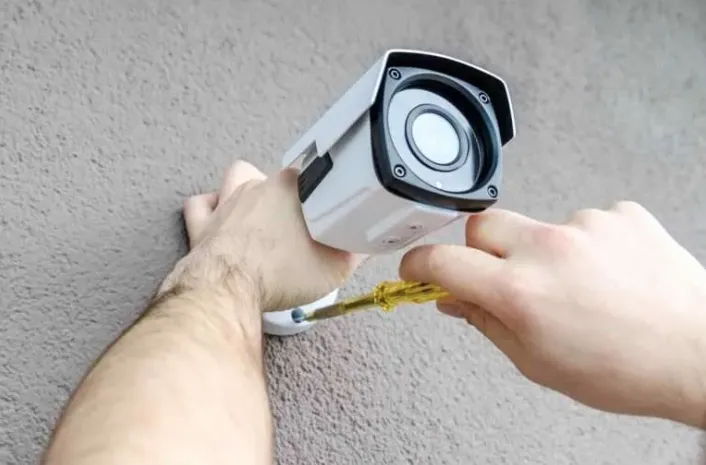
While hidden cameras are rarely advisable and have limited effectiveness in deterring and preventing external crimes, they are not necessarily illegal provided there is a clear, proven reason for their use, such as suspected or alleged malpractice or criminality.
This use of cameras is restricted to specific instances, such as investigations, and is strictly time-limited until that investigation is concluded. It should also consider any possible breaches of privacy and how to avoid them.
In any case, CCTV footage must not be accessible to any employee. It should be correctly stored with measures in place to safeguard it from unauthorised access, and it should be supported by policies that set out how long information will be stored, who it can be shared with in what circumstances, and when it will be deleted.
Effective Use of CCTV In a Workplace: A checklist
As we’ve indicated, a comprehensive CCTV policy is vital, but the first step is usually to carry out an impact assessment.
This process looks at the reasons behind your intended use of CCTV, the benefits from a business and commercial perspective, and the drawbacks it could have on your staff, alongside your obligations in terms of protecting staff, defending business assets and meeting data privacy regulations.
During an initial impact assessment, employers are usually expected to:
1. Establish a Clear and Lawful Purpose
- CCTV must only be used for justified reasons, such as crime prevention, health and safety, or monitoring operational efficiency.
- Conduct and document a Data Protection Impact Assessment (DPIA) before installation.
2. Consult and Communicate with Employees
- Inform employees before installing CCTV and explain why it’s being introduced.
- Be transparent about what the cameras will monitor, how data will be used, and how long it will be stored.
3. Provide Clear Signage
- Place signs in all areas under surveillance, stating that CCTV is in use.
- Include contact details for the system operator and the reason for monitoring.
4. Register with the Information Commissioner’s Office (ICO)
- All businesses using CCTV for workplace monitoring must register and pay the data protection fee.
5. Clarify Camera Locations
- Avoid placing cameras in areas where people have a reasonable expectation of privacy (e.g. toilets, break rooms).
- Be specific about camera placement and ensure signage matches the coverage.
Read more: Where to position CCTV
6. Control Access to Footage
- Set out clear procedures on who can access CCTV footage and under what conditions.
- Store all footage securely using encryption and password-protected systems.
7. Document Data Storage and Access Policies
- Create written policies covering retention periods (typically 30 days), access protocols, and data sharing rules.
- Ensure these policies comply with the UK GDPR and the Data Protection Act 2018.
8. Support Subject Access Requests (SARs)
- Staff and visitors have the right to request CCTV footage that includes them.
- Outline a formal SAR process and train managers on how to handle, redact, and respond to requests within 30 days.
9. Train Staff and Appoint Responsible Individuals
- Provide training to managers, security personnel, and anyone with CCTV duties—especially around data handling and confidentiality.
- Alternatively, contract a professional, accredited security company to manage your system.
10. Avoid Covert Surveillance Unless Legally Justified
- Covert monitoring (e.g. hidden cameras) is only legal under strict conditions with proper authorisation (e.g. under RIPA for criminal investigations).
By working through these tasks, creating opportunities for employee consultation, and ensuring you have the right policies, procedures and protocols in place, you can use the power of CCTV to protect and defend your business, while ensuring your staff can go about their work without unnecessary scrutiny, or any perceived breaches of privacy.
Professional Advisory Support When Installing CCTV in the Workplace
As we’ve seen, there are numerous considerations to think about before installing workplace CCTV, and the right types of surveillance, monitoring systems, positions, and even camera models will all depend on your specific security concerns, access permissions, and physical security defences.
For further and customised guidance on meeting the CCTV workplace regulations, you are welcome to contact the Clearway team to schedule an initial consultation.