


Landlords, property management companies, and owners often recognise the benefits of CCTV surveillance. This ensures communal and shared areas are maintained and used within the terms of tenancy leases, enhances security, and improves tenants’ peace of mind that anything unauthorised, illegal, or suspicious will be captured and investigated.
However, this contrasts with the duty landlords have to respect tenants’ privacy and adhere to data protection regulations, which means they must follow several steps to ensure their CCTV is lawful, properly managed, and compliant with all the relevant standards.
Today, we’re focusing specifically on the rules related to communal areas, such as shared entrances, hallways, facilities, and spaces in residential blocks of flats, shared commercial spaces, and any other building where tenants can use an amenity without having exclusive usage rights.

Recapping the Primary Rules for CCTV in Communal Areas
- Landlords and building managers are entitled to install CCTV in communal areas if they wish. Most do so to augment security and protect tenants using areas like car parks, stairways and lobbies.
- To comply with data protection laws, they must define the CCTV’s purpose, communicate this with tenants, and create policies that set out how data will be used, stored, accessed, and managed.
- Regardless of how crucial CCTV surveillance might be, the responsible party must follow all the requisite steps. Even though cameras might be outside of a living space, there is still a very real potential to breach personal data protection and human rights legislation, which can carry significant liabilities.
CCTV cameras are a great way to deter unwanted and illegal activities and protect the welfare of residents, delivery people, and personnel such as maintenance teams and cleaners who access communal spaces. Shared areas are also commonly easier to access than individual apartments, units, or flats.
The complexities arise because, according to the Information Commissioner’s Office (ICO) definitions, the videos, still images and audio collected through a CCTV system constitute personal information, which means that, in the first instance, the person installing the cameras must register with the ICO as a data controller.
This process requires the responsible party to share information about where, why and how they are using CCTV and managing personal data, with regulations that mean they must:
- Communicate the presence of CCTV to all relevant parties, with signage showing that recording is taking place and the contact information for the data controller.
- Explain the justification for the CCTV and ensure that only recordings relevant to that purpose are kept, with controlled access, which means anybody without authority cannot access personal data about any individual.
- Create policies and procedures outlining how recordings will be deleted, the scenarios in which they might be shared, and with whom.
Informing tenants is critical because putting up CCTV cameras without notifying those affected could both breach the regulations and give rise to disputes if there is any perception that cameras are being used to infringe on privacy, record activities outside of the intended use, or affect the rights of tenants to go about their usual routines without being scrutinised.
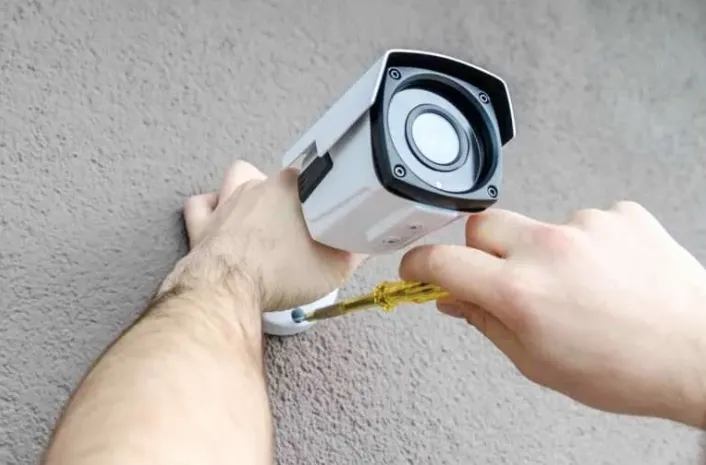
Installing CCTV in a Communal Space: Privacy Impact Assessments
A privacy impact assessment is similar to any other risk assessment in that it provides a structured way for landlords or building managers to detail what they are trying to achieve with the installation of CCTV and how that could potentially impact their tenants or other building users.
For example, if a landlord were to install CCTV to deter fly-tipping and waste dumping in a front garden, they might need to consider the following points:
- How likely it is that the CCTV will capture various types of unrelated activities, such as residents coming and going, putting their bins outside, answering the door, and receiving deliveries.
- How to ensure the CCTV is proportionate, pointing only at the necessary areas and not recording anything irrelevant to the purpose of the surveillance.
- Timings, such as whether their cameras should be on continuously, motion-activated or only live overnight, especially if the majority of incidents occur during the hours of darkness.
- Whether cameras will capture audio or only images, and the best places to install signage at every entry point to the area being filmed, to ensure anybody entering knows there is CCTV covering the area.
Provided there is a legitimate reason for the CCTV, tenants are aware of its usage and parameters, and sufficient thought has been given to ensure this isn’t a privacy breach and that any personal data will be disregarded, deleted, or stored according to ICO and data protection regulations, the landlord will have fulfilled their obligations.
Considerations When Using Ring Doorbells in Communal Areas Rather Than Professionally Fitted CCTV
As security specialists with decades of experience, we often speak with clients who need independent advice. We ensure the use of the best-value CCTV with all the performance features they need and don’t run the risk of falling foul of data privacy legislation.
However, landlords and building managers could still commit a data protection breach inadvertently, often by installing Ring doorbells and similar devices without professional input.
Police forces often advocate for using either CCTV or video-capture doorbells. They are a great way to capture information that later becomes important in identifying and apprehending criminals. Still, the legalities and data protection rules also apply.
If the landlord, for example, installs this type of doorbell, they’ll still need to meet all of the above requirements, such as specifying the use of any stored recordings, having a system to ensure information is handled securely and isn’t accessible to anybody else, and having a policy that sets out the lawful, transparent, and responsible use of data captured.
Of course, the ideal is to use a professionally fitted CCTV system with advanced capabilities and straightforward data protection compliance, but in any case, you should be conscious of the implications of the Data Protection Act and seek advice if you have any concerns or doubts about whether your communal space CCTV is in full adherence.
Related content
CCTV in the Workplace: What Are the Rules in 2026?
Mon Jan 19 2026
CCTV Retention Rules: How long can CCTV footage be kept for in the UK?
Sun Feb 8 2026
CCTV in Schools – What Are the Rules?
Mon Mar 17 2025