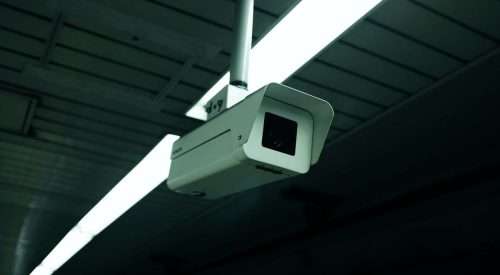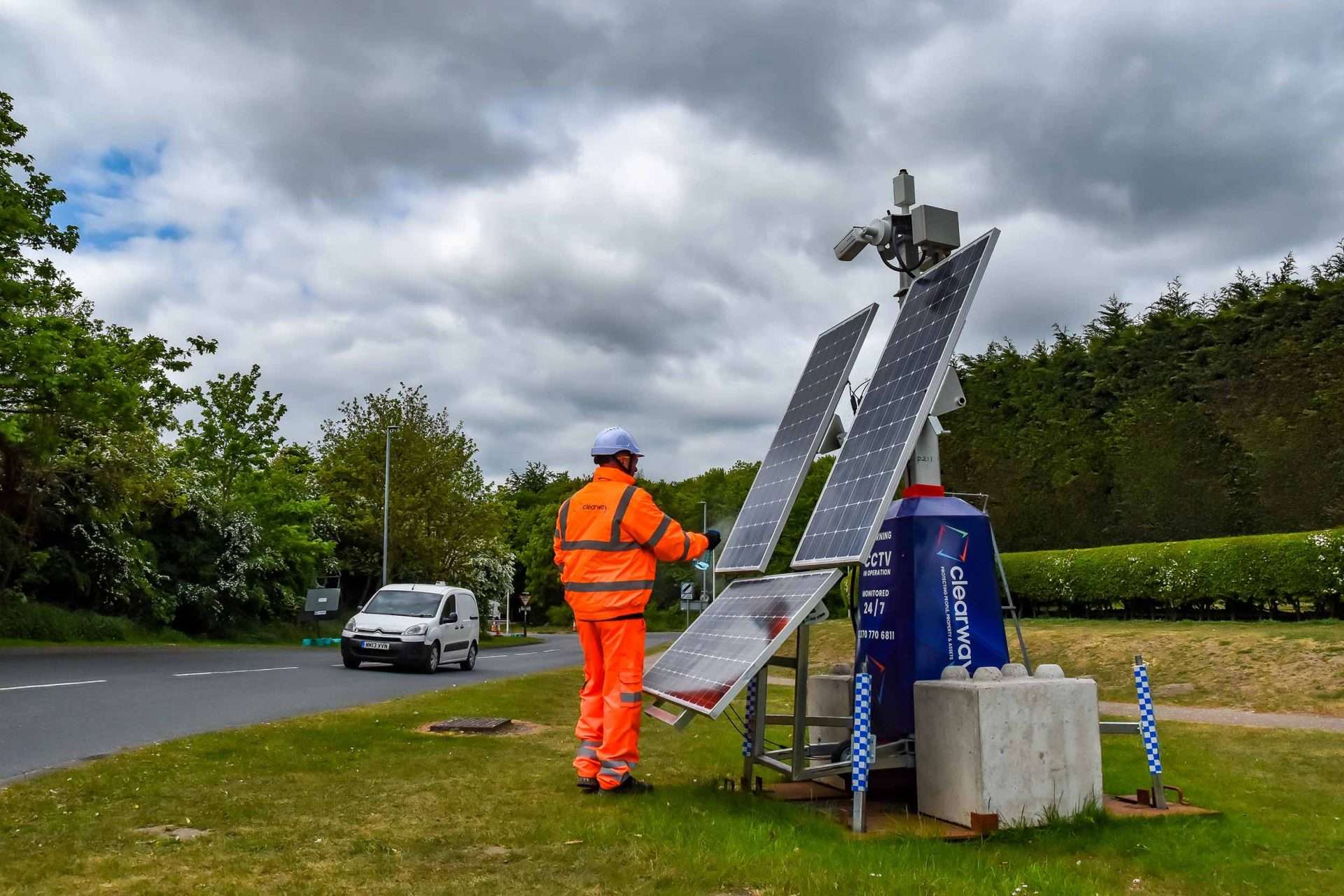


CCTV surveillance is a critical security precaution for many businesses, construction sites and private properties throughout the UK. Having signage and visible cameras can be a strong deterrent, and ensure your premises are protected from criminal activity – but how long should CCTV footage be stored for?
It’s important to use CCTV responsibly. There are guidelines for storing personal information related to data protection. Therefore a lot depends on why you use CCTV, how that footage is processed, and how long you need to retain it.
In this article, the Clearway team summarises the key factors to consider when retaining CCTV footage.
Key Takeaways: How long can CCTV be kept for in the UK
- There is no specific legal limit for CCTV retention in the UK, but most organisations keep footage for 31 days, unless there is a legitimate reason to retain it longer, such as for legal or investigative purposes.
- CCTV footage is classed as personal data under the UK GDPR and Data Protection Act 2018, meaning organisations must justify their retention period and ensure data is securely stored and deleted when no longer needed.
- Certain industries (e.g., finance, healthcare, law enforcement) may have specific retention requirements, and footage related to legal disputes, crimes, or insurance claims may be kept for longer than 30 days if necessary.
UK Laws Relevant to Storing CCTV Surveillance
The primary law that you need to be aware of is The Data Protection Act (1998).
This regulation aims to protect privacy and avoid any person or business misusing information captured by CCTV cameras.
Regulatory controls are designed to protect the rights of anybody recorded by CCTV, and mean that you should:
- Erect signs informing visitors to your premises that CCTV is in action.
- Have a policy outlining the appropriate uses of the footage captured.
- Decide on who has access, and how this will be safely stored.
- Delete images and videos after a set period.
For businesses, the easiest way to demonstrate good CCTV management is to have an operational policy outlining each of these factors.
You will also need to register with the Information Commissioner’s Office, as a company who collects data – the most critical data is directly identifiable with an individual. That might include car registration plates, or footage showing employees arriving or leaving work, for example.
The ICO has an online CCTV checklist that helps work through each of the key considerations.

How long does CCTV footage last?
There isn’t a hard and fast rule about how long you should – or can – keep CCTV footage. A lot depends on why you are collecting it, and whether any potential criminal activity has been identified that should be shared with the police.
Generally, the authorities recommend a retention period of 31 days. A month is typically enough time to review footage collected and highlight any captures that may be required in an investigation.
Small business owners might not find this practical. For example, if you use CCTV as a deterrent to criminals, and have not recorded any serious incidents, a minimum retention period of 14 days might be more suitable.
In any case, this retention period should be recorded in your CCTV policy, and apply to all footage, unless any events have taken place in that time.
The ICO guidance is that you shouldn’t keep CCTV videos for ‘longer than necessary’. There is, therefore, some discretion offered, and you should consider what sort of incidents you are likely to record, and what retention period is most suitable.
Should your CCTV pick up a serious crime or something you suspect might be a major incident, you should keep this imagery for 31 days – for example, if you record CCTV in vulnerable areas where there are high instances of crime.
Should I Keep CCTV Footage for Longer if I Have Captured Something Suspicious?
CCTV can only be used for specific purposes – namely, recording criminal activity or unauthorised security breaches.
In most circumstances, you cannot use it to record people at work, or neighbouring properties, for example.
Therefore, if you have captured an incident, this must be in accordance with the stated use of your CCTV installation. It might be necessary to keep videos for longer if there has been an accident.
In that scenario, it is usually advisable to copy the relevant CCTV, and only the appropriate videos, to a separate disc that you can easily share with the authorities. If there were an accident on site that could potentially be the subject of a legal claim, a claimant could instigate court action at any time within the next three years.
However, you must remain compliant with data protection laws and safeguard the information without unauthorised personnel access.
The 31-day recommendation is usually sufficient. This period allows the police enough time to investigate an incident, identify which commercial CCTV systems may be useful, and request access to the videos captured.
Storing CCTV footage – a summary
CCTV is an efficient way to deter intruders and support investigations, as long as it’s managed responsibly.
The UK doesn’t set a fixed CCTV retention period, so your policy should explain why you record, how long you keep footage, who can access it, and how footage is deleted or overwritten once it’s no longer needed.
ICO guidance is clear that CCTV footage should not be kept for longer than necessary, so retention decisions should be purpose-led and documented.
If you’re planning a new setup or reviewing an existing one, it helps to think beyond retention and look at the full operational picture.
Clearway supports businesses with temporary hire for short-term or flexible coverage, plus CCTV monitoring for faster response when incidents happen, and maintenance and repair to keep systems reliable and audit-ready.
If you want practical advice on your setup, retention approach, or the right system for your site, speak to our team.
Frequently Asked Questions
1. How long do shops keep CCTV?
Most shops and retailers keep CCTV footage for 30 days. However, larger stores or supermarkets may retain footage for longer periods if needed for security, loss prevention, or legal purposes. The retention period must comply with UK GDPR and be justifiable.
2. How long do security cameras keep footage?
The retention period for security cameras varies based on the storage capacity, system settings, and legal requirements. In general:
- Small businesses/home CCTV: 7–30 days
- Retail, corporate, and public sector: 30–90 days
- High-security locations (banks, transport, law enforcement): Several months to years
Footage is typically overwritten once storage is full unless manually saved.
3. How long do pubs keep CCTV footage?
Pubs and licensed venues usually retain CCTV footage for 30 days, in line with licensing conditions and crime prevention policies. Some councils or police licensing authorities may require longer retention (e.g., 60–90 days) for investigations or public safety compliance.
Related Reading
Recent posts
Security Trends for 2026: How Technology and Insight Are Reshaping Commercial Protection
Tue Mar 10 2026
Mon Mar 9 2026
CCTV Signage Rules: Do you need signs for CCTV?
Mon Mar 9 2026