

PIR sensors (Passive Infrared sensors) detect infrared radiation emitted by people or vehicles and trigger alerts when unexpected movement is sensed, such as someone entering a restricted area or moving on-site outside normal hours.
Infrared radiation is naturally emitted by warm objects, especially humans and animals.
Here’s how it works:
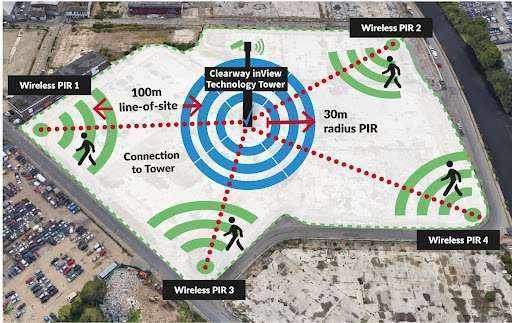
How Does a PIR Sensor Work:
- All objects emit some level of infrared radiation, but warm bodies (like people or vehicles) emit more.
- PIR sensors have two slots made of a special material that is sensitive to IR.
- When a warm body moves across the sensor’s field of view, it causes a sudden change in the amount of infrared radiation between the two slots.
- This change is interpreted as “motion,” triggering an alert in a security system.
So, in short, PIR sensors use heat (infrared energy) to detect movement, which is why they’re good at spotting people or vehicles, especially in dark or low-light conditions.
Sensors are invisible without specialist equipment but can identify any form of suspicious motion while eliminating false alarms caused by weather, falling branches, or small species of wildlife.
These sensors are now installed in many CCTV systems, perimeter intrusion solutions and other security devices, as an effective way to maintain continual oversight day and night, whether or not your premises or building is empty.
Clarity on How PIR Motion Sensors Function
The exact functions and features of a set of PIR sensors will depend somewhat on the type of device they are installed within, such as a CCTV surveillance system, an intruder alarm, or a wireless perimeter intrusion detection system.
However, if we use intruder alarms as an illustration, most alarm units comprise a circuit, twin contact points, and a relay.
How a PIR sensor works in a security context?
- Monitoring the Area – The PIR sensor constantly scans its surroundings for infrared (heat) energy, establishing a baseline level from the environment.
- Detecting a Change – When a person, vehicle, or animal enters the sensor’s field of view, their body emits infrared radiation that differs from the ambient level.
- Sensing Movement – The sensor detects this sudden change in heat, which indicates movement. Even subtle actions like crawling or climbing can be picked up.
- Activating the Relay – Once movement is detected, the sensor activates its internal relay, which breaks or completes an electrical circuit.
- Triggering a Response – This relay action sends a signal to the security system. Depending on the setup, it can:
- Sound an audible alarm or siren
- Send notifications to security personnel
- Alert a central monitoring station
- Continuous Monitoring
The sensor continues to monitor the area, detecting further movement or confirming when the intruder has left the zone.
To be as effective as possible, we always recommend devices engineered with casings that protect against temperature fluctuations and humidity. These can distort the sensor’s accuracy and potentially cause false alerts.
What does Clearway say?
“In over a decade of securing high-risk and vulnerable sites, I’ve consistently relied on PIR technology as one of the most dependable early warning systems. What makes it so effective is its ability to detect even subtle movement through shifts in body heat, meaning it doesn’t just rely on visibility or lighting like some traditional systems. It picks up a wide range of threats—from intruders attempting to sneak onto a site at night, to individuals trying to avoid detection by crawling or hiding in shadows. Whether it’s a vacant property, a live construction site, or a school after hours, PIR sensors give us a vital first line of defence and allow our response teams to act quickly, before incidents escalate.”
How PIR Motion Sensors Avoid Repeat and Unnecessary False Alarms
PIR devices themselves have limited ability to distinguish between specific shapes, sizes, or objects—they simply detect changes in infrared radiation.
However, modern security systems that include PIR sensors can be configured to reduce false alarms by integrating additional logic or combining with other technologies.
Here’s how this works in practice:
- Sensitivity Settings: Some PIR devices allow you to adjust sensitivity levels to ignore small animals or minor heat fluctuations.
- Masking Zones: You can block out parts of the sensor’s field of view (e.g., near radiators or sunny windows) using physical lens masks or software settings.
- Dual-Technology Sensors: PIR is often combined with microwave sensors or AI-based video analytics, which help confirm whether the movement is from a human rather than, say, a cat or a tree swaying in the wind.
- Smart Algorithms: In more advanced systems, PIR-triggered events are filtered using intelligent video analytics that evaluate the shape, size, and behaviour of the detected object.
This means they can be used in scenarios where animals other than humans are expected. For example, K9 security dog patrols, those with outdoor boundaries frequented by wildlife, or even for residential homes and gated compounds where pets are present.
By programming your security systems to ignore specific shapes or to trigger an alarm only when an object exceeds a certain size or height, you can eliminate false alarms and ensure that your premises remain fully protected without treating normal activities as suspicious.
What types of Cameras use PIR?
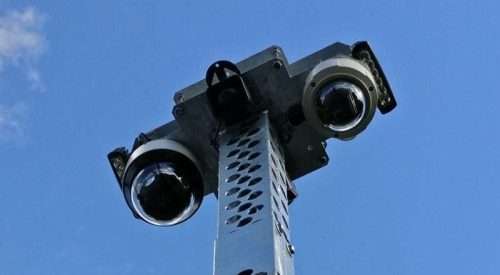
CCTV Towers
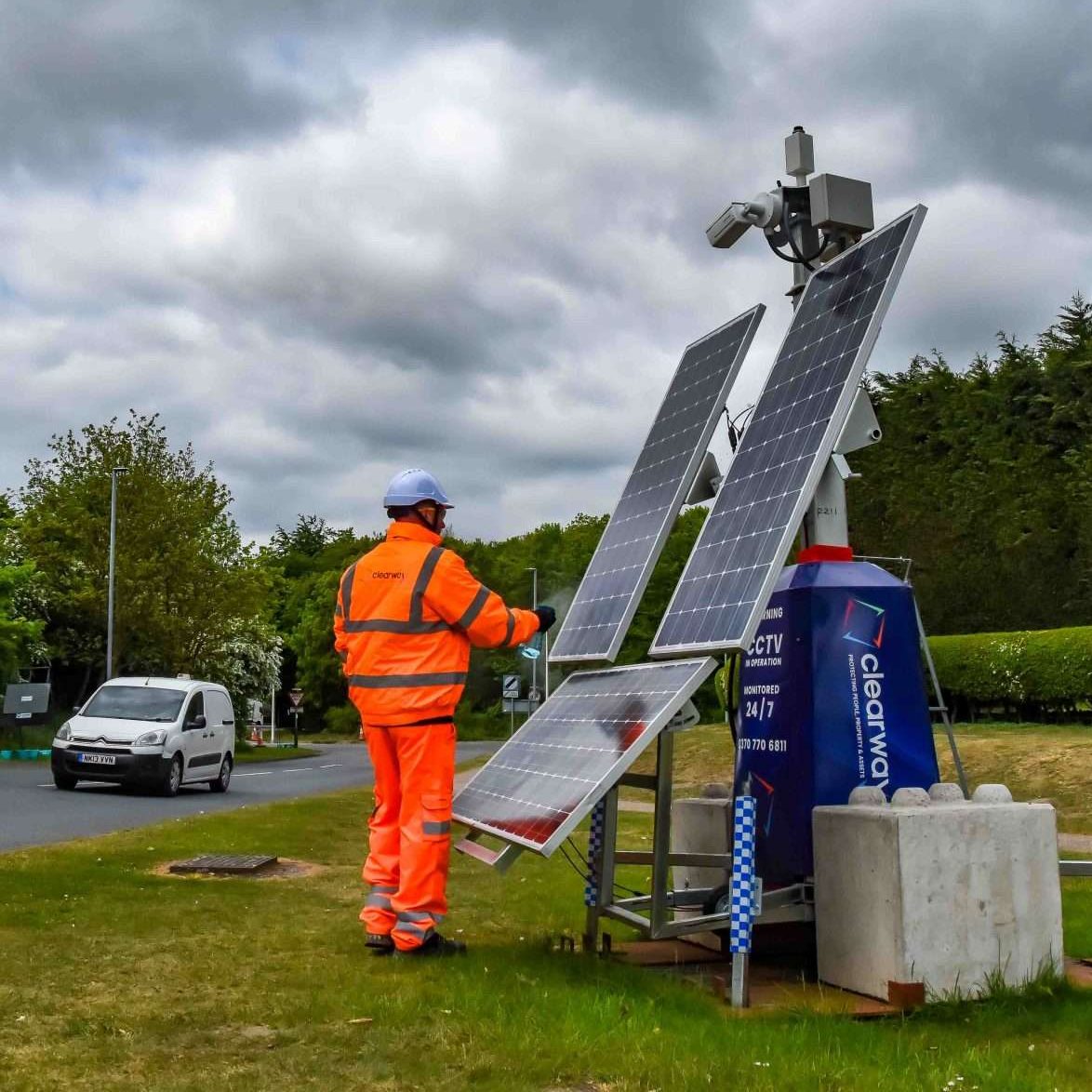
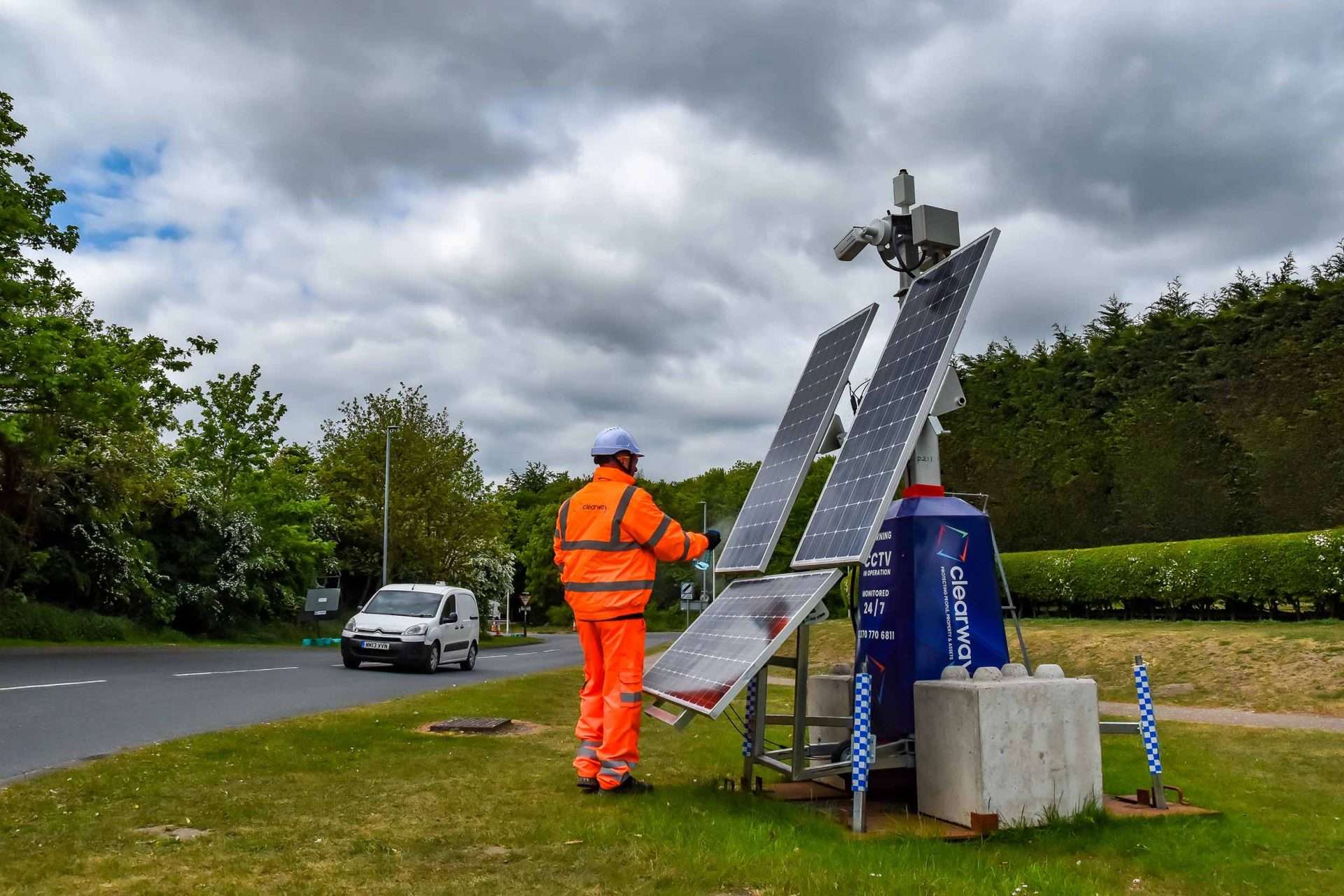
CCTV towers are in big demand and, given their visibility, provide the dual benefit of deterring intrusions and trespassers while working proactively to identify unusual, suspicious, or criminal behaviour or movements that could constitute a security threat.
Powered by commercial-grade batteries or solar panels, CCTV towers have vast coverage areas and work wirelessly and autonomously in any outdoor setting of any size, utilising advanced features, including PIR sensors.
Depending on your business environment and security requirements, the benefits include:
- Automatic footage recording when the PIR sensor picks up on infrared radiation, ensuring that audible or transmitted alarms are supported by high-resolution images or videos.
- Rapid detection of movement within your designated coverage area, including immediate alarms when a vehicle, animal or person enters the range of the CCTV tower.
- Customised triggers and transmission protocols, using secure notifications to alert on-site security teams, your monitoring service, the police or supervisors.
- Verified alarm callouts, using the recorded footage to confirm whether a live incident is underway, directing responders to the exact location, and logging the nature and severity of the alert to ensure the response is appropriate.
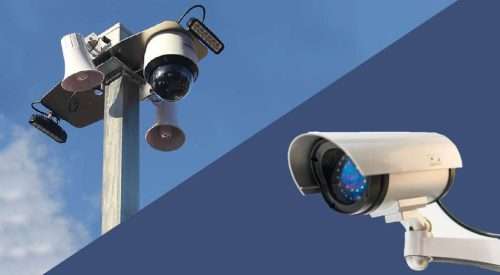
Clients can adapt their CCTV towers to their specifications, with options to add flashing security lights, audible sounds, or transmit warnings to suspected intruders to advise them that their presence has been identified, they are being recorded, and a security team is en route.
PIR cameras in practice
There are many security scenarios that benefit from PIR cameras. For example:
1. Vacant Property Security
Scenario: A commercial building is temporarily unoccupied following tenant departure.
Use of PIR Camera: Detects unauthorised movement inside or around the property, especially at night. Triggers alerts or alarms to deter squatters, vandals, or metal thieves.
Benefit: Reduces need for constant manned patrols; quick response to potential breaches.
Find out more about PIR sensors in vacant property CCTV.
2. Construction Site Protection
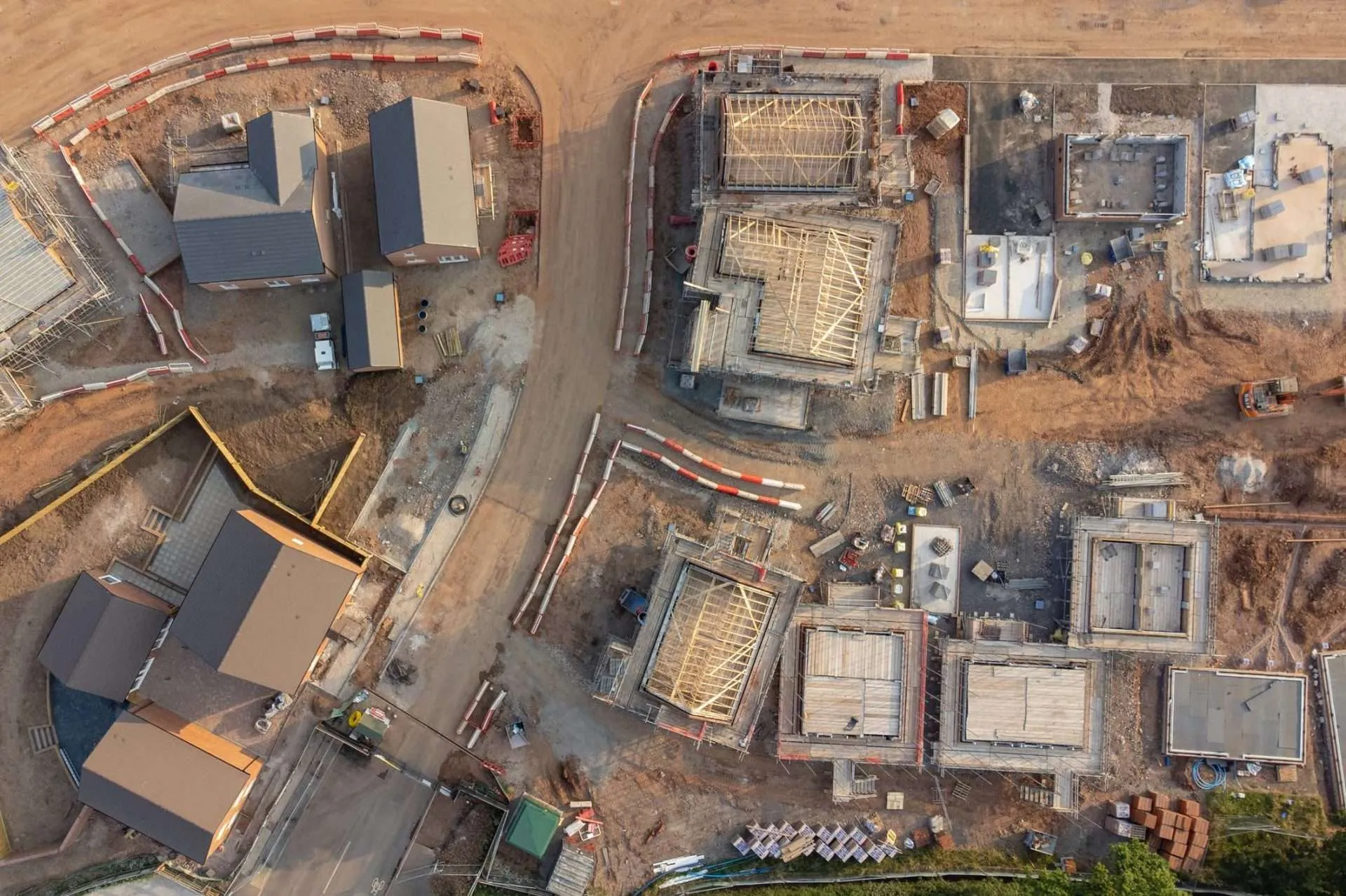
Scenario: A large construction site is left unattended overnight or on weekends.
Use of PIR Camera: Monitors perimeters and entry points. If a trespasser attempts to enter—by climbing a fence or crawling to avoid detection—the PIR sensor picks up the heat and motion, triggering a real-time alert.
Benefit: Prevents theft of high-value machinery and materials; deters health & safety risks from intruders.
Find out more about building site CCTV.
3. Industrial Estates
Scenario: A distribution warehouse is closed after hours.
Use of PIR Camera: Detects movement near loading bays, storage yards or vehicle access points. Combined with floodlighting or sirens to scare off intruders.
Benefit: Protects inventory, prevents fuel theft, and improves response times.
4. Highways & Infrastructure Projects
Scenario: Temporary roadworks or critical infrastructure sites need remote monitoring.
Use of PIR Camera: Monitors restricted zones and detects unusual presence after hours. Movement triggers alerts that are sent to monitoring stations.
Benefit: Enhances safety, prevents vandalism and cable theft, and maintains project continuity.
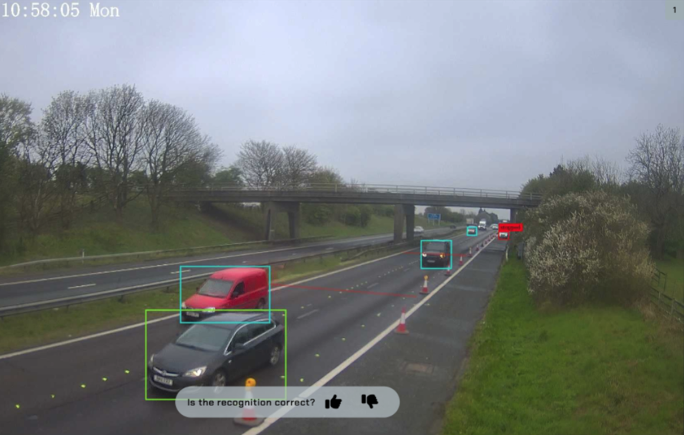
Find out more about traffic monitoring CCTV.
5. Fly-Tipping & Environmental Offences
Scenario: A known fly-tipping hotspot near a commercial estate.
Use of PIR Camera: Hidden or overt units detect vehicles entering after hours or dumping activity. Evidence can be recorded and reported to authorities.
Benefit: Prevents environmental damage, supports enforcement action, and reduces clean-up costs.
6. Warehouses (Logistics & Storage Facilities)
Scenario: A warehouse storing high-value goods, closed during nights and weekends.
Use of PIR Camera:
- Monitors access points, storage bays, and perimeters after hours.
- Detects unauthorised movement such as someone attempting to hide between racking or enter via loading bays.
- Triggers immediate alerts to on-site guards or a remote monitoring centre.
Benefit:
- Prevents theft, fuel siphoning, or damage to inventory.
- Reduces reliance on manual patrols and increases detection accuracy in low-light areas.
Find out more about warehouse CCTV.
7. Schools & Educational Facilities
Scenario: A primary or secondary school during holidays or after school hours.
Use of PIR Camera:
- Monitors playgrounds, bike racks, and entry points for loitering, trespassing, or vandalism.
- Detects unauthorised movement—e.g. someone trying to climb a fence or access buildings.
- Can be configured to ignore small animals while detecting human presence.
Benefit:
- Prevents break-ins, graffiti, and property damage.
- Supports safeguarding and community confidence by ensuring sites are secure when empty.
Find out more about school CCTV.
If you need further information about PIR sensors, the benefits of automated movement detection, or the best ways to incorporate this technology into your security setup, you can contact the Clearway team and speak to us about your needs.
The Clearway Team 
The Clearway Team
Clearway is one of the UK’s most successful, innovative and rapidly expanding integrated security services and intelligent protection organisations – designed to protect people, property and assets.