


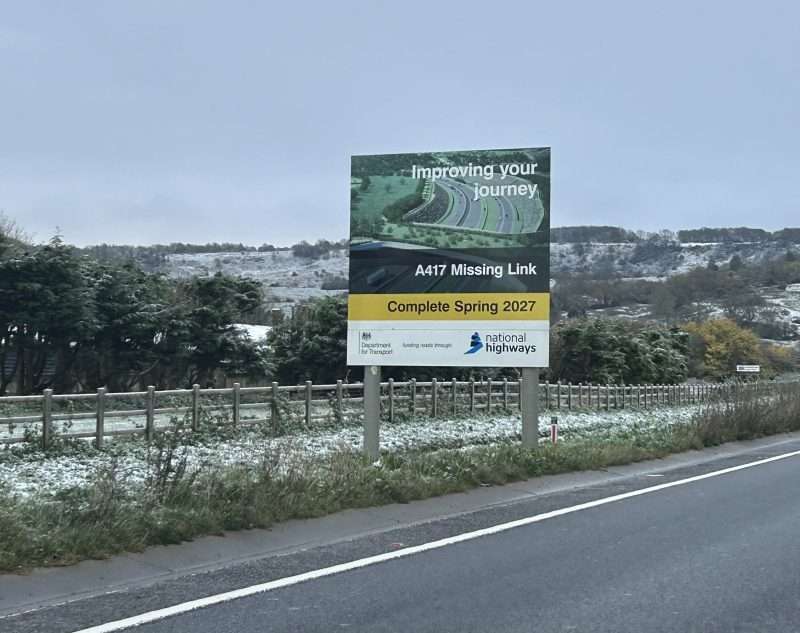
Key information
Scope of project: Informed junction redesign – A417 Missing Link Scheme
Area: Cheltenham
Services: Traffic monitoring
Background
Concerns were raised around the practicality and safety of the Ullenwood Manor/A436 Junction, Cheltenham, and senior members of the Kier Design, Health Safety & Wellbeing, Operations and Traffic Management Teams identified the need for design change.
The junction in question is positioned on the opposite side of the road to what was soon to be the main site entrance to a new scheme on the A417 and would significantly interface with Kier’s works on this scheme. A number of anecdotal reports of unsafe driving at the junction had been provided but a more detailed survey was suggested, to ensure that driver behaviour could be accurately monitored, in addition to standard traffic count and classification, before any decision was made on the temporary layout design of the junction during the construction phase of the project.
Before any proposals for junction design amends could be put forward, the team needed to survey the site and collate the necessary data, this needed to be done safely and quickly.
Solution
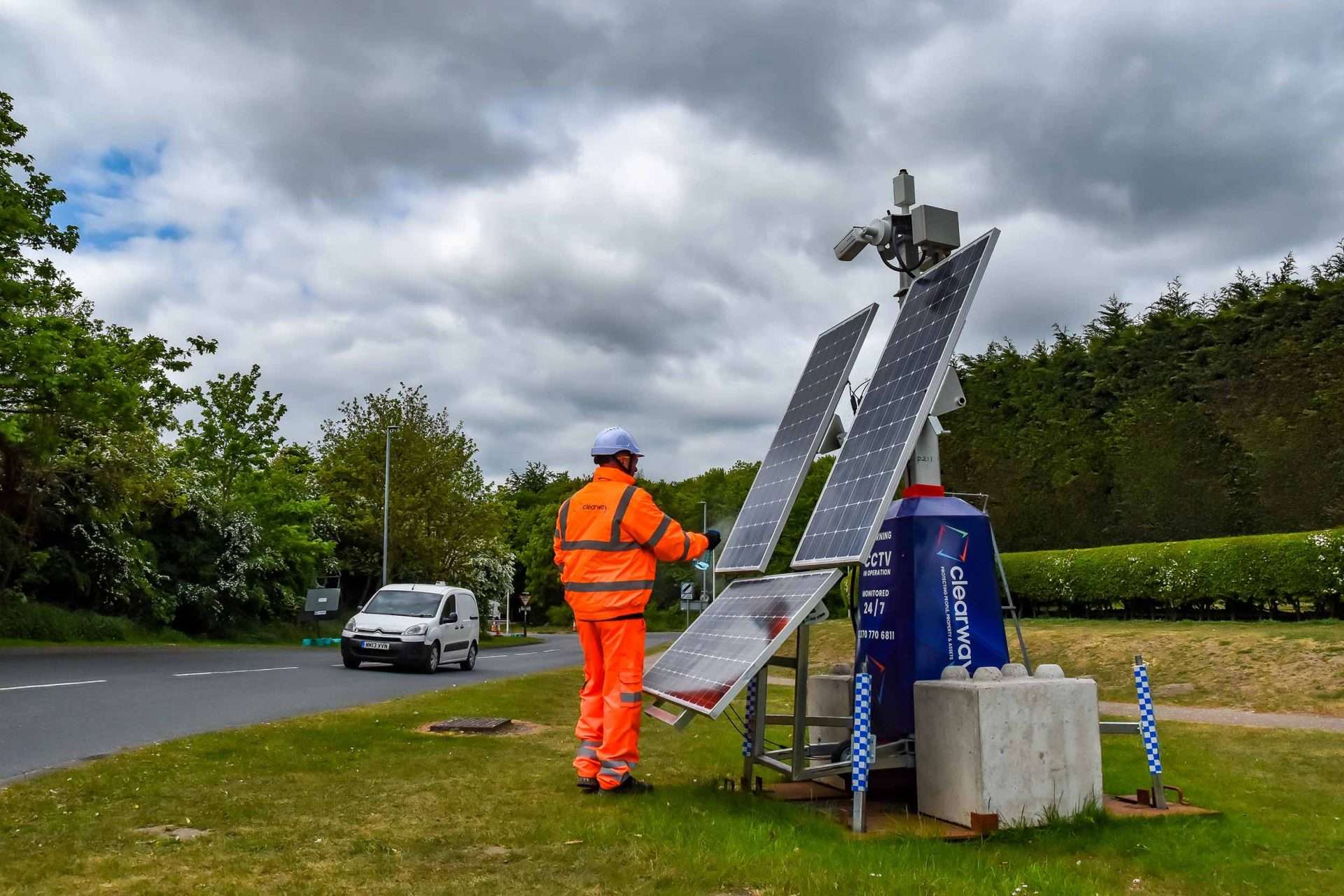
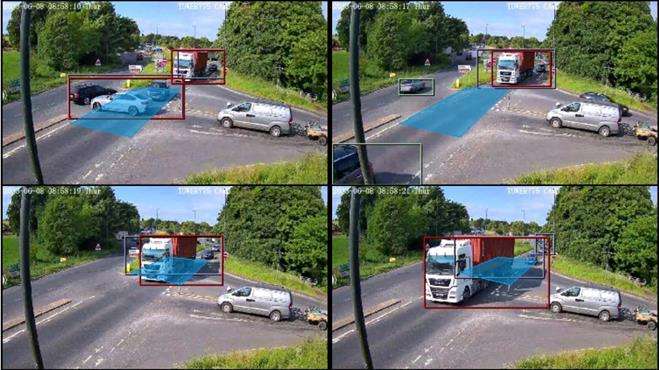
Clearway quickly deployed our solar-powered CCTV Towers with its cutting edge, AI-driven Vehicle Incident Detection and Traffic Speed/Counting System enabling the Kier team to not only conduct standard traffic surveys (count, classification etc.) but also detect and report on any Unsafe Acts and Near Misses.
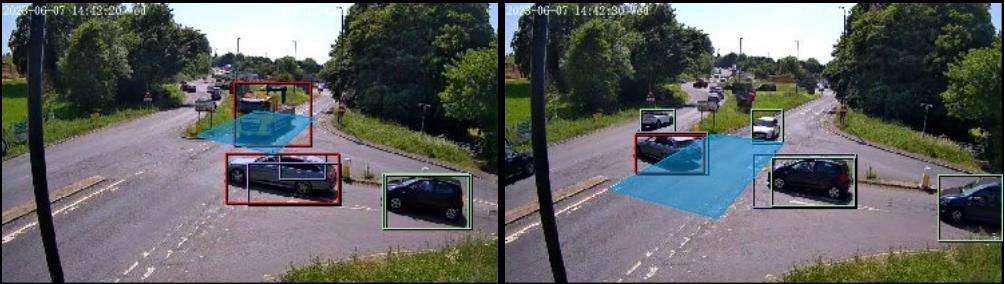
The system was able to detect when vehicles crossing the A436 to join the westbound carriageway stopped foul of the eastbound carriageway, or pulled out from the junction whilst a moving vehicle was present on the eastbound carriageway, and recorded the number of counts.
The system was live for a period of 28 Days, and monitored traffic count, classification and driver behaviour when using the junction. Kier traffic engineers were able to carry out the analysis, with data transmitted for processing and analysis. Capturing this data and combining it with visual/pictorial outputs provided clear, actionable evidence to influence traffic management and road user safety during the design process.
Each incident was also pushed to an evidence ‘locker’ which meant that each one could be visually interrogated, not just statistically recorded. At the end of the installation, Clearway delivered a full and detailed report providing a comprehensive review of all the data required to make as informed a decision as possible. This fed into the A417 Traffic Management Managers report for National Highways.
Outcome
The use of the Clearway CCTV Tower with AI-powered intelligent detection proved to be successful in providing both a thorough Count/Classification survey, and also information around road user safety/unsafe driving, which would not have been previously available.
By ensuring the Kier teams had accurate data around current road use, they were able to influence the junction redesign, which will significantly reduce the number of Unsafe Acts and Near Misses, and therefore limit the likelihood of a serious accident.
Through utilising AI-enabled cameras to conduct advanced, instead of standard analogue or human-monitored count and classification surveys, the Traffic Management team were able to identify 228 acts of unsafe driving, within a 28-day period.
Using the information provided, a mini roundabout was selected instead of the previous preferred option of traffic lights. This change was a direct result of the information provided through the Clearway AI-driven detection and monitoring solution provided via our CCTV Tower. We were able to provide significantly more information than previous monitoring techniques, providing decision makers with clear and effective evidence, which was used to ensure that all road users, both members of the travelling public, and project personnel would have the safest possible interface throughout the A417 project
This case study highlights the use of AI-enabled technology in traffic monitoring as best practice, for the consideration of any contractors needing to inform their decision making.

Award-winning project
This scheme won a National Highways Blue Star Award, something the team are extremely proud of receiving.
Blue Star Awards are National Highways opportunity to recognise a company, team or individual who has delivered benefits for Health, Safety orWellbeing through innovation.
Read the case study in full here.
Download Case Study
Download file