

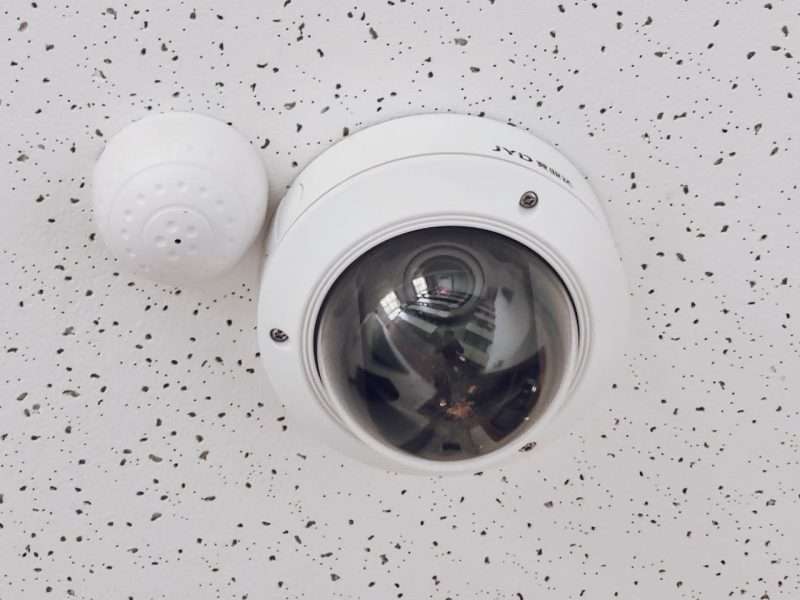
Turret and dome CCTV cameras can look similar, but key differences in movement and housing affect where they work best. Dome cameras are usually ideal for indoor or discreet surveillance, while turret cameras are better suited to outdoor use and night-time monitoring.
While both cameras have a round-shaped design, the lens within a dome camera is protected behind a clear ‘shield’. In contrast, the flexible ball cameras in a turret can pivot and swivel, without a cover.
Each CCTV device has several applications and benefits, and the best solution is to analyse your risks and requirements, rather than picking a specific type of CCTV camera solely based on how it looks.
Comparing Dome and Turret CCTV Cameras: Key Takeaways
- Dome and turret cameras have relatively small profiles and incorporate numerous features, such as motion detection, PTZ, and infrared for overnight surveillance, but there are nuances and differences to be aware of.
- The discreet nature of a dome camera means these are most often installed in spaces like offices and shops where surveillance can’t be overt or disruptive, while turrets are seen as providing the simplest CCTV maintenance in dusty or outdoor areas.
- Each camera performs reliably and can be integrated with other security assets, and decisions may depend on the types of risk in question, the potential for tampering, and the layout of the area you need to monitor.
Are Dome and Turret CCTV Cameras the Same Thing?
It’s common to assume that two round CCTV cameras provide identical functionality and features, but this isn’t correct. Dome and turret CCTV cameras are not the same, as they differ in design, visibility, and how well they perform indoors, outdoors, and at night. Here is a summary of the most notable differences.
| Dome CCTV | Turret CCTV | |
| External design | Use a concealed camera behind a clear dome-shaped housing or cover | More obvious and uses a ball and socket, which allows the camera to pivot |
| Key Features | Provide wide coverage with 360-degree vision | Cover flexible angles with cameras that can swivel |
| Footage quality | High-quality captures over wide angles, although there is potential for infrared ‘bounce back’ against the dome | Optimal night vision capabilities with both long-range and zoom functions |
| Drawbacks | Can collect condensation, and cleaning is more difficult | Vulnerable to tampering due to the lack of a cover in front of the camera lens |
| Durability | Highly durable and vandal-resistant | Camera lenses are more exposed to water ingress and weather damage |
While every site will be different, dome cameras are ideal for public access spaces where vandalism is possible, covering large areas and providing discreet coverage. Turret cameras are well-suited for long-range surveillance and for sites with high moisture levels.
Why Does the Choice Between Dome and Turret Cameras Matter?
Any fixed CCTV system should be designed to mitigate the risks and threats relevant to your premise, and to deter or proactively pick up on suspicious activity that needs to be investigated, you need the appropriate coverage and features.
There is ample evidence that the angle, field of vision and position of CCTV cameras are key to providing effective security, which is why businesses need to understand how different types of cameras work to determine which are right for their premises. [1]
Even the highest-performance CCTV camera can fail to prevent crime if the surveillance system doesn’t have the right functionality, isn’t used correctly, or isn’t updated to respond to changes in assessed risks. [2]
Clearway’s CCTV security team says, ‘Designing and deploying surveillance systems is all about learning the most appropriate ways to mitigate risks and create a safe, secure environment, whether an office, school, construction site, retail park or public town centre.
We always recommend that any organisation comparing CCTV cameras consult an experienced professional, because picking a system that leaves blind spots, doesn’t work properly in heavy rain, or isn’t visible enough to form a deterrent can mean additional cost and unresolved risk.’
What Are the Characteristics and Features of Dome Cameras?
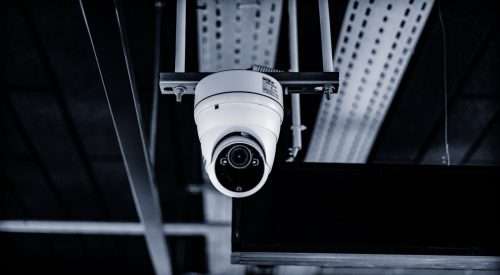
Dome cameras are almost always the CCTV cameras you’ll find in workplaces, offices, supermarkets and on public transport networks. The lens and other camera components are contained in a clear dome, a design that makes the camera less conspicuous.
The dome cover makes cameras hard to reach, ideal for public settings where vandals might try to cause damage, block the camera, or obscure the lens. It’s also effective at stopping dust or dirt from impacting image quality.
Features of Dome CCTV Cameras:
- Design: The clear dome protects the lens and blends into the environment, though there can be issues with infrared bounce-back, which reduces image clarity at night.
- Angles: Dome cameras are most often produced with wide-angle lenses that cover a broader field of view than a single camera, which can mean one dome replaces two alternative units and improves cost-efficiency.
- Installation: These CCTV cameras can be installed on any wall or ceiling, and though most often used indoors, there are outdoor dome cameras with weatherproof casings.
- Flexibility: If a site owner wants to change the areas covered by a dome camera, the unit will need to be removed and reinstalled elsewhere.
How Do Turret CCTV Cameras Work?
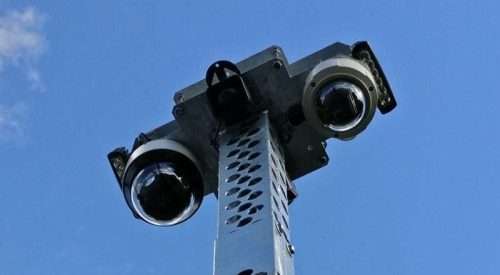
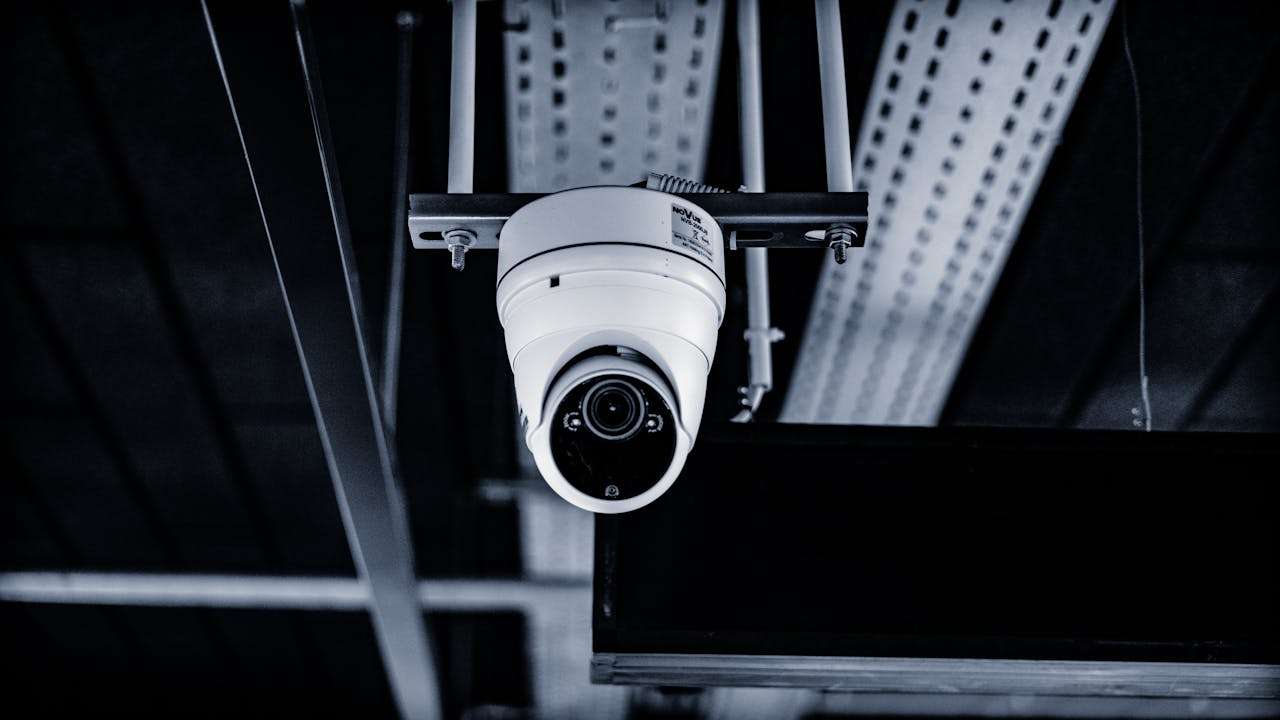
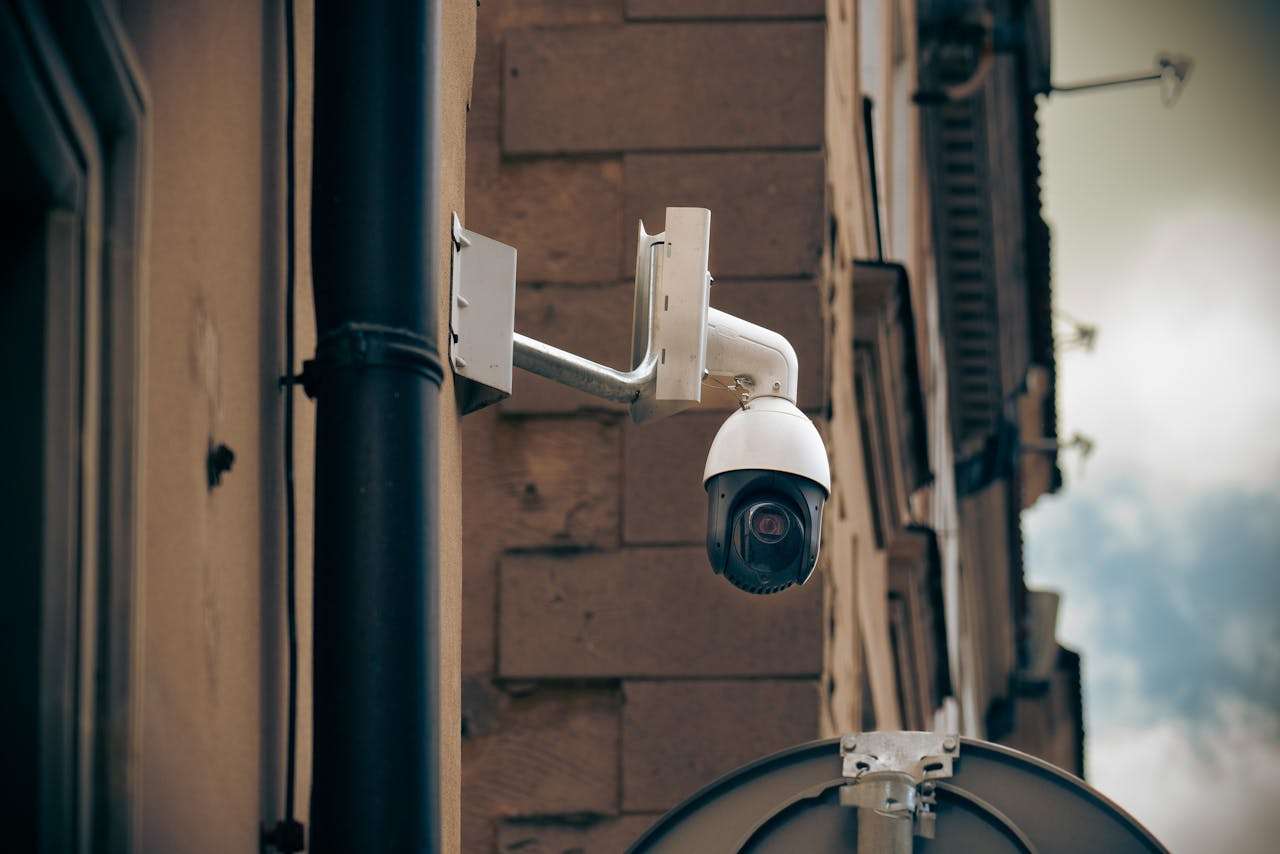
Turret cameras have a ball-and-socket mount, allowing the camera to rotate in any direction to cover different angles or areas. There isn’t a cover, which can mean the lens can potentially be tampered with, but the greater visibility makes these CCTV units a better deterrent.
Features of Turret Cameras
- A turret camera is more of a half-sphere shape, with flexible mounts that stand out, are more noticeable and can rotate 360 degrees.
- Turret cameras with optical zoom functionality can provide both long-distance surveillance and close-up images with equally high resolutions.
- Most turret cameras are installed on walls or ceilings indoors, or on walls outside.
- A turret camera can be rotated to adjust the area being monitored.
Which Is Best: A Dome or Turret Camera?
Each CCTV system design varies, and while both dome and turret cameras have ideal applications, businesses can also consider combining camera models or using some fixed CCTV alongside wireless surveillance, depending on the outcomes of their risk assessments.
Although it’s impossible to state with certainty which camera would be optimal for your premises or site, and the risks you need to manage, the lists below summarise some of the situations in which one or the other may be preferable.
When to Choose a Dome Camera
It’s best to choose a dome camera for the following scenarios:
- To install discreet surveillance that doesn’t attract attention
- When you need cameras that blend in with the aesthetic of your business
- If you’re looking for a camera that will operate reliably without being exposed to environmental damage, vandalism or tampering
- When you need a camera with good low-light functionality
When a Dome Camera Is Less Suitable
A dome camera may not be suitable in the following scenarios:
- For sites and businesses that want a visible deterrent
- When risks and areas of coverage are changeable, and CCTV cameras will need to be repositioned
- If infrared is a key requirement and takes precedence over other features
When a Turret Camera May Be Ideal
It’s best to choose a turret camera for the following scenarios:
- If you’re looking for cameras that you can adjust and rotate to improve coverage or focus on specific assets or entrances
- When you need to be able to monitor activities over longer distances and close up
- For premises in need of higher-profile CCTV that prospective intruders can see
- If you need excellent nighttime vision and cameras with low-light performance
Reasons Not to Choose a Turret Camera
A turret camera may not be suitable in the following scenarios:
- When you require discretion and don’t want CCTV to be obvious
- If you’re installing cameras outdoors and need to protect lenses from the elements
- In any situation where there are risks of criminal tampering or vandalism
Further information and more tailored guidance are available from our professional CCTV surveillance consultants.
Frequently Asked Questions
Is it Better to Install Turrets or Dome Cameras?
The right answer will always depend on the specifics of your site and security risks. Still, in general, turret cameras are ideal for busy and multi-use sites, where operators can zoom in or pan out and access clear night-vision feeds.
Dome cameras are more suitable for discretion and are resistant to vandalism and tampering, which is why they’re so widely used in offices, cafes, gyms, hospitality venues and workplaces.
What Are the Drawbacks of Dome CCTV Cameras?
The dome covering the camera lens can accumulate condensation, which is difficult to clean, and, depending on the light sources, infrared can bounce back into the clear casing, reducing the clarity of nighttime CCTV feeds.
What Is a Turret CCTV Device?
Turret cameras are so-called because the camera rotates and swivels, covering 360 degrees within a single unit. The camera has a three-axis ball-and-socket mount that allows for movement.
Can Turret Cameras Come With Built-In Audio Recording?
Yes, although it’s important to be cautious around any CCTV surveillance that incorporates audio, as this can breach data privacy rules if you’re fitting cameras in a workplace or a public setting where people have a right to privacy.
However, cameras can feature audio-detection functions that don’t necessarily record conversations but can pick up on noise signals that trigger an alert or prompt a responder to investigate the cause.
References:
Related content
Sun Nov 24 2024
Tue Aug 5 2025
Sun Aug 7 2022
Mon Mar 9 2026