

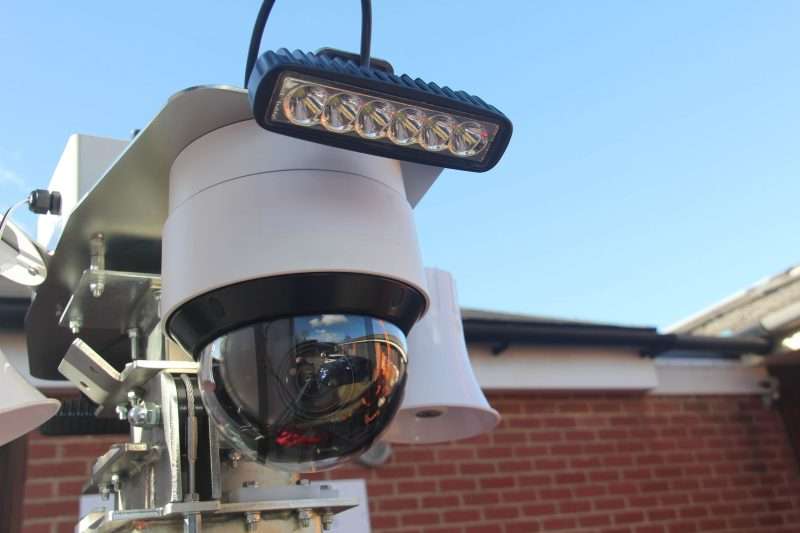
Commercial CCTV systems protect business premises and assets by deterring crime, capturing evidence, and enabling real-time response to security risks.
Choosing CCTV for a business premises can be complex, especially if you’re not clear on the contrasts between bullet and dome cameras, aren’t sure about when and how you’d want to access your surveillance, or don’t know the rules for CCTV that apply in your sector.
This guide shares some insights, advice and suggestions as a buyer’s guide for any business considering purchasing a new CCTV system.
Commercial CCTV Options: Key Takeaways
- CCTV cameras come in various designs and casings, each with differences in terms of their field of view, zoom capabilities, night vision, and how they actively deter threats.
- Business owners may also need to consider the difference between wireless and hardwired CCTV, with the former often used within car parks, open land and compounds that can’t be protected by conventional cabled cameras.
- Conducting a full risk assessment is often advisable, as it helps clarify the threats you’re facing, when and where they occur, and how best to mitigate them.
Which CCTV cameras do I need? The 5 Criteria
It’s best to approach CCTV with 5 factors in mind:
- Why do you need CCTV?
- Which features do you need based on your use case
- Where will your CCTV be located?
- Are you replacing or upgrading your current CCTV?
- What is your budget?
Businesses stuck on comparing commercial surveillance systems are normally advised to speak with a professional, since there are so many options, it’s easy to get it wrong.
Clearway’s commercial surveillance advisory team says, ‘We often speak with clients who know they need CCTV surveillance – but there are literally hundreds of potential cameras, designs, features and integrations that could be suitable.
The best advice is to organise a risk assessment or give us a call, but in the meantime, we’ve summarised some of the most important factors you’ll need to consider.’
5 Questions to Ask when choosing Commercial CCTV
1. The Reason for Installing CCTV
It might seem obvious that CCTV is there to deter intruders, but it’s essential you state the purpose of your surveillance to comply with workplace CCTV regulations.
You might need to monitor perimeters, prevent employee theft, safeguard inventory, or identify issues such as equipment malfunctions or non-PPE compliance, for example.
Businesses installing new CCTV systems are also advised to analyse the ICO guidance on storing and using personal data, especially when they intend to use commercial CCTV in workplaces to monitor employees. [1]
2. The Features You Need Your CCTV to Have
CCTV cameras can have numerous features, including video analytics, infrared for overnight surveillance, and remote-controlled PTZ movement. Having a checklist of what your CCTV needs to do will narrow down the options.
3. The Location of Your Planned CCTV Installation
Commercial CCTV cameras can be installed inside or out, be obvious or discreet, be erected on towers, or be fitted inside recesses – and the position of the cameras will influence the types of CCTV that are appropriate.
4. The Existing Alarms or Cameras On Site
If you already have alarms, CCTV cameras, fire detectors, and access controls, you may need a surveillance system that you can integrate with them to ensure all of your devices and surveillance systems are connected.
5. The Budget You Have to Spend
Costs are always a consideration, and if you have a maximum budget or a time constraint, they might be a major factor in your decision-making.
However, it’s also important to think about whether a low-cost basic CCTV system will be sufficient to protect you from the much higher costs of break-ins or thefts.
What Are the Main Types of Business CCTV Systems?
The table below summarises some of the most commonly used CCTV systems we install, including dome, tower-mounted and PTZ cameras.
| CCTV Type | Purpose |
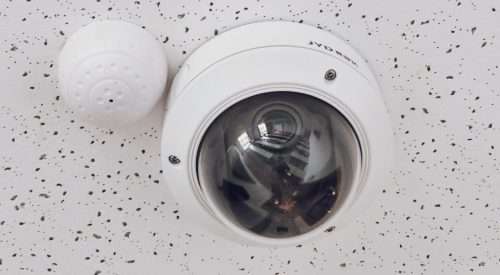
| Dome cameras | Discreet cameras, typically used indoors, which have a round dome that conceals the lens and the camera’s direction. |
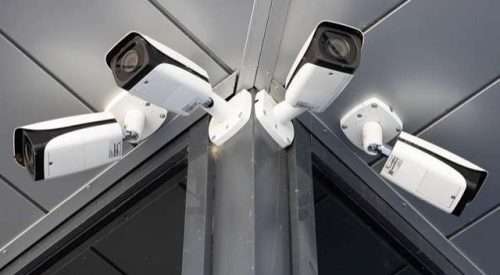
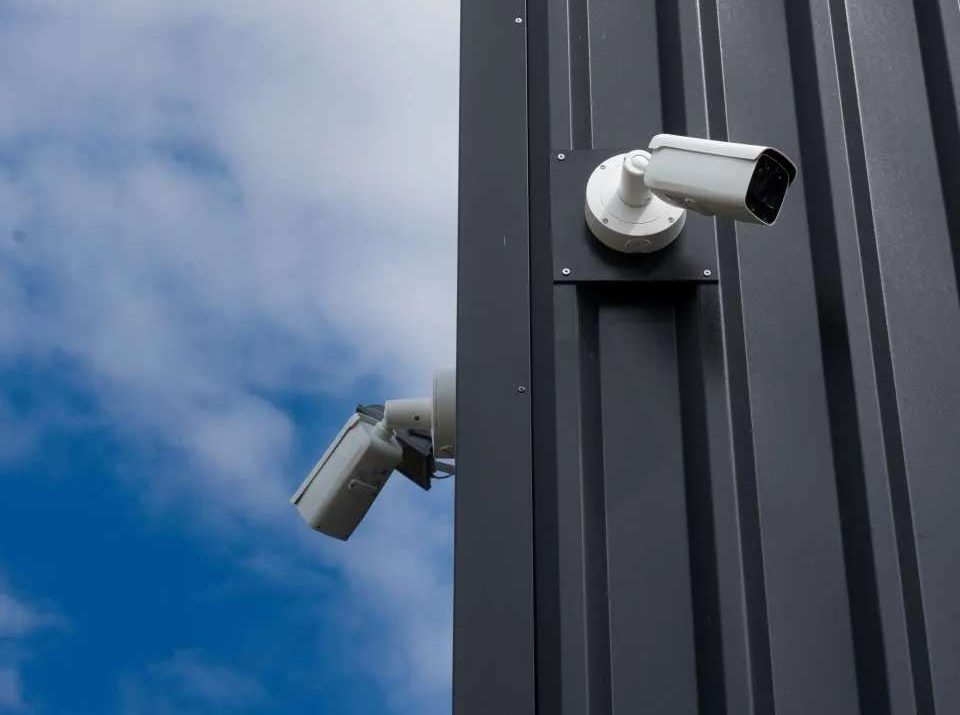
| Bullet cameras | Used indoors and out with a visible camera that can usually provide long-range surveillance over larger areas. |
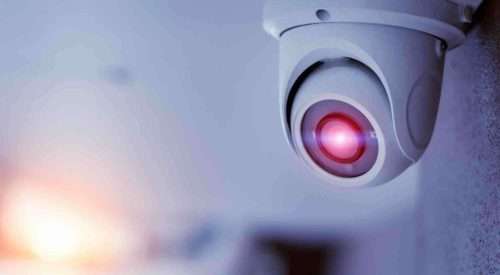
| Turret cameras | Incorporate a ball-and-socket camera that can swivel 360 degrees for both up-close and longer-range surveillance. |
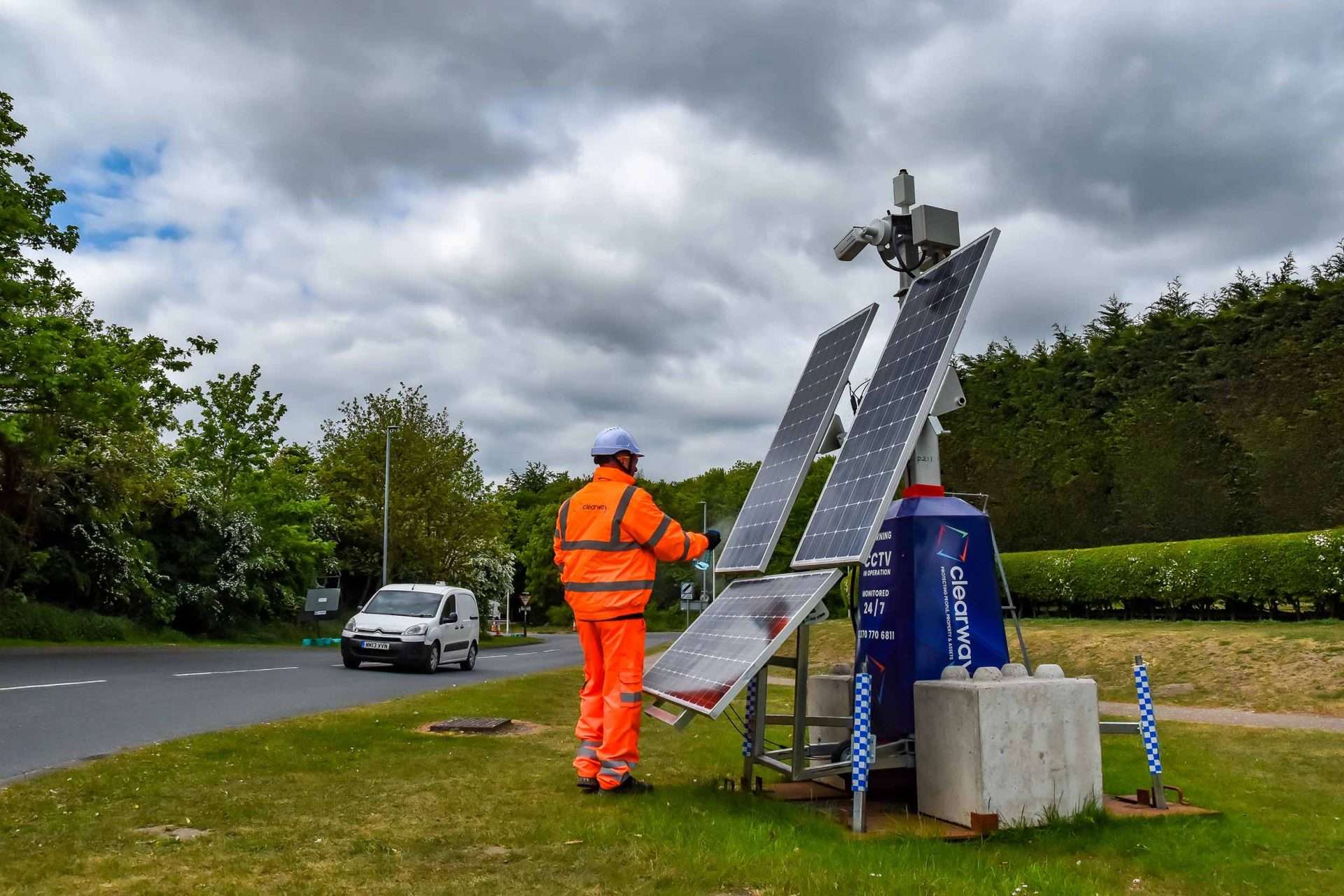
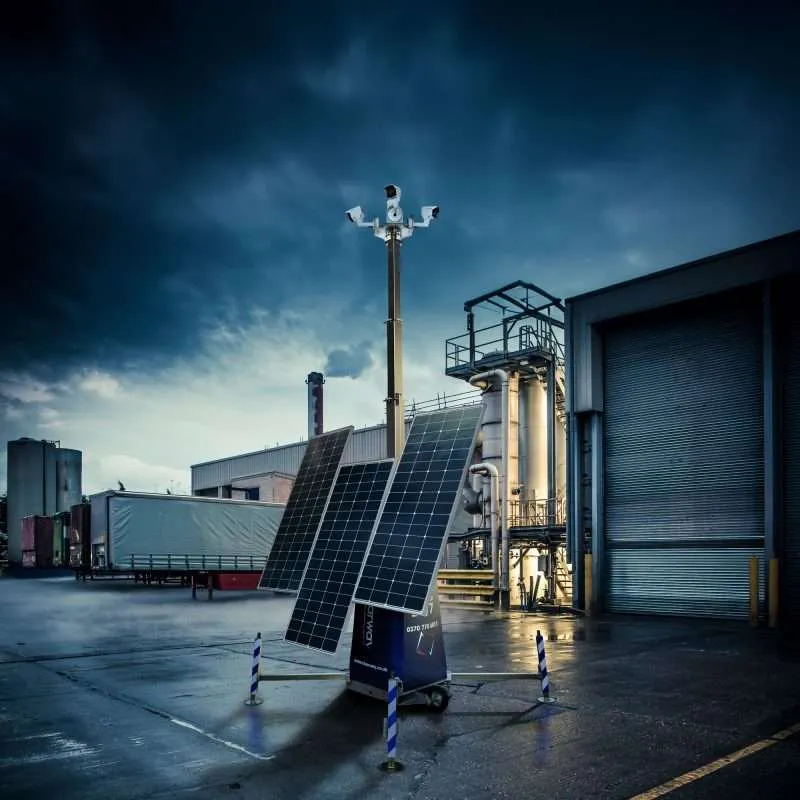
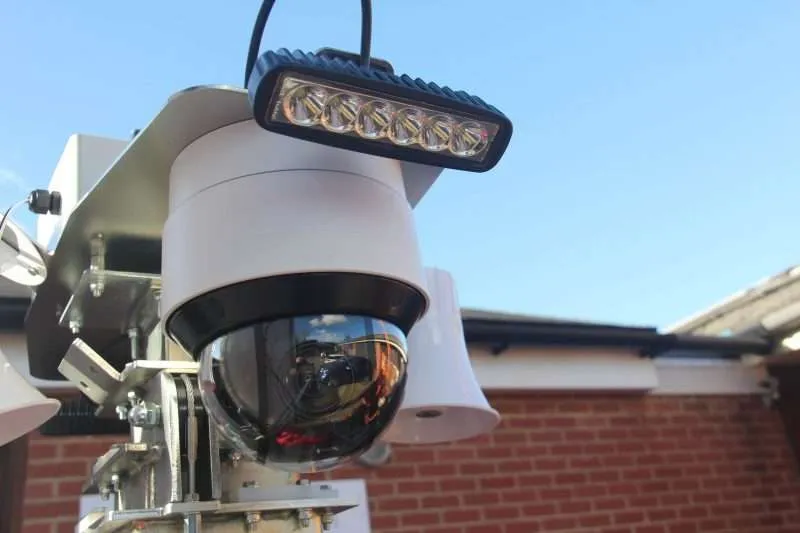
| CCTV towers | Tower-mounted, wireless cameras for high-risk and off-grid sites, such as construction sites and car parks. |
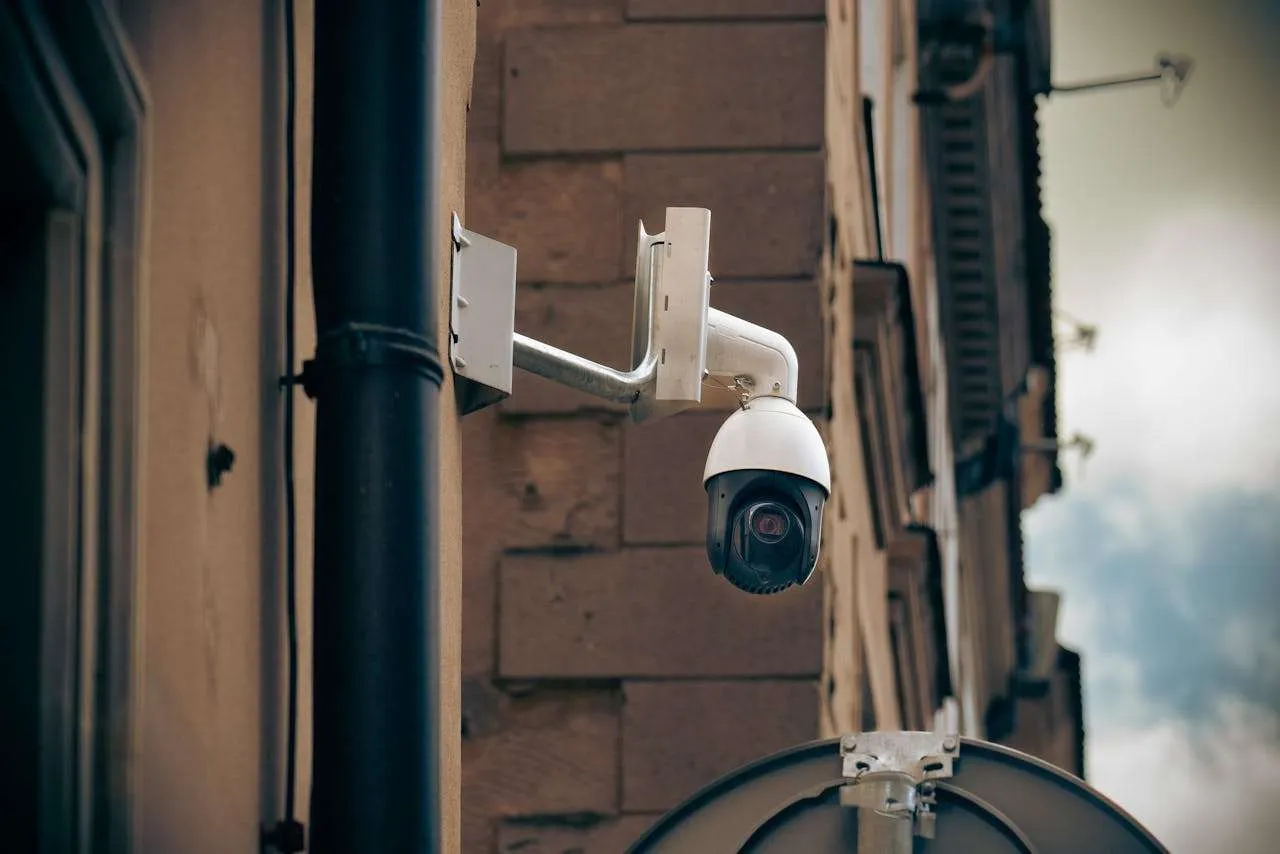
| PTZ cameras | Provide operators with tools to pan, tilt or zoom the camera’s angle to get a better view or change the area being monitored. |
| Wireless cameras | Operate from solar or battery power, ideal for vacant properties or commercial units undergoing renovations. |
| IP cameras | Digitally compress footage within the camera itself, with encrypted transmissions and faster alert notifications. |
Many of these attributes can be combined. For example, a dome camera might also have IP functionality, and a CCTV tower will often have PTZ capabilities.
You should also remember that hardwired CCTV systems can be more complex to install, but they’re a permanent security fixture once in place. Wireless cameras are usually used for the short-term, on a hire basis.
Choosing CCTV Based on Your Use Case
The best type of commercial CCTV depends on what you are protecting, how the site operates, and how the footage will be used. A system that works perfectly for a retail store may be completely unsuitable for a construction site, warehouse, or vacant property.
Below are the most important considerations when selecting CCTV for commercial use.
Wired vs Wireless CCTV Systems
Wired CCTV systems use fixed cabling for power and data transmission and are commonly deployed in permanent commercial premises.
Best suited to:
- Offices, warehouses, factories, retail parks
- Sites requiring 24/7 recording without interruption
- Environments with existing power and network infrastructure
Advantages:
- Highly stable and reliable
- Consistent image quality
- Better for multi-camera and high-resolution deployments
Limitations:
- Higher installation time and cost
- Less flexible if layouts or coverage requirements change
Wireless and Non-Wired CCTV systems transmit footage over Wi-Fi or mobile networks and may be battery or solar powered.
Best suited to:
- Temporary or rapidly changing sites
- Construction projects, events, remote locations
- Short-term or mobile security requirements
Advantages:
- Fast deployment
- Flexible camera placement
- Minimal site disruption
Limitations:
- Dependent on signal strength
- Battery management required
- Not always ideal for continuous high-traffic monitoring
Related Reading: Fixed vs wireless CCTV – which is better?
IP CCTV vs Analogue CCTV
IP CCTV (Internet Protocol) is now the standard for most commercial installations.
Best for:
- Businesses requiring high-definition footage
- Remote access and cloud integration
- Advanced security features and analytics
Advantages:
- Superior image quality
- Easier scalability
- Supports intelligent analytics and automation
Considerations:
- Requires adequate network capacity
- Higher upfront cost, lower long-term limitations
Analogue CCTV is typically used where legacy systems are already in place.
Best for:
- Basic monitoring needs
- Simple upgrades without full system replacement
Considerations:
- Lower image quality
- Limited analytics and integration
- Less future-proof
For most modern commercial environments, IP CCTV offers greater long-term value.
Related Reading: IP Vs Analogue CCTV – Which do you need?
Image Quality and Camera Resolution
Resolution directly affects how usable footage is.
Consider:
- Identification vs general monitoring
- Facial recognition requirements
- Licence plate visibility
- Distance and field of view
Higher resolution cameras are essential for evidential use, while lower resolution may be sufficient for general area coverage.
Field of View and Camera Type
Different camera styles serve different purposes:
- Fixed cameras for focused monitoring
- Dome cameras for discreet indoor coverage
- Bullet cameras for visible deterrence
- PTZ cameras for large open areas
Choosing the wrong camera type can result in blind spots or unnecessary overspend.
Lighting Conditions and Night Performance
Poor lighting is one of the most common reasons CCTV fails.
Consider:
- Low-light or no-light environments
- Infrared vs colour-at-night technology
- Glare from vehicle headlights or street lighting
Sites operating at night require cameras designed for consistent low-light performance.
Related Reading: Does CCTV work in the dark?
Intelligent Analytics and AI Capabilities
Modern commercial CCTV increasingly uses AI-driven analytics to move from passive recording to proactive security.
Analytics can include:
- Intrusion and perimeter detection
- People and vehicle classification
- Loitering detection
- Line crossing and restricted area alerts
- Object removal or abandonment detection
Best suited to:
- Large or unmanned sites
- High-risk environments
- Businesses needing real-time alerts and intervention
Analytics reduce false alarms and manual monitoring requirements.
Related Reading: Intelligent Video Analytics
Monitoring, Alerts and Response
Consider how footage will be used:
- Live monitoring vs post-incident review
- On-site monitoring vs remote monitoring
- Automated alerts vs manual review
For critical environments, CCTV is often paired with monitored services to ensure incidents are acted on immediately.
Related Reading: What is CCTV monitoring?
Storage, Retention and Access
Storage requirements vary significantly by use case.
Key considerations:
- Local recording vs cloud storage
- Required retention period
- Ease of footage retrieval
- Data protection and GDPR compliance
Longer retention and higher resolution footage require more storage capacity.
Scalability and System Growth
Commercial CCTV should support future expansion.
Ask:
- Can additional cameras be added easily?
- Can analytics be enabled later?
- Is the system compatible with third-party platforms?
A scalable system avoids costly re-installs as the business grows.
Environmental and Durability Requirements
The physical environment matters.
Consider:
- Indoor vs outdoor use
- Weather exposure
- Dust, vibration, or vandalism risk
- Operating temperatures
Construction sites, for example, require far more rugged equipment than offices.
Compliance and Insurance Requirements
Some sectors have specific compliance needs.
Consider:
- GDPR and privacy controls
- Insurer requirements for evidence quality
- Industry-specific standards
CCTV that fails to meet these standards may not be accepted as valid evidence.
Budget vs Risk Profile
Cost should be balanced against risk, not just price.
Low-risk environments may only need basic coverage, while high-risk sites benefit from intelligent, monitored systems that prevent incidents rather than just record them.
What Is the Best CCTV System for My Business Type?
As we’ve seen, you’ll need to consider all the attributes your cameras should have, and there isn’t necessarily one type of CCTV that will be perfect for two similar businesses.
For example, one retail centre might need inobtrusive dome cameras throughout, and another might require wireless CCTV to monitor loading bays and large paid-for car parks.
Reviewing the data protection guidelines and regulations before you move forward is also time well spent, helping you stay up to date with the requirements for using CCTV sensitively and with respect for personal privacy. [2]
However, the suggestions below are based on general business characteristics and priorities.
Business 1: Hospitality, Office or Retail Businesses Wanting Discreet Surveillance
In this situation, a dome camera is likely the best option because it provides 360-degree coverage, and it’s impossible to tell where it’s pointing. This both deters thieves and avoids disconcerting genuine customers or staff.
Dome cameras also need only straightforward maintenance because the lens is protected from dust.
Business 2: Construction Sites and Developers With Outdoor Land
CCTV towers are commonly used for construction sites and in other industrial applications. Towers are easy to see, a robust deterrent, and can cover large areas, with wire-free functionality that operates independently of the national grid.
Business 3: Industrial Parks With Heightened Overnight Break-In Risks
Bullet cameras are widely used in commercial and industrial settings because they are durable, weatherproof, and can capture high-quality images from a distance.
The casing is visible and a deterrent, and infrared night vision can protect industrial sites and car parks in any light.
CCTV Towers are also great for monitoring outdoor areas, depots and car parks.
Business 4: Transit Hubs and High-Footfall Warehouses
Warehouses and logistics sites often use a variety of cameras per zone, but many use turret cameras because the ball-and-socket design allows the camera to swivel to cover every area within the perimeter or space.
CCTV Towers are also great for monitoring outdoor warehousing areas, depots and car parks.
Business 5: Interior Decorators, Developers and Property Managers
During periods when commercial units or buy-to-let premises are being refurbished, awaiting sale, or pending new tenants, running mains-powered CCTV may not be possible.
Wireless CCTV is ideal, as it can be hired for temporary periods and runs from commercial-grade batteries.
Business 6: Larger Business Sites or Compounds With Live Video Analytics
CCTV cameras with PTZ features are reliable for businesses that need to supervise larger buildings or areas.
Outdoor PTZ cameras can cover car parks, loading bays, and entrances, whereas indoor PTZ cameras can be used in warehouses and venues, with the ability to zoom in and move the camera in any direction.
How Can I Be Sure I’m Choosing the Best CCTV for My Organisation?
Security cameras can be a significant investment, and it’s advisable to speak with an independent specialist who can review the pros and cons of all the options, provide tailored recommendations, and ensure you’re delighted with the performance of your commercial CCTV.
By now, you should have a greater idea about the types of features, functions and applications of modern commercial CCTV devices – and which would prove most beneficial in securing your premises, protecting your staff and defending your assets from theft.
Frequently Asked Questions
What Should I Expect to Spend on a Commercial CCTV System?
As a very rough indication, the current average prices in the UK for a CCTV camera range from around £100 for a basic model to £3,600 and above for advanced devices, and installation can cost from as little as £350 to several thousand for very complex, extensive commercial surveillance solutions. [3]
However, it’s incredibly difficult to provide even ballpark figures because every business is different and may need different installation and wiring services, integrations with software and alerts, or rely on 24/7/365 monitoring to investigate CCTV alerts when their premises are shut.
Read more: How much does CCTV cost?
Can I Use Simple CCTV Cameras Designed for Residential Homes at My Business?
Potentially, but it’s not advisable. Residential cameras usually have limited functionality and are meant to deter intruders by protecting a single front door or entrance path. They also tend to be less durable and will rarely comply with the terms of insurance coverage.
Commercial-grade CCTV can protect multiple entry and access points, provide weatherproof casings engineered to last for years, and integrate with other surveillance assets and alarms to keep buildings properly defended.
Read more: Why do you need commercial CCTV?